Why You're Always Tired — and What It Might Mean
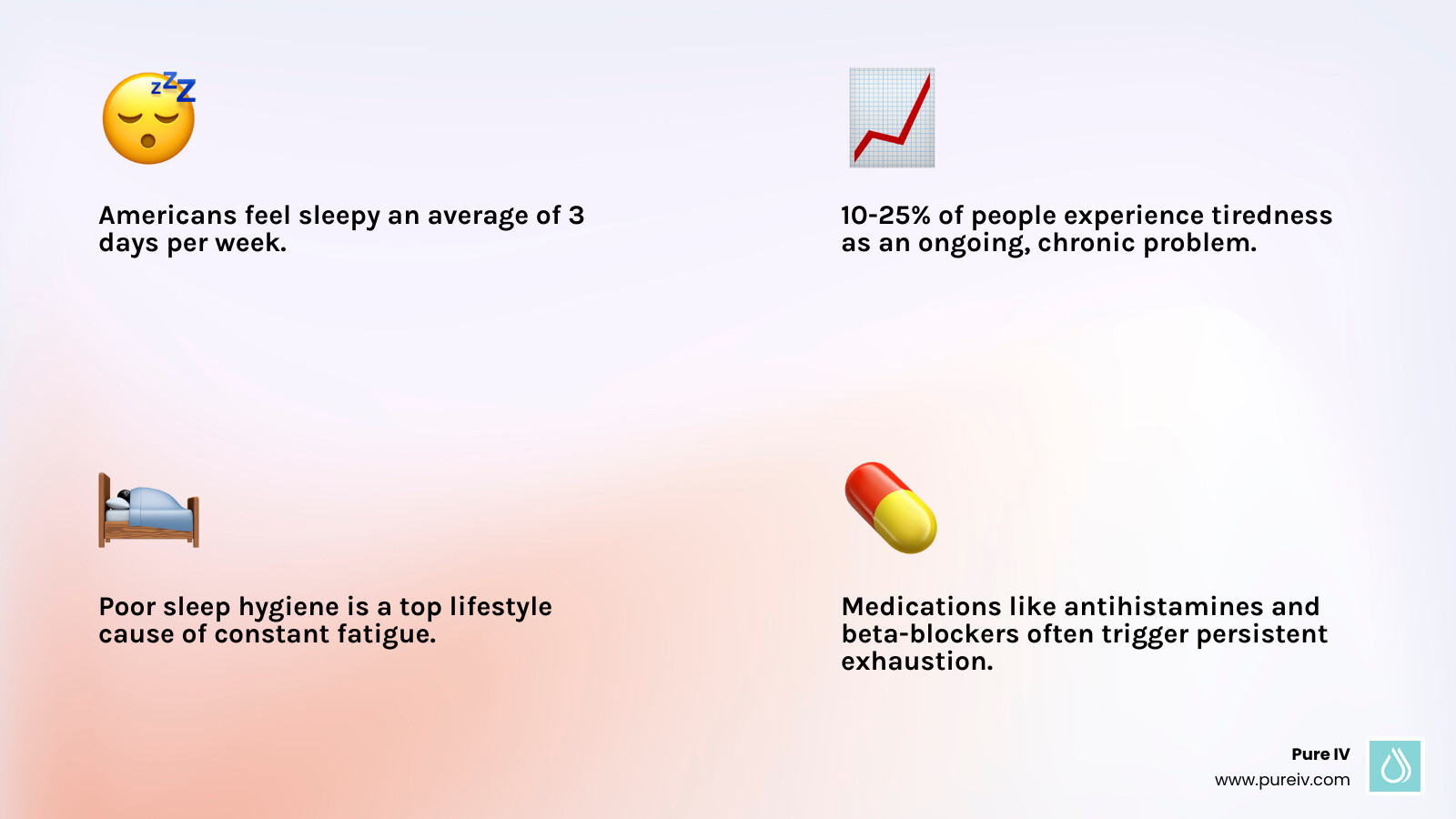
If you've been asking yourself "why am i always tired" no matter how much sleep you get, you're far from alone. Research shows Americans feel sleepy an average of three days a week, and between 10% and 25% of people deal with tiredness as an ongoing, chronic problem.
Here are the most common reasons you may feel constantly drained:
| Category | Common Causes |
|---|---|
| Lifestyle | Poor sleep hygiene, dehydration, sedentary habits, poor diet |
| Mental health | Stress, anxiety, depression, burnout |
| Medical conditions | Anemia, thyroid disorders, diabetes, sleep apnea, POTS |
| Medications | Antihistamines, beta-blockers, antidepressants, opioids |
| Nutritional gaps | Low vitamin D, low B12, iron deficiency |
This guide walks through each of these causes in plain language — so you can figure out what's actually going on and take action.
Persistent, unexplained tiredness isn't something to brush off. It can quietly erode your productivity, your mood, and your quality of life. And in many cases, it signals something your body is actively trying to tell you.
I'm Dr. Allison Lane, a board-certified emergency medicine physician and sports medicine specialist with over 15 years of clinical experience treating patients whose performance and daily function are impacted by fatigue, dehydration, and energy depletion — the very issues behind why am i always tired. As Medical Director of Pure IV, I work directly with people seeking fast, effective recovery when their bodies are running on empty.
Tiredness vs. Fatigue: Understanding Why I Am Always Tired
We often use the words "tired" and "fatigued" interchangeably in casual conversation, but in the medical world, they describe two very different experiences. Understanding which one you are dealing with is the first step toward reclaiming your day.
Tiredness is a natural, expected response to activity. If you spent the day hiking in the Red Rocks near Las Vegas or finished a grueling shift at a hospital in Nashville, you should feel tired. This type of exhaustion is usually "resolved" by a good night’s sleep or a relaxing weekend. It is temporary and linked to a specific cause.
Fatigue, however, is a different beast entirely. It is a persistent, overwhelming feeling of tiredness that doesn’t go away with rest. It’s that "heavy" feeling where even small tasks—like folding laundry or answering an email—feel like running a marathon. According to the NHS guide on tiredness and fatigue , fatigue can impact your physical energy, your mental clarity (brain fog), and your emotional resilience.
| Feature | Temporary Tiredness | Chronic Fatigue |
|---|---|---|
| Onset | After physical or mental exertion | Often occurs without a clear trigger |
| Sleep Impact | Feeling refreshed after waking up | Still feeling exhausted after 8+ hours |
| Duration | Short-term (days) | Long-term (weeks or months) |
| Daily Life | Can usually "push through" | Significantly impairs work and social life |
If you find that your "battery" never hits 100%, even after a long weekend, you aren't just tired; you are likely experiencing fatigue. This distinction is vital because while tiredness might just mean you need a nap, fatigue often points to an underlying problem that needs to be addressed.
Lifestyle Culprits: Habits Draining Your Battery
Sometimes, the answer to why am i always tired is hidden in our daily routines. We live in a world that prizes "the hustle," but our bodies weren't designed to run on caffeine and blue light 24/7.
One of the most ironic causes of tiredness is a lack of movement. It sounds counterintuitive—shouldn't resting save energy? Not exactly. As the old physics saying goes, "A body at rest stays at rest." According to the Cleveland Clinic on sedentary lifestyle , inactivity can actually breed more tiredness. When we don't move, our circulation slows down, and our bodies become less efficient at producing energy.
Diet also plays a massive role. If you are reaching for white bread, sugary snacks, or processed "energy" bars, you might be trapped in a cycle of blood sugar spikes and crashes. These crashes leave you feeling wiped out by 2:00 PM. Instead, the goal should be vitamin-rich foods like leafy greens, lean proteins, and complex carbohydrates that provide a steady stream of fuel.

The Dehydration Trap: Why Am I Always Tired and Thirsty?
Did you know that 75% of Americans are chronically dehydrated? Most of us consume only two and a half cups of water or less each day, which is nowhere near the recommended 11 to 15 cups.
When you are dehydrated, your blood volume drops, making your heart work harder to pump oxygen and nutrients to your brain and muscles. This leads to:
- Persistent brain fog and "fuzzy" memory
- Dark-colored urine
- Muscle cramps and headaches
- A noticeable dip in mood and energy levels
Many people try to fix this with more coffee, but caffeine is a diuretic that can actually worsen the problem. If you’ve reached the point where you’re drinking water but still feel "dried out," you might be dealing with an electrolyte imbalance. This is where IV for energy becomes a game-changer. By delivering fluids and essential minerals directly into the bloodstream, you bypass the digestive system for near-instant rehydration and cellular support.
Sleep Hygiene and Sleep Disorders
It’s not just about the quantity of sleep; it’s about the quality. While you sleep, your body performs a number of critical processes , including repairing cells and releasing growth hormones. If you aren't hitting at least 7 hours of high-quality sleep, your body never finishes its "nightly maintenance."
Common disruptors include:
- Sleep Apnea: This is often underdiagnosed. If you wake up gasping or snorting, or if a partner says you snore loudly, your brain might be waking you up dozens of times a night to restart your breathing. You can learn more about the risks from the Cleveland Clinic on sleep apnea.
- Insomnia: Difficulty falling or staying asleep can be caused by stress, menopause, or "blue light" from phones.
- Poor Sleep Hygiene: Having an inconsistent bedtime or keeping your room too warm can prevent you from reaching deep REM sleep.
The Medical Perspective: When Fatigue Signals an Underlying Issue
If you’ve fixed your diet, started drinking more water, and prioritized sleep, but you’re still asking why am i always tired, it’s time to look under the hood. Persistent fatigue is often a symptom of a medical condition that a simple lifestyle "tweak" can't fix.
Medical professionals use diagnostic patterns to narrow down the cause. This usually involves blood tests to check for deficiencies or hormonal imbalances.
Common Conditions: Anemia, Thyroid, and POTS
Three of the most frequent medical causes of fatigue include:
- Iron Deficiency Anemia: Think of iron like the "train cars" that carry oxygen throughout your body. If you don't have enough iron, you don't have enough cars to deliver the oxygen your organs need. This affects roughly 3 million Americans and causes shortness of breath and pale skin.
- Thyroid Problems: Your thyroid is the "thermostat" of your metabolism. An underactive thyroid (hypothyroidism) slows everything down, leaving you feeling sluggish and cold. You can find more details on NHS on hypothyroidism.
- POTS (Postural Orthostatic Tachycardia Syndrome): This is a condition where your autonomic nervous system doesn't properly manage blood flow when you stand up. Blood pools in your lower body, and your heart races to compensate. People with POTS often describe their fatigue as "hundreds of times worse than the flu." The Cleveland Clinic on POTS explains why this condition is so frequently misdiagnosed.
Medications and Hormonal Shifts
Sometimes the very things meant to help us make us tired. Many common medications have drowsiness as a primary side effect, including:
- Beta-blockers(for blood pressure)
- Antihistamines(for allergies)
- Antidepressants and Anxiolytics
- Opioid pain medications
Hormonal shifts are another major factor. During menopause or pregnancy, levels of progesterone and other hormones fluctuate wildly. These shifts can disrupt your sleep cycle and slow your metabolism, leading to what many describe as "adrenal fatigue," though doctors often look for broader endocrine issues.
The Mind-Body Connection: Stress, Anxiety, and Burnout
We cannot talk about energy without talking about mental health. Your brain is the most energy-intensive organ in your body, and "mental load" is a real physical drain.
When you are under chronic stress, your body is stuck in a "fight or flight" loop, pumping out cortisol. Over time, this high-alert state leads to emotional exhaustion and burnout. Depression, too, is a major cause of fatigue; it doesn't just make you feel "sad," it can make your limbs feel heavy and your brain feel like it's moving through molasses.
This creates a vicious feedback loop: you’re too tired to exercise or see friends, which makes you feel more anxious or depressed, which in turn makes you even more tired.
Reclaiming Your Vitality: Practical Steps to Boost Energy
The road back to high energy starts with small, consistent steps. Here is how we recommend getting started:
- Keep a Fatigue Diary: For one week, track when you feel most tired, what you ate, how much you drank, and how you slept. This helps your doctor identify patterns.
- Prioritize Vitamin D: About 1 in 5 people have low levels of Vitamin D, especially in the winter. Getting 20 minutes of outdoor sunlight can help reset your internal clock and boost your mood.
- Establish a Sleep Protocol: Go to bed and wake up at the same time every day—yes, even on weekends in Scottsdale or Denver.
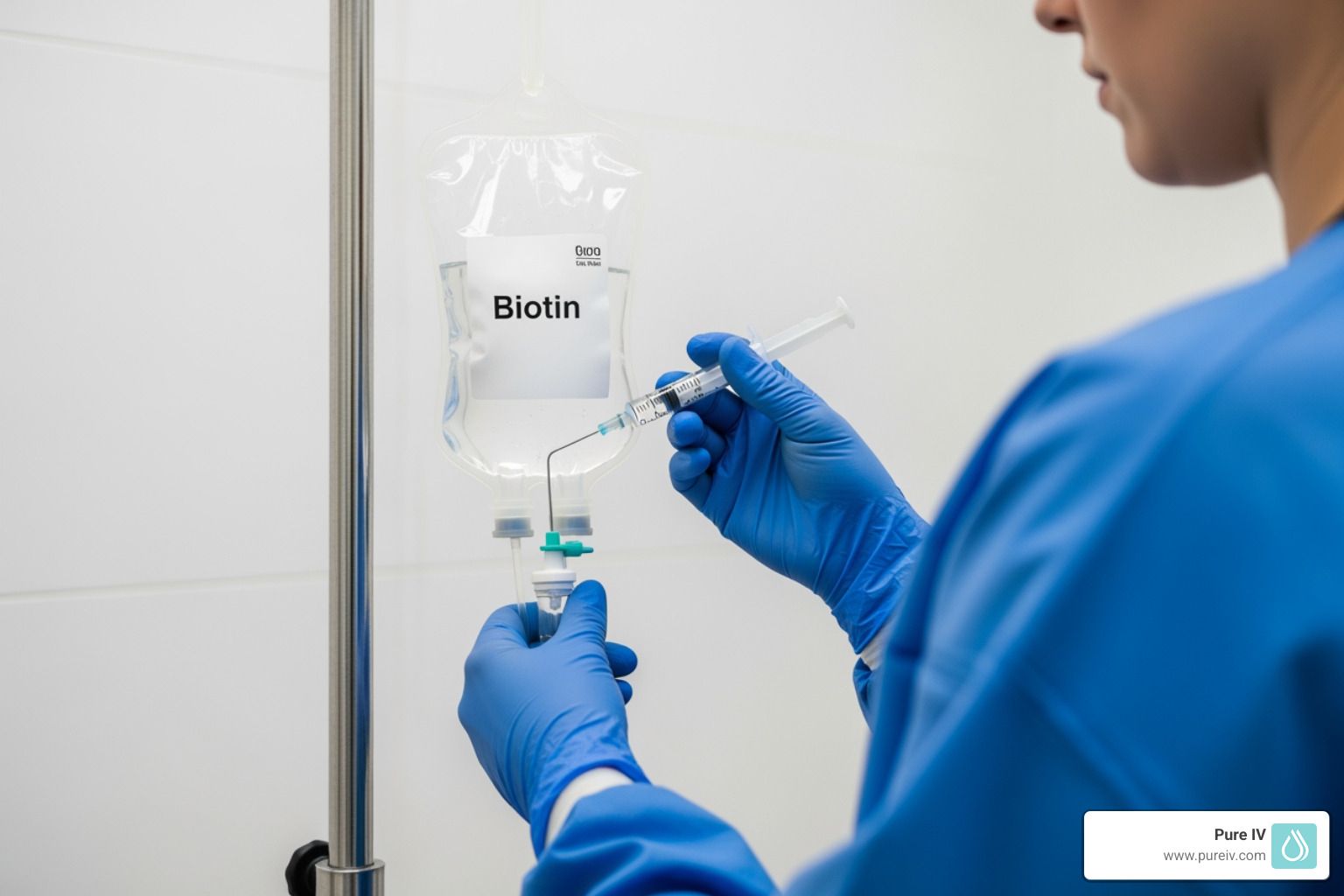
- Targeted Nutrition: Focus on colorful produce and lean proteins. If you’re struggling to get enough nutrients through food alone, consider fatigue IV treatment. This provides a concentrated dose of B-complex vitamins, Vitamin C, and magnesium to jumpstart your recovery.
When to Consult a Professional about Why Am I Always Tired
While we all have "off" days, you should consult a healthcare provider if your tiredness has lasted more than six months without an obvious cause. If you are sleeping 7-9 hours and still can't function, or if you have symptoms like unexplained weight loss, fainting, or heart palpitations, it is time for a clinical evaluation.
Physicians like Dr. Katelynn Sheaffer emphasize that persistent fatigue is a valid medical concern. Don't let anyone tell you "it's just in your head."
Rapid Recovery and Hydration Solutions
For many of our clients in places like Las Vegas, Nashville, or Phoenix, the "slow" route of oral supplements isn't enough to keep up with their busy lives. This is why IV therapy has become so popular.
Because IV fluids bypass the gastric system, they offer 100% absorption. This allows for:
- Immediate Electrolyte Restoration: Essential for those recovering from intense workouts or travel.
- Cellular Repair: High doses of antioxidants like Glutathione help combat the oxidative stress that causes fatigue.
- Speedy Rehydration: Much faster than drinking water, especially for those with chronic dehydration.
Frequently Asked Questions about Why I Am Always Tired
Can dehydration cause long-term fatigue?
Absolutely. Chronic dehydration means your body is consistently operating with less fluid than it needs. This strains your heart, kidneys, and brain, leading to a permanent state of low energy and "brain fog."
How do I know if my tiredness is actually depression?
While only a professional can diagnose depression, a key indicator is if your tiredness is accompanied by a loss of interest in things you used to love, feelings of hopelessness, or changes in appetite. Depression fatigue often feels "heavy" and emotional, whereas physical fatigue might feel more like muscle weakness.
Which vitamins are most important for daily energy?
The "big three" for energy are Vitamin B12 (for red blood cell formation), Vitamin D (for bone and immune health), and Iron (for oxygen transport). Magnesium is also crucial for over 300 biochemical reactions in the body, including energy production.
Conclusion
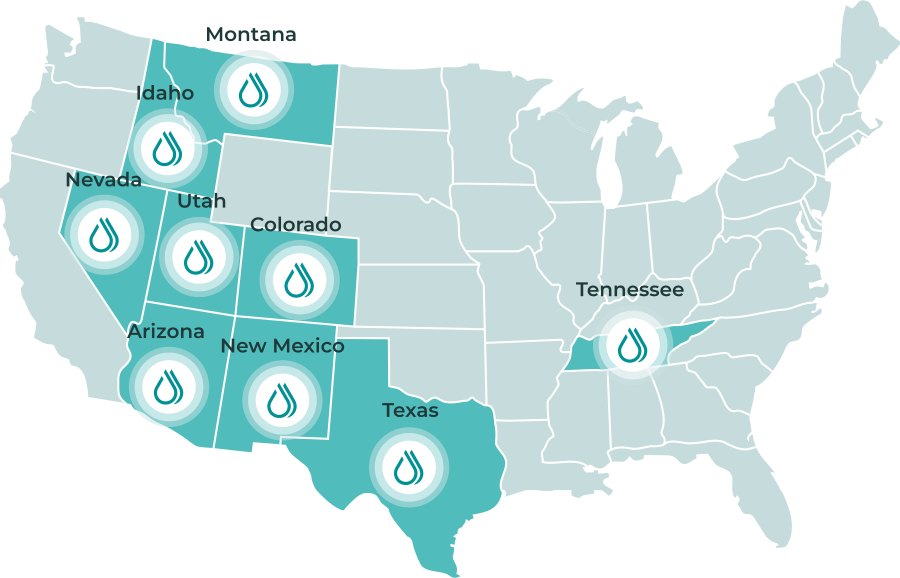
At Pure IV, we believe you shouldn't have to live your life in a state of exhaustion. Whether your fatigue is caused by the dry heat of Tucson, the high altitude of Salt Lake City, or the high-stress pace of a Nashville boardroom, we are here to help.
Our mobile healthcare service brings licensed nurses and paramedics directly to your home, office, or hotel. With real-time Nurse Practitioner approval for every treatment, you get personalized, professional care designed to help you thrive, not just survive.
Ready to stop feeling drained? Schedule your Fatigue IV Treatment today and let us help you get your energy back to zero—and then way beyond.