What to Expect During Your IV Treatment
★★★★★ Trusted by 50,000 satisfied patients
Table of Contents
- What to Expect During Your IV Treatment
- Before Your Appointment: How to Prepare
- When Your Provider Arrives
- The IV Placement: What It Actually Feels Like
- During the Infusion: The Easy Part
- After the IV: Removal and Aftercare
- How You Will Feel After Your IV Treatment
- Honest Answers to First-Timer Fears
- Frequently Asked Questions
- You Are Ready. The Only Thing Left Is to Book.

If this is your first IV therapy appointment, you might be wondering what the experience actually feels like. Maybe you are a little nervous about the needle. Maybe you are wondering if it will hurt, how long it takes, or what you should do while the IV is dripping.
Those are all completely normal questions. And the honest answer is that most people are surprised by how easy and comfortable the whole thing is.
A typical Pure IV treatment takes about 45 minutes to an hour. A licensed nurse or paramedic comes to your home, office, or wherever you are, places a small IV in your arm, and monitors you while the fluids drip into your bloodstream. You sit on your couch, scroll your phone, watch TV, or just relax. That is the whole experience.
This guide walks you through every step of your appointment, from what happens before the nurse arrives to how you will feel after the IV is done. By the time you finish reading, you will know exactly what to expect and have zero surprises on treatment day.
Before Your Appointment: How to Prepare
There is not a lot you need to do before your IV appointment. But a few small steps can make the experience smoother and help you feel your best during and after the treatment.
Eat Something Light
Do not come to your IV appointment on an empty stomach. Eat a light meal or snack about an hour before your scheduled time. A piece of toast, a banana, some crackers, or a light sandwich all work great. Having food in your stomach keeps your blood sugar stable, which reduces the small chance of feeling lightheaded during the infusion.
Drink Water
It might sound funny to drink water before getting an IV hydration treatment, but being well-hydrated actually makes the whole process easier. When you are hydrated, your veins are fuller and easier for your provider to access. Drink a glass or two of water in the hour leading up to your appointment. It makes a real difference.
Wear Comfortable Clothes
Your provider will need access to your arm, usually the inner elbow area or the back of your hand. Wear short sleeves or a loose top that you can easily push above your elbow. Comfortable clothes also help you relax during the treatment. Think couch clothes, not business clothes.
Set Up a Comfortable Spot
Since your provider comes to you, pick a place where you will be comfortable sitting for about 45 minutes. Your couch, a recliner, your bed propped up with pillows, or even a chair at your desk all work. Make sure there is decent lighting nearby so your provider can see clearly when placing the IV.
Fill Out Your Health Intake
After you book, you will receive a short health intake form. Fill this out before your appointment so your provider can review it in advance. This covers your medical history, current medications, allergies, and how you are feeling. It takes about two minutes and allows the Nurse Practitioner to review and approve your treatment before the nurse even arrives.
When Your Provider Arrives
At your scheduled appointment time, your Pure IV provider arrives at your location. Here is exactly what happens from the moment they walk in.
Introductions and Verification
Your provider will introduce themselves, show you their ID, and confirm your name and the treatment you booked. They will ask if anything has changed since you submitted your health intake. New symptoms, new medications, or anything that came up since you booked. This takes about two minutes and is a standard safety step.
Setting Up
Your provider brings everything they need in a medical bag. They will set up their supplies on a clean surface near where you are sitting. You will see them lay out sealed IV supplies, pull on fresh gloves, and organize their equipment. Everything is single-use, sterile, and opened from sealed packaging right in front of you.
There is no big setup. No bulky equipment. No machines. Just a bag of IV fluid, a tubing set, a catheter kit, antiseptic wipes, gloves, and a few other small items. It all fits in a bag the size of a small backpack.
Vital Signs Check
Before starting your IV, your provider will take your blood pressure, heart rate, and oxygen level. These baseline numbers help them confirm you are in good shape to receive the treatment. It also gives them reference points to check during the infusion if needed.
This quick check only takes a minute and uses the same equipment your doctor uses at a regular checkup.
The IV Placement: What It Actually Feels Like
This is the part most first-timers are nervous about, and it is completely understandable. Nobody loves needles. But here is what actually happens, described honestly.
Finding the Vein
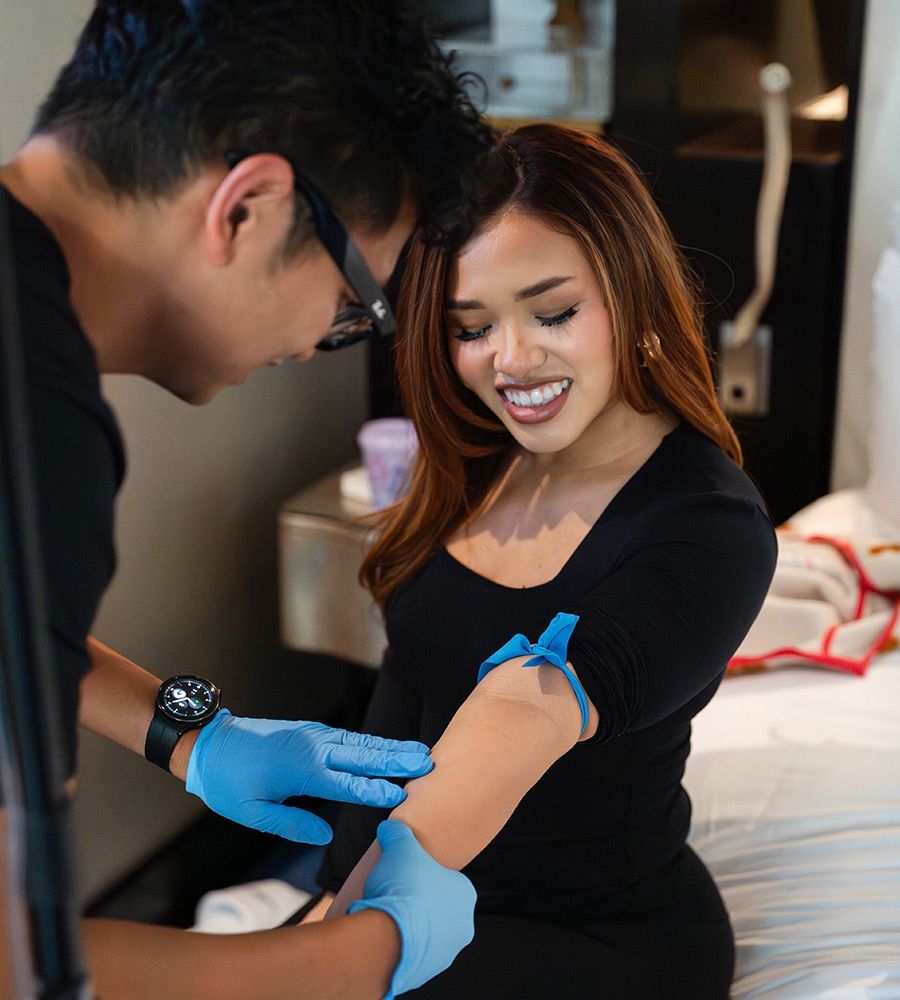
Your provider will look at your arm, usually the inner elbow area, and feel for a good vein. They may tie a soft rubber tourniquet around your upper arm to make the veins stand out. They are looking for a vein that is straight, visible, and easy to access. This usually takes 15 to 30 seconds.
If you know you have difficult veins, or if previous blood draws have been tricky for you, tell your provider upfront. They are experienced with all types of veins and may choose a different site, like your forearm or the back of your hand. Communication helps them help you.
The Needle Stick
Your provider will clean the area with an antiseptic wipe and then insert a small needle attached to a catheter. Most people describe this as a quick pinch or a tiny sharp sensation that lasts about one second. Some people say it feels like a rubber band snap. Some barely feel it at all.
The needle does not stay in your arm. Once the catheter, which is a soft, flexible plastic tube, is threaded into the vein, the needle is removed and discarded. Only the soft catheter stays in place. This is the same technique used in hospitals and during blood draws.
After the catheter is secured with a small piece of medical tape, the IV tubing is connected and the drip begins. From the moment the tourniquet goes on to the moment the IV is flowing, the entire process takes about 60 to 90 seconds.
Does It Hurt?
The honest answer: the needle insertion may cause a brief, mild discomfort for about one second. After that, most people feel nothing at all. Once the soft catheter is in place, there is no sharp sensation. You may feel a slight cool or cold feeling running up your arm as the room-temperature fluids enter your vein. This is completely normal and actually feels pleasant to most people.
If you feel any stinging, burning, pain, or discomfort after the initial placement, tell your provider immediately. This could indicate the catheter needs to be repositioned. A properly placed IV should not hurt during the infusion.
On a scale of 1 to 10, most first-time patients rate the discomfort as a 1 or 2 out of 10, and many say it was easier than getting blood drawn.
During the Infusion: The Easy Part
Once the IV is placed and flowing, the hard part is over. Now you just sit back and let the treatment work.
How Long Does the Drip Take?
A standard IV infusion takes 30 to 45 minutes depending on the treatment package and the drip rate your provider sets. Some specialty treatments like NAD+ take longer, typically 60 to 90 minutes, because they need to be infused more slowly. Your provider will tell you the expected time for your specific treatment.
What Can You Do While the IV Is Dripping?
Anything you would normally do sitting on your couch. Seriously. The IV is in one arm and secured with tape, so your other hand and arm are completely free. Most Pure IV patients use the time to scroll their phone, watch TV or a show, read a book, answer emails, take a phone call, listen to a podcast, chat with their provider, or just close their eyes and rest.
Some people use their IV time as a forced break in their busy day. More than a few patients have told us it is the most relaxed 45 minutes of their week.
The only thing you should avoid is moving the arm with the IV aggressively or bending it sharply at the elbow, which could shift the catheter. Normal, gentle movement is fine.
What Does the Drip Feel Like?
Most people feel very little during the infusion itself. Here is what you might notice:
- Cool sensation: Because the IV fluid is at room temperature and your body is warmer, you may feel a cool stream running up your arm or through your body. This is the most commonly reported sensation and most people find it refreshing, especially in hot climates like Arizona, Nevada, and Texas.
- Metallic taste: Some people notice a brief metallic or vitamin-like taste in their mouth when certain nutrients, particularly magnesium or glutathione, enter the bloodstream. This lasts a few seconds and is completely harmless.
- Warmth or flushing: Magnesium can sometimes cause a temporary warm or flushed feeling, like a mild hot flash. It passes within a minute or two. Your provider can slow the drip if this happens.
- Mild pressure at the IV site: You may feel slight pressure where the catheter is. This is normal. If it becomes uncomfortable or you notice swelling, tell your provider immediately.
- Relaxation: Many people feel a wave of relaxation or calm during the infusion, especially with treatments containing magnesium. Some patients feel drowsy. Others feel more alert. Everyone responds a little differently.
Your Provider Stays with You the Entire Time
This is important. Your Pure IV nurse or paramedic does not start your IV and leave the room. They stay with you from start to finish. They monitor the drip rate, watch for any reactions, answer your questions, and make sure you are comfortable throughout the entire infusion.
If you feel anything unusual at any point, nausea, lightheadedness, discomfort, or anything else, just tell your provider. They can slow the drip, pause the treatment, add anti-nausea medication, or stop the IV entirely if needed. You are never alone with an unattended drip.
After the IV: Removal and Aftercare
When the IV bag is empty, your provider will disconnect the tubing, gently remove the catheter from your arm, and place a small adhesive bandage over the insertion site. The entire removal takes about 30 seconds and is painless.
Immediate Aftercare
- Keep the bandage on for one to two hours. This helps the tiny puncture site close and prevents minor bleeding or bruising.
- Continue drinking water. Even though you just received IV fluids, drinking water throughout the rest of the day helps your body continue processing and distributing the nutrients.
- Eat normally. There are no dietary restrictions after an IV. Eat when you are hungry.
- Avoid heavy lifting with that arm for a few hours. This reduces the chance of bruising or irritation at the IV site.
- Resume normal activities immediately. There is no recovery time and no downtime. You can drive, work, exercise, or do anything else right after your IV. Most people feel better, not tired.
What About Bruising?
A small bruise at the IV site is the most common side effect and is completely normal. It is the same type of bruise you might get after a blood draw. It usually appears within a few hours, turns a light yellow or purple, and fades within three to five days. Not everyone bruises. Some people have zero marks at all.
If you bruise easily, let your provider know before the IV so they can apply extra pressure after removal and choose the best insertion site.
How You Will Feel After Your IV Treatment
This is the part everyone wants to know. Here is what most Pure IV patients report after their treatment.
Within 30 Minutes
Many people start feeling the effects before the IV is even finished. Increased energy, reduced nausea, improved mental clarity, and a general sense of feeling better are the most commonly reported benefits within the first 30 minutes. If you came in dehydrated, you may feel a noticeable difference almost immediately.
Within 1 to 4 Hours
This is when most people feel the full impact. Your body has had time to absorb and distribute the nutrients. Energy levels rise, headaches fade, brain fog clears, and you may notice your mood improves. If you received an IV for hangover recovery or illness, this is typically when you feel dramatically better.
Over the Next Few Days
The benefits of a single IV treatment typically last several days to two weeks depending on the treatment and your individual health. You may notice sustained energy, better sleep, improved skin, and fewer cold or flu symptoms. The effects are not permanent, which is why many people build regular IVs into their monthly wellness routine.
What If You Do Not Feel a Dramatic Difference?
Not everyone has a dramatic before-and-after moment. If you are already well-hydrated and well-nourished, the effects may be more subtle. That does not mean the IV did not work. It means your body was already in relatively good shape and the IV provided incremental support rather than emergency rescue.
People who are dehydrated, hungover, sick, nutrient-depleted, or run down tend to feel the most dramatic difference. People who are already feeling good may notice a more gradual boost.
If you try an IV and do not feel it made a difference, talk to your provider. They may recommend a different treatment package, a different frequency, or they may suggest lab work to see if there is a specific deficiency worth targeting.
Honest Answers to First-Timer Fears
We hear these concerns from first-time patients every day. Here are straight answers.
"I am really scared of needles."
You are not alone. A lot of our patients tell us this before their first appointment. The good news is that the needle is only involved for about one second. Once the soft catheter is in place, the needle is gone. Your provider is experienced with nervous patients and will walk you through every step. If you need to look away, close your eyes, or take a deep breath, that is completely fine. Many needle-shy patients tell us afterward that it was much easier than they expected.
"What if I feel sick during the IV?"
It is uncommon, but some people feel mild nausea if certain vitamins are infused too quickly. If this happens, your provider will immediately slow the drip rate or pause the treatment. Many IV packages include anti-nausea medication that can be added on the spot. Your provider is monitoring you the entire time specifically to catch and address things like this.
"What if the nurse cannot find a vein?"
Our providers are experienced RNs and paramedics who place IVs regularly, including on patients with difficult veins. If the first site does not work, they will calmly try a different location. Drinking water before your appointment makes veins easier to access. If you know you have hard-to-find veins, let your provider know so they can use the best approach from the start.
"What if my provider is late or does not show up?"
Pure IV confirms your appointment and sends you updates so you know when your provider is on the way. If there is a delay, we will contact you. We respect your time and take punctuality seriously.
"Is it going to be awkward having a stranger in my house?"
We understand this is a unique experience. Our providers are professionals who do this every day. They are friendly, respectful of your space, and focused on making you comfortable. They set up quickly, take care of you during the treatment, clean up completely, and leave. Most patients are surprised by how easy and normal it feels.
"What if it does not work?"
Results vary depending on your health, hydration level, and the treatment you choose. Most people feel a noticeable benefit. If you do not, talk to your provider about trying a different treatment package or frequency. Pure IV will never pressure you to keep booking if you do not feel the treatments are helping.
Frequently Asked Questions
How long does an IV treatment take?
A standard IV treatment takes 30 to 45 minutes for the infusion itself. Including arrival, setup, vitals, and cleanup, expect the total appointment to be about 45 minutes to one hour. Specialty treatments like NAD+ can take 60 to 90 minutes.
Can I go to work after my IV?
Yes. There is no downtime after an IV treatment. You can return to work, drive, exercise, or do anything else immediately. Most people feel more energized after their IV, not less.
What should I wear to my IV appointment?
Wear something comfortable with short sleeves or sleeves you can push above your elbow. The IV is usually placed in your inner arm area. Comfortable, casual clothing works best since you will be sitting for about 45 minutes.
Can I eat or drink during the IV?
Yes. You can eat snacks and drink water during your infusion. In fact, staying hydrated during and after the IV is encouraged. Some people bring a water bottle or a coffee.
Will I need to use the bathroom during the treatment?
Some people need a bathroom break during their IV, which is completely normal since fluids are entering your body. Your provider can temporarily disconnect the IV tubing so you can get up and use the restroom without any issues.
Is the IV loud or noisy?
Not at all. Mobile IV therapy uses a gravity drip system, not a pump. There is no beeping, no motor sound, and no noise. The only sound is whatever you choose to have on, your TV, music, or comfortable silence.
What if I want to stop the IV mid-treatment?
You can stop at any time for any reason. Your provider will remove the IV safely and cleanly. You are always in control of your own treatment. If you are not feeling well, uncomfortable, or simply change your mind, just say so.
How soon can I schedule my first appointment?
Pure IV offers same-day appointments in most markets. You can book online at pureiv.com and have a provider at your door within a few hours in many cases.
Do I need to do anything special after my first IV?
Nothing special. Drink water throughout the day, keep the bandage on for an hour or two, and go about your normal routine. You may want to take note of how you feel over the next 24 to 48 hours so you can share that with your provider for future treatments.
You Are Ready. The Only Thing Left Is to Book.
Now you know exactly what to expect before, during, and after your IV treatment. You know what to eat, what to wear, what the needle feels like, what you can do while the IV drips, and how you will feel afterward.
There are no surprises left. Just a comfortable 45-minute treatment that most people wish they had tried sooner.
Pick your treatment. Pick your time. And let Pure IV come to you.