Altitude Sickness IV | Adjust Faster. Enjoy More.
Medically reviewed by Allison Lane, MD, Medical Director & Co-Owner
You came to Denver for a conference. Salt Lake City to ski. Colorado Springs to hike. Bozeman for a wedding. And now you have a splitting headache, you’re nauseous, you’re exhausted, and the elevation you didn’t think about is wrecking your trip. Altitude sickness happens because your body isn’t getting enough oxygen and is losing water faster than it can replace it. The Altitude Sickness IV addresses both problems in 30–60 minutes — so you can stop lying in your hotel room and start doing what you came here to do.
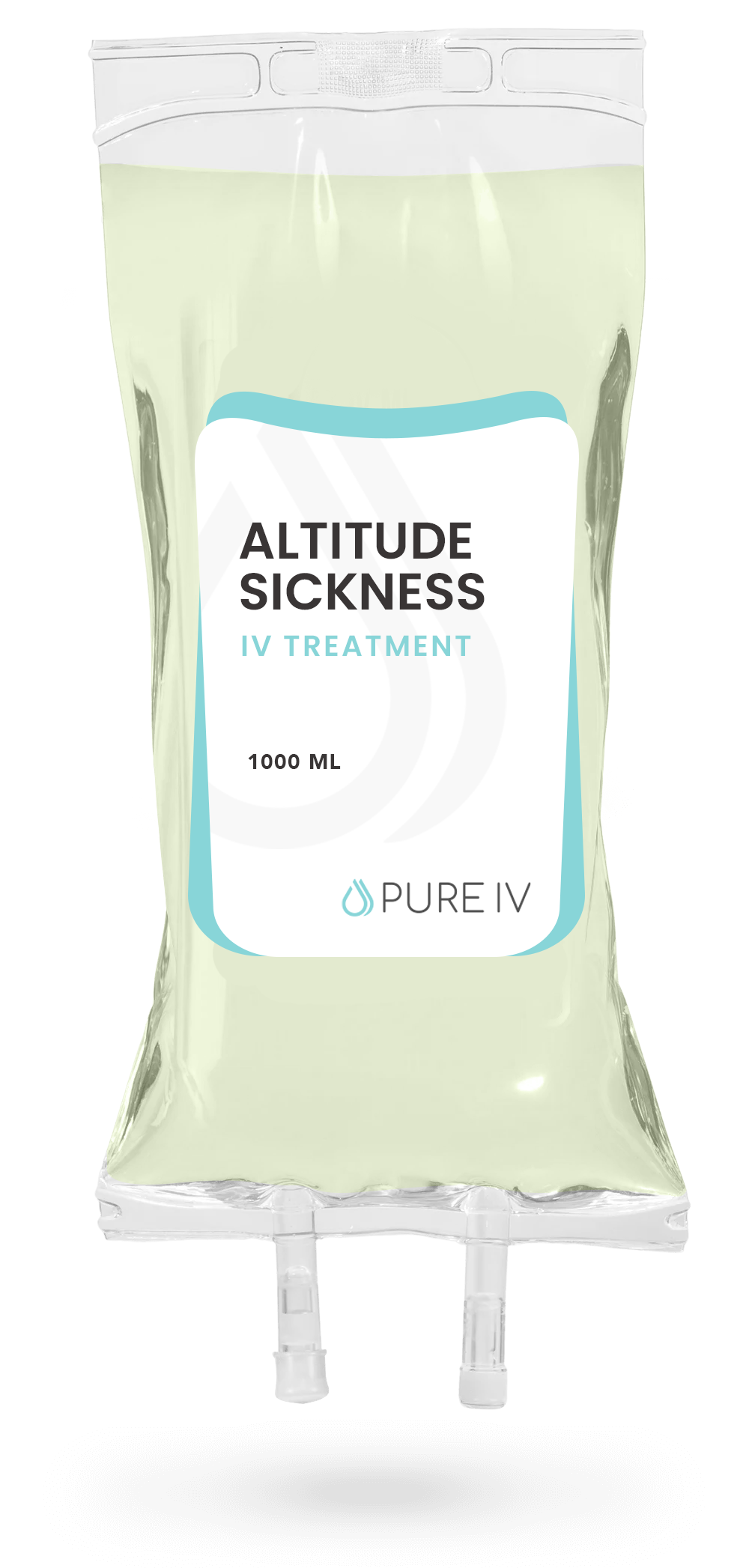
What’s in the bag:
•
B Vitamins (B-complex + B12) •
Vitamin C •
Magnesium •
Glutathione •
Zinc • Nausea Medication • Pain Medication • Steroid • IV Fluids
Treatment time: 30–60 minutes
HSA & FSA accepted. Cash and all major credit cards.
Price: $295
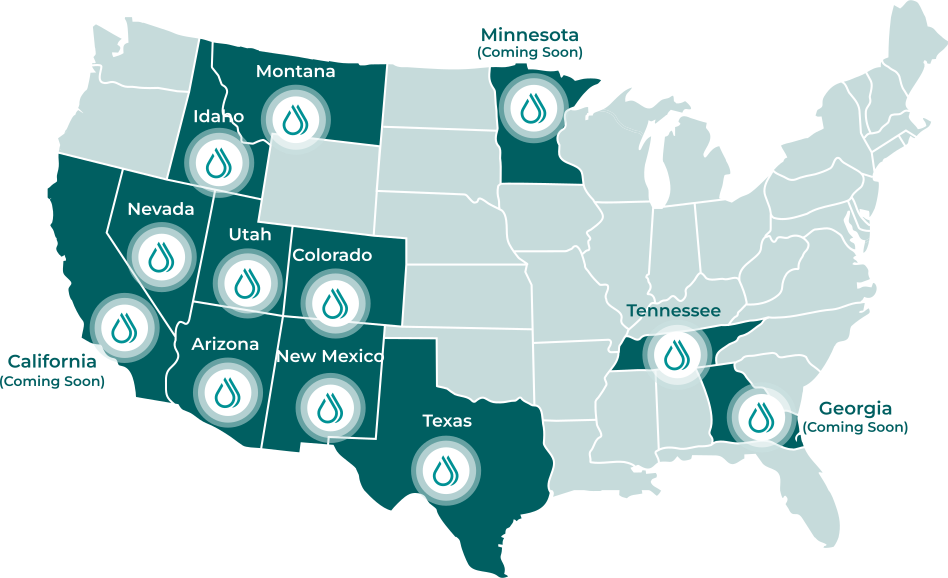
Popular in Denver, SLC, Colorado Springs, Boise & Bozeman
*Only available in select cities
★★★★★ Trusted by 50,000 satisfied patients

What Altitude Does to Your Body
- Less oxygen per breath. At 5,280 feet (Denver), the air has about 17% less oxygen than at sea level. At ski resort altitudes (9,000–12,000 feet), it’s 25–40% less. Your body compensates by breathing faster and increasing heart rate, but it takes 1–3 days to adjust. During that adjustment period, you feel it — headache, fatigue, dizziness, nausea.
- You dehydrate 2x faster. The air at altitude is drier, and your increased breathing rate causes you to exhale more moisture. Studies show insensible water loss (water lost through breathing and skin) doubles at altitudes above 5,000 feet. Add alcohol, exercise, or a day of skiing, and dehydration becomes severe quickly.
- Magnesium loss accelerates. Altitude-induced diuresis (increased urination) depletes magnesium. Low magnesium causes muscle cramps, headaches, and poor sleep quality — all of which compound the altitude symptoms you’re already experiencing.
- Your immune system is stressed. Altitude, travel fatigue, and dehydration combine to suppress immune function. Vitamin C provides antioxidant support during the adjustment period.
Prevention or Treatment?
Prevention (day of arrival):
Book your IV within a few hours of arriving at altitude. Pre-loading hydration and nutrients gives your body a head start on adjustment. Most effective for visitors who know they’re altitude-sensitive or who plan to be active (skiing, hiking, altitude training) the next day.
Treatment (symptoms already present):
If you already have headache, nausea, and fatigue, the IV provides rapid relief. Fluids address dehydration, magnesium targets the headache, and anti-nausea medication (if needed) stops the nausea. Most patients feel significant improvement within 1–2 hours of treatment.
Markets Where Altitude Matters
| City | Elevation | Common Visitor Scenarios |
|---|---|---|
| Denver, CO | 5,280 ft | Conferences, concerts, sports events, day trips to mountains |
| Colorado Springs, CO | 6,035 ft | Hiking, Pikes Peak, military families visiting |
| Salt Lake City, UT | 4,226 ft | Skiing (resorts at 8,000–11,000 ft), hiking, national parks |
| Boise, ID | 2,730 ft | Sun Valley skiing (9,150 ft), outdoor recreation |
| Bozeman, MT | 4,820 ft | Yellowstone, Big Sky skiing (11,166 ft summit), hiking |
Pure IV
Why Pure IV?
Physician-owned.
Real medical practice with physician equity.
Real-time NP oversight. Every treatment reviewed and approved.
Licensed RNs and paramedics. No shortcuts.
We know altitude. Our teams in Denver, Colorado Springs, SLC, Boise, and Bozeman treat altitude sickness regularly. They understand the conditions.
Hotel delivery. We come to your room. No Uber to a clinic while you’re dizzy.
How It Works
Step 1
Book online or call/text (833) 688-1299
Same-day. We deliver to hotels, Airbnbs, and rental properties.
Step 2
NP reviews your symptoms
Anti-nausea medication approved if needed.
Step 3
Nurse arrives. 30–45 minutes
Recover in your room. Hit the slopes tomorrow.
FAQ's
Frequently Asked Questions
How quickly will I feel better?
Most patients report significant headache and nausea improvement within 1–2 hours. Full hydration restoration happens during the 30–45 minute treatment. The fatigue component takes longer — typically 4–8 hours as your body continues adjusting. The IV accelerates the adjustment but doesn’t eliminate it entirely.
Should I get the IV before or after I arrive?
Post-arrival is most popular and effective. Within a few hours of landing or checking in is ideal. If you’re very altitude-sensitive, a pre-departure hydration IV at a lower-altitude Pure IV market can also help.
I’m here to ski. Should I get the IV before or after skiing?
Ideally both: the Altitude Sickness IV on arrival day to adjust, and a Hydration or Athletic Performance IV after your first big day on the mountain. At minimum, get the altitude IV on arrival — skiing at 9,000–12,000 feet when you’re already altitude-sick is miserable and potentially dangerous.
Do you accept insurance?
IV therapy is not covered by insurance. We accept HSA/FSA cards, cash, and all major credit cards.
Don’t Let the Altitude Win.
Book your Altitude Sickness IV now. Available in Denver, Colorado Springs, Salt Lake City, Boise, and Bozeman.