Zinc IV Therapy | The Immune Mineral Your Body Can’t Stockpile
You probably already know zinc is “good for your immune system.” You might even grab zinc lozenges when you feel a cold coming on. But do you know why zinc works? Or why your body runs out of it so quickly? Or why those lozenges make you nauseous?
Zinc is unlike most other minerals. Your body has no dedicated zinc storage system. Iron gets stored in ferritin. Calcium gets stored in bones. Zinc doesn’t have a reservoir. What you absorb today gets distributed to the 300+ enzymes that need it, and whatever isn’t immediately used gets excreted. You need a fresh supply constantly.
That’s a design problem when you get sick, because your immune system suddenly needs a LOT more zinc than normal — and there’s no reserve to draw from.
★★★★★ Trusted by 50,000 satisfied patients
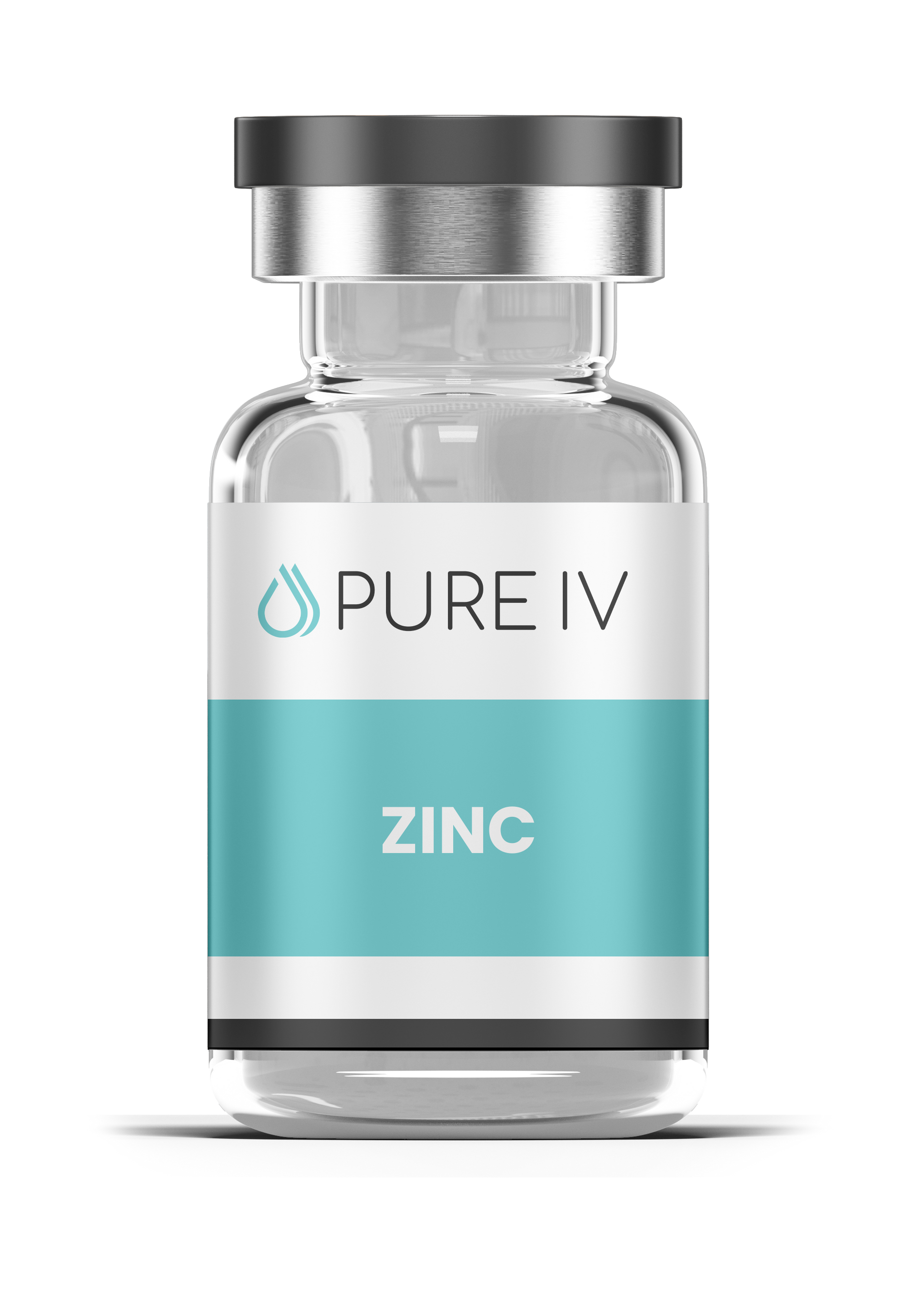
How Zinc Actually Fights Viruses
Zinc doesn’t kill viruses directly. Instead, it blocks viruses from doing what viruses do — making copies of themselves inside your cells.
Here’s the simplified version of what happens when a virus infects you:
- The virus enters a cell. It hijacks your cell’s machinery to copy its own genetic material. An enzyme called RNA-dependent RNA polymerase (RdRp) is responsible for making these copies in many common viruses, including rhinoviruses (common cold) and coronaviruses.
- Zinc inhibits RdRp. Zinc ions (Zn²⁺) interfere with this copying enzyme. With enough zinc present inside the cell, the virus replicates slower — giving your immune system more time to identify and destroy infected cells before the virus spreads to neighboring cells.
- Zinc enhances immune cell function. Simultaneously, zinc supports the development and activation of T lymphocytes, natural killer cells, and macrophages. These are the immune cells that actually eliminate virus-infected cells from your body.
So zinc works on two fronts: slowing the virus AND strengthening the army that’s fighting it. That’s why timing matters so much — zinc is most effective in the early stages of infection, when slowing viral replication gives your immune system a meaningful head start.
Zinc’s Other Critical Jobs
Immune defense gets the headlines, but zinc is a cofactor for over 300 enzymatic reactions:
- Wound healing. Zinc is required for cell division, collagen synthesis, and inflammatory response modulation — all phases of wound repair. Zinc-deficient patients heal significantly slower after surgery, cuts, or burns. This is well-documented enough that zinc supplementation is standard practice in many hospital burn units.
- Protein synthesis. Every time your body builds a new protein — whether it’s an enzyme, a structural protein, a hormone, or an antibody — zinc is involved. Zinc finger proteins (named for their zinc-dependent structure) regulate gene expression throughout your body.
- Taste and smell. Zinc is essential for the function of gustin, a protein involved in taste perception, and for maintaining the olfactory epithelium (the tissue responsible for smell). Loss of taste and smell is one of the earliest signs of zinc deficiency.
- Testosterone and reproductive health. Zinc is involved in testosterone production and sperm development. Low zinc is associated with reduced testosterone levels in men and impaired fertility in both sexes.
- Skin integrity. Zinc modulates keratinocyte differentiation (skin cell development) and sebaceous gland function. Zinc deficiency is associated with acne, dermatitis, and impaired skin barrier function.
The Oral Zinc Problem
If you’ve ever taken a zinc supplement on an empty stomach, you know the problem: nausea, stomach cramps, sometimes vomiting. Zinc is one of the most GI-irritating minerals in oral supplement form.
This creates a catch-22 when you’re sick:
When you need zinc most (during illness), you’re least able to tolerate it. You’re already nauseous. Your appetite is gone. Taking a zinc tablet makes the nausea worse. And zinc absorption from oral supplements is already impaired by phytates in food, other competing minerals (calcium, iron), and medications.
Oral zinc sulfate absorption rates hover around 20–40% under ideal conditions. During illness, with reduced appetite and GI inflammation, absorption drops further.
IV zinc bypasses every one of these problems. No GI irritation. No absorption competition. No nausea. The full dose reaches your bloodstream immediately — right when your immune system needs it.

Who’s Most Likely to Be Low on Zinc
- Vegetarians and vegans. Zinc from plant sources is less bioavailable than zinc from meat because phytates in grains, legumes, and nuts inhibit zinc absorption. Vegetarians may need up to 50% more zinc than meat-eaters.
- Older adults. Zinc absorption declines with age, and dietary intake often decreases simultaneously. Up to 45% of adults over 60 may have inadequate zinc intake.
- Athletes. Zinc is lost through sweat. Endurance athletes and those training in hot environments are at particular risk.
- People with GI conditions. Crohn’s, celiac, and chronic diarrhea all impair zinc absorption.
- Heavy alcohol users. Alcohol reduces zinc absorption and increases urinary excretion.
- Pregnant and breastfeeding women.
Zinc requirements increase during pregnancy and lactation.
Zinc and Vitamin C — The Power Pair
There’s a reason zinc and vitamin C show up together in nearly every immune-focused IV package. They attack infections through complementary mechanisms:
| Zinc | Vitamin C | |
|---|---|---|
| Primary immune role | Inhibits viral replication inside cells | Fuels oxidative burst that kills infected cells |
| Immune cell support | T cell development and activation | Neutrophil function and lymphocyte proliferation |
| Barrier protection | Maintains skin and mucosal integrity | Collagen production in epithelial barriers |
| Antioxidant function | Structural component of superoxide dismutase (SOD) | Direct free radical scavenging + glutathione recycling |
Think of it this way: zinc slows the enemy advance while vitamin C powers your counterattack. Neither one alone is as effective as both together.
Which Pure IV Packages Include This Ingredient
| Package | Price | Best For |
|---|---|---|
| Immune Boost | $250 | Zinc + vitamin C for immune defense |
| Cold & Flu | $250 | Zinc for active illness symptom reduction |
| Myers Cocktail | $250 | Zinc as part of the complete Myers formula |
| Recovery | $275 | Zinc for tissue repair and immune rebuilding |
| Anti-Inflammatory | $350 | Zinc for cytokine modulation |
| Super Immune | $335 | Higher-dose zinc for aggressive immune support |
| Mega Myers | $325 | Enhanced formula with zinc |
| Megalodon | $405 | Comprehensive immune formula |
| Platinum | $405 | Premium formula with zinc |
| Jackpot | $405 | All-inclusive with zinc |
| High Rollers | $600 | Maximum everything |
FAQ's
Frequently Asked Questions
Should I take zinc when I feel a cold coming on?
Research supports early zinc supplementation (within 24 hours of symptom onset) for reducing cold duration. IV zinc is the fastest delivery method — no GI side effects, no absorption delays, no waiting for lozenges to dissolve. If you feel something coming on, booking an immune-focused IV with zinc gives your body the zinc it needs immediately.
Can you take too much zinc?
Yes. Chronic high-dose oral zinc (above 40 mg/day for extended periods) can cause copper deficiency because zinc and copper compete for absorption. IV zinc at therapeutic doses in an occasional infusion does not carry this risk. Our NP ensures appropriate dosing.
Does zinc really help with colds?
Multiple meta-analyses show that zinc supplementation started within 24 hours of cold symptom onset can reduce the duration of illness by approximately 1–2 days and reduce symptom severity. The effect is most pronounced when zinc reaches therapeutic blood levels quickly — which is where IV delivery has an advantage over oral.