Normal Saline IV
“Can’t I just drink more water?”
It’s the most common question people ask about IV therapy. And it’s a fair question. Water is water, right? If you’re dehydrated, drink a glass of water and you’re fine.
Except that’s not how your body actually works. And the difference between drinking water and receiving IV saline isn’t marketing — it’s physiology.
★★★★★ Trusted by 50,000 satisfied patients
What Normal Saline Actually Is
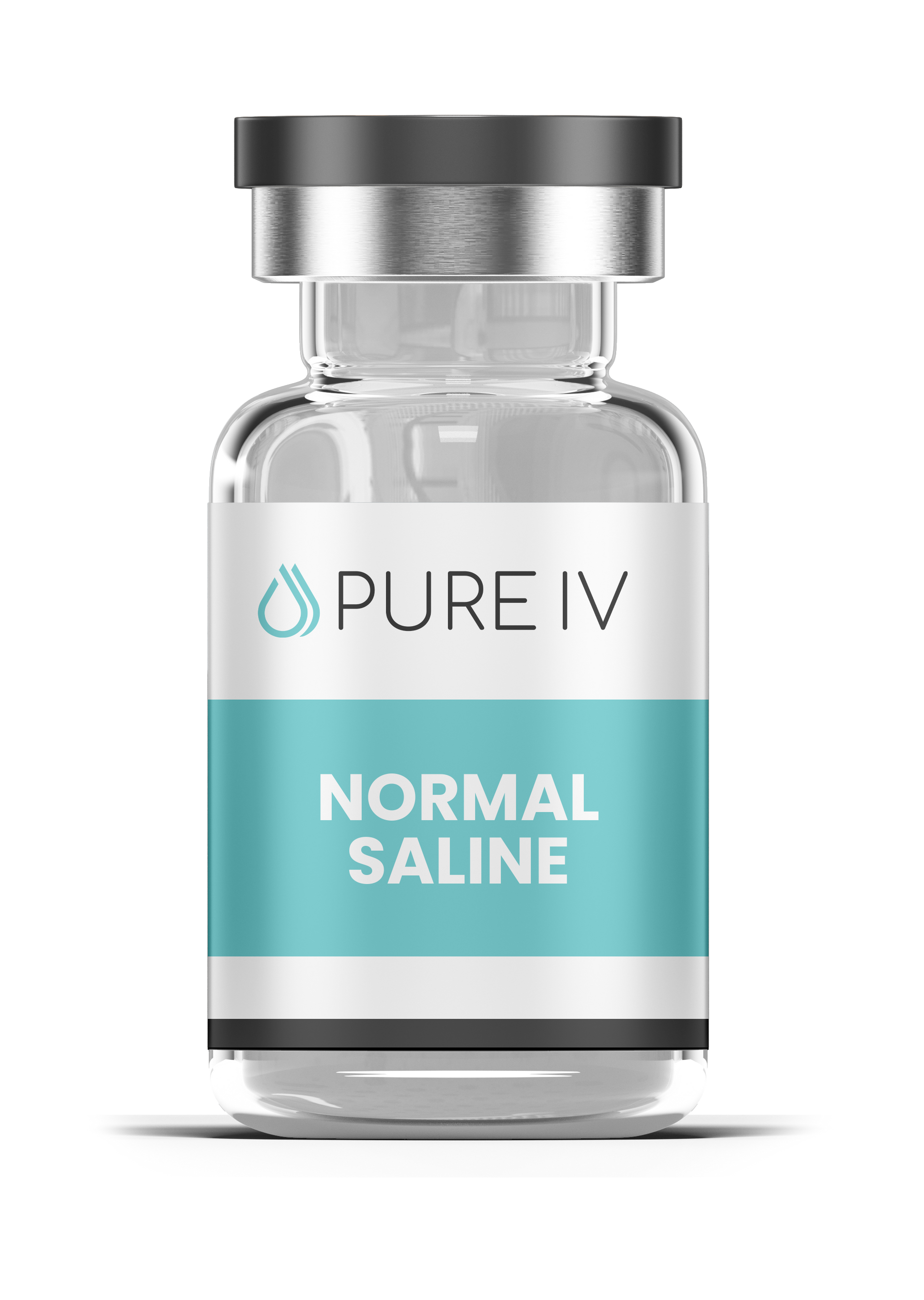
Normal saline is a sterile solution of 0.9% sodium chloride (salt) in water. That 0.9% concentration isn’t arbitrary — it matches the osmolarity of your blood plasma. That means normal saline has the same salt concentration as the fluid already in your blood vessels.
This matters because of osmosis. When you introduce a fluid into your bloodstream, its salt concentration determines where the water goes:
| Fluid Type | What Happens | Result |
|---|---|---|
| Too dilute (plain water) | Water moves OUT of blood vessels into surrounding tissue through osmosis | Cells swell. Blood volume doesn’t increase effectively. Electrolytes dilute. |
| Too concentrated (hypertonic) | Water moves INTO blood vessels from surrounding tissue | Useful in specific medical emergencies but not standard hydration. |
| Isotonic (normal saline, 0.9%) | Water stays in the vascular space | Blood volume increases. Plasma expands. Organs get better perfusion. |
This is why you can’t just inject water into a vein. Pure water in your bloodstream would cause your red blood cells to swell and burst (hemolysis) because the water would rush into the cells through osmosis. Normal saline prevents this by matching your blood’s natural salt concentration.
Drinking Water vs. IV Saline — The Full Comparison
When you drink a glass of water, here’s the journey it takes:
- Stomach: Water sits in your stomach for 5–20 minutes before passing to the small intestine. If you’re nauseous or vomiting, it may come right back up.
- Small intestine: Water absorbs through your intestinal lining into your bloodstream. This process takes 30–90 minutes for meaningful absorption.
- Distribution: Absorbed water distributes throughout your entire body — 60% goes to intracellular fluid, 25% goes to interstitial fluid (between cells), and only about 15% ends up in your blood plasma (the part that actually improves circulation and organ perfusion).
- Kidney filtration: Your kidneys begin filtering excess water within 15–30 minutes. If you drink a large amount quickly, most of it passes through your kidneys before your body can use it. That’s why chugging water makes you urinate frequently but doesn’t necessarily resolve dehydration symptoms quickly.
Compare that to IV saline:
- Direct to bloodstream. No stomach. No intestinal absorption. No 15% distribution limitation. 100% of the fluid enters your plasma immediately.
- Plasma expansion in minutes. Blood volume increases within the first 10–15 minutes of infusion. Blood pressure normalizes. Organ perfusion improves. Your kidneys, brain, and muscles get better blood flow almost immediately.
- Electrolyte delivery.
Normal saline contains sodium and chloride ions — the two most critical electrolytes for maintaining fluid balance. Plain water doesn’t contain electrolytes and can actually dilute your existing electrolytes if consumed in excess (hyponatremia).
When Your Body Can’t Wait for a Glass of Water
For mild dehydration on a normal day, drinking water works fine. IV hydration isn’t necessary for every headache or dry mouth. But there are specific situations where your body’s needs exceed what oral hydration can deliver:
You’re vomiting
The most obvious case. Everything you drink comes back up. Your stomach is the problem. IV saline bypasses it entirely.
Severe dehydration
When you’re significantly dehydrated (from prolonged illness, excessive heat exposure, athletic events, or chronic inadequate intake), your gut’s absorption capacity is compromised. A dehydrated intestinal lining absorbs water less efficiently. IV saline delivers the fluid your gut can’t currently handle.
Arizona heat
Phoenix hits 115°F. You lose 0.8–1.5 liters of sweat per hour in extreme heat. That’s not just water — it’s water AND electrolytes. Drinking plain water replaces the water but dilutes your remaining electrolytes. IV saline replaces both simultaneously.
Altitude
Denver, Colorado Springs, Salt Lake City — dry air at altitude increases insensible water loss (moisture you lose through breathing). You dehydrate faster than you realize because you don’t feel the sweat. Many altitude sickness symptoms are actually dehydration symptoms.
Hangover.
Alcohol is a diuretic. It suppresses ADH (antidiuretic hormone), causing your kidneys to excrete more water than you’re taking in. A night of heavy drinking can produce 1–2 liters of excess urine output. By morning, you’re significantly dehydrated and drinking water alone takes hours to catch up.
Post-athletic events
Marathons, triathlons, intense training sessions. You lose 1–2 liters per hour of intense exercise in heat. Sports drinks help but GI absorption has limits during and after extreme exertion.

Saline Is the Vehicle — Everything Else Rides Along
There’s a second, equally important role for normal saline in IV therapy: it’s the delivery vehicle for everything else. Vitamins, minerals, antioxidants, and medications are added to the saline bag and delivered in solution. The saline provides the fluid volume that carries these ingredients through your bloodstream and distributes them to your cells.
Without saline, there’s no IV therapy. It’s the foundation that makes everything else work.
Which Pure IV Packages Include This
| Package | Price | Notes |
|---|---|---|
| Every Pure IV package | $130–$600 | 1 liter of normal saline is included in every package |
| Hydration IV | $130 | Saline-only option for pure rehydration |
Every Pure IV package includes 1 liter of normal saline
— even the packages focused on vitamins or pain relief. The hydration is never an afterthought. It’s the foundation.
FAQ's
Frequently Asked Questions
Is IV saline really better than drinking water?
For mild, everyday dehydration, drinking water is fine. IV saline is better when you need rapid rehydration (vomiting, severe dehydration, heat illness), when your GI system can’t absorb adequately, or when you need electrolyte replacement alongside hydration. It’s not that water doesn’t work — it’s that IV saline works faster and more completely in specific situations.
Can you just use water in an IV?
No. Pure water injected into a vein would cause red blood cells to swell and burst through osmosis (hemolysis). The 0.9% sodium chloride in normal saline matches your blood’s osmolarity, preventing this dangerous reaction.
How much saline do I get in a Pure IV treatment?
Every Pure IV package includes 1 liter (1,000 mL) of normal saline. For context, that’s about 4.2 cups of fluid delivered directly into your bloodstream over 30–45 minutes.
How quickly will I feel the hydration?
Most patients notice improvement within 15–20 minutes of starting the infusion. By the time the full liter is delivered (30–45 minutes), significant dehydration symptoms like headache, dizziness, and fatigue typically resolve.