IV Therapy vs. Oral Supplements
★★★★★ Trusted by 50,000 satisfied patients
Table of Contents
- IV Therapy vs. Oral Supplements
- The Science: How Your Body Absorbs Nutrients
- Side-by-Side Comparison
- When IV Therapy Is the Clear Winner
- When Oral Supplements Are Perfectly Fine
- Vitamin-by-Vitamin: IV vs. Oral Breakdown
- The Smartest Approach: Combine Both
- Cost: Is IV Therapy Worth It?
- Common Myths About IV Therapy and Supplements
- Frequently Asked Questions
- Ready to Experience the Difference?
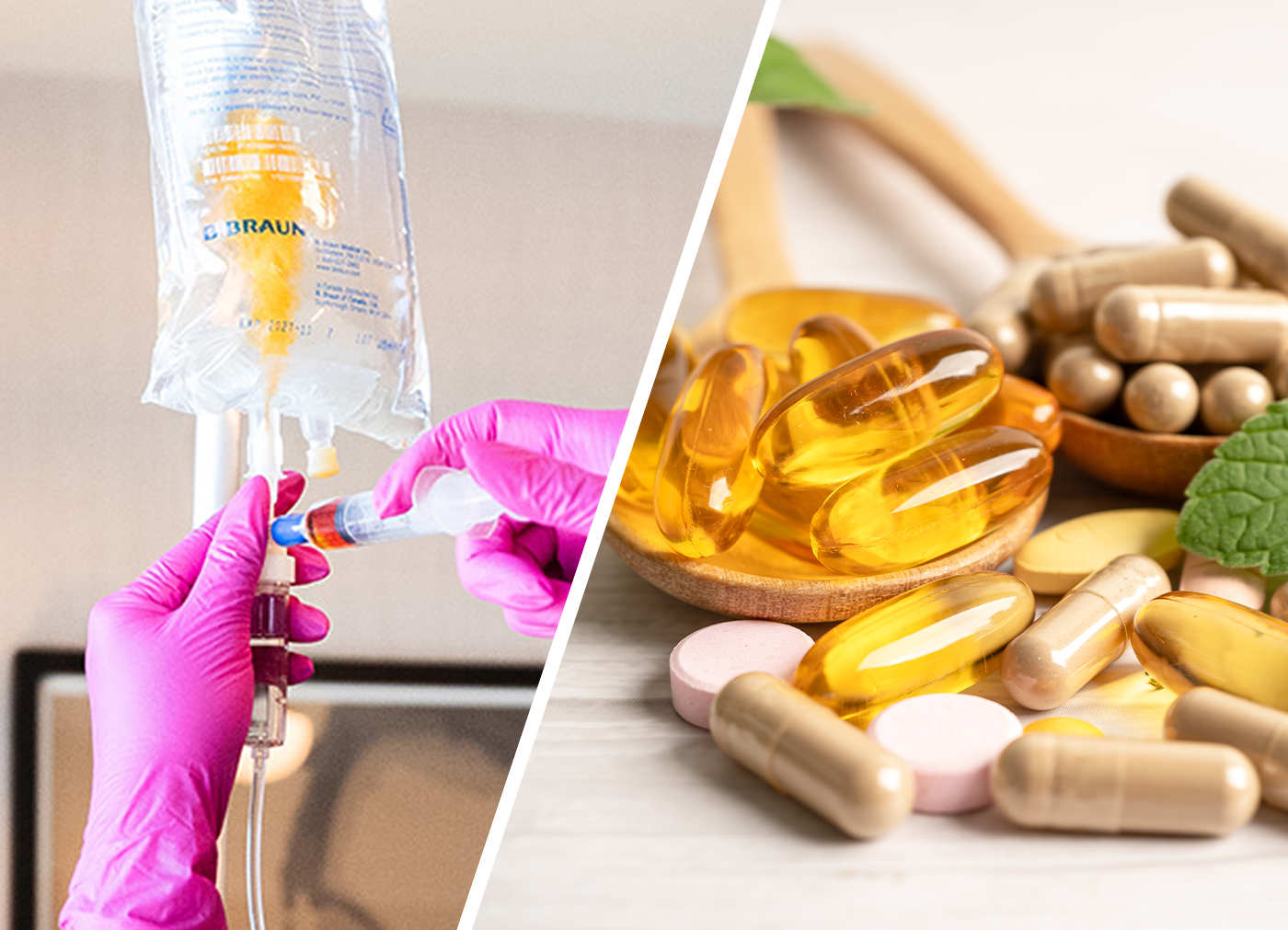
You have probably seen the claims. IV therapy delivers 100 percent absorption. Oral supplements only deliver 10 to 50 percent. IV therapy works instantly. Pills take days.
Those claims are not wrong. But they are not the full picture either.
The truth is that IV therapy and oral supplements are different tools designed for different situations. Neither one is universally better. The right choice depends on what you are trying to accomplish, how quickly you need results, your budget, and what is going on with your body right now.
This page gives you the honest comparison. We sell IV therapy, so we obviously believe in it. But we also believe you deserve the full picture so you can make a smart decision for yourself. We will tell you when IV therapy is the clear winner, when oral supplements are perfectly fine, and when combining both makes the most sense.
The Science: How Your Body Absorbs Nutrients
To understand why IV therapy and oral supplements produce different results, you need to understand one concept: bioavailability. Bioavailability is the percentage of a nutrient that actually makes it into your bloodstream where your body can use it.
How Oral Supplements Are Absorbed
When you swallow a vitamin pill, it goes on a long journey before your body gets any benefit. The pill travels to your stomach where acid and enzymes start breaking it down. The nutrients then move into your small intestine where they are absorbed through the intestinal wall into your bloodstream. From there, they pass through your liver in a process called first-pass metabolism, where more of the nutrients are filtered out before the rest finally circulates through your body.
At each stage of this journey, you lose nutrients. Stomach acid destroys some. Your intestinal lining only absorbs a fraction. Your liver filters out more. By the time the nutrients reach your cells, you are typically getting 10 to 50 percent of what was in the original pill. Some nutrients lose even more. Oral vitamin C, for example, maxes out at about 20 percent absorption at standard doses. The rest passes through your body unused.
Several factors make oral absorption even more unpredictable. Your gut health, age, the food in your stomach, other medications you take, and even your stress levels all affect how much you actually absorb. Two people can take the same vitamin and absorb very different amounts.
How IV Therapy Is Absorbed
IV therapy skips the entire digestive process. Nutrients are delivered directly into your bloodstream through a small catheter in your arm. There is no stomach acid to break them down, no intestinal wall to cross, and no first-pass metabolism through the liver.
The result is close to 100 percent bioavailability. Every milligram of every nutrient in the IV bag reaches your bloodstream and becomes immediately available to your cells. This is not a marketing claim. It is basic pharmacology. By definition, intravenous delivery achieves 100 percent bioavailability because the measurement standard for bioavailability is intravenous delivery itself.
This is why hospitals use IV delivery for critical medications and nutrients. When absorption matters and time matters, IV is the medical standard.
Side-by-Side Comparison
| Factor | IV Therapy | Oral Supplements |
|---|---|---|
| Absorption Rate | ~100% bioavailability | 10-50% depending on nutrient and individual |
| 10-50% depending on nutrient and individual | Minutes to hours. Nutrients available to cells immediately. | Minutes to hours. Nutrients available to cells immediately. |
| Hydration | Delivers 500-1000mL of fluids directly. Rapid rehydration. | No hydration component. Must drink water separately. |
| Customization | Custom nutrient blends tailored to your needs per treatment. | Fixed formulas. Must buy multiple products for different needs. |
| Convenience | Requires 45-60 min appointment with a provider. | Swallow a pill in seconds at home. No appointment needed. |
| Cost Per Use | $150-$350 per treatment depending on package. | $0.30-$3.00 per day for most supplements. |
| Daily Maintenance | Not practical for daily use. Best used periodically. | Designed for daily use. Easy to build into a routine. |
| GI Side Effects | None. Bypasses the stomach entirely. | Nausea, bloating, stomach upset common with iron, magnesium, zinc. |
| Gut Health Dependency | Not affected by gut issues. Works regardless of GI health. | Absorption reduced by IBS, Crohn's, celiac, leaky gut, SIBO, low stomach acid. |
| Medical Supervision | Administered by licensed provider. Monitored throughout. | Self-administered. No oversight unless you consult a doctor separately. |
| Needle Required | Yes. Small IV catheter in the arm. | No. Taken by mouth. |
When IV Therapy Is the Clear Winner
There are situations where IV therapy is not just better than oral supplements. It is the only option that makes real sense. Here are the most common scenarios.
Hangover Recovery
When you are hungover, you are dehydrated, nauseous, and your body is depleted of B vitamins, electrolytes, and glutathione. Taking pills when you feel like vomiting is miserable and often pointless because your stomach cannot absorb them well in that state. IV therapy delivers hydration, anti-nausea medication, and replenishing nutrients directly into your bloodstream, bypassing the stomach entirely. Most people feel dramatically better within 30 to 60 minutes.
Illness and Cold or Flu Recovery
When you are sick, your body needs higher doses of immune-supporting nutrients like vitamin C and zinc. But oral vitamin C absorption maxes out around 200 milligrams per dose, and higher doses cause GI distress. IV therapy can deliver 5,000 to 25,000 milligrams of vitamin C directly into the bloodstream at concentrations oral supplements cannot achieve. The same applies to zinc, B vitamins, and glutathione. If you are too sick to eat or keep food down, oral supplements are not an option anyway.
Severe Dehydration
Drinking water when you are severely dehydrated is slow and inefficient. Your body can only absorb about 200 to 400 milliliters of water per hour through the gut. An IV delivers 500 to 1,000 milliliters of electrolyte-balanced fluid directly into your bloodstream in 30 to 45 minutes. For dehydration from heat, exercise, travel, food poisoning, or illness, IV hydration is dramatically faster.
Nutrients That Do Not Survive Digestion
Some nutrients are almost completely destroyed during digestion. Glutathione, your body's most powerful antioxidant, is broken down by stomach acid and intestinal enzymes before it can be absorbed. Oral glutathione supplements are largely ineffective. NAD+, which supports cellular energy and anti-aging, has extremely poor oral bioavailability. For these specific nutrients, IV delivery is not just better. It is the only way to get meaningful amounts into your bloodstream.
Malabsorption Conditions
If you have a digestive condition that reduces nutrient absorption, such as Crohn's disease, ulcerative colitis, celiac disease, IBS, SIBO, or if you have had bariatric surgery, oral supplements may be significantly less effective for you. IV therapy bypasses the compromised digestive system entirely, ensuring you actually receive the nutrients your body needs.
Acute Situations Requiring Speed
Migraines, athletic recovery after intense training or competition, jet lag, morning sickness, and pre-event energy boosts are all situations where timing matters. You do not have days to wait for oral supplements to build up in your system. IV therapy delivers results in the same appointment.
When Oral Supplements Are Perfectly Fine

We would not be honest with you if we said IV therapy is always better. There are plenty of situations where oral supplements do the job just fine.
Daily Vitamin Maintenance
If you eat a reasonably healthy diet and just want to fill small nutritional gaps, a quality daily multivitamin is a practical and cost-effective choice. You do not need IV therapy every day to maintain baseline vitamin levels. A good oral supplement taken consistently can keep your nutrient levels in a healthy range for a fraction of the cost.
Vitamin D
Vitamin D is one of the most common deficiencies, especially in people who spend most of their time indoors. Oral vitamin D3 supplements are well-absorbed, inexpensive, and effective for most people. A daily or weekly oral dose of D3 with a meal that contains fat is usually sufficient to maintain healthy levels. This is one area where a pill genuinely works well for most people.
Long-Term Budget-Conscious Wellness
If budget is a primary concern and you do not have a specific acute need, a consistent oral supplement routine can provide meaningful health benefits at a much lower cost than regular IV therapy. A monthly supply of quality supplements might cost 30 to 60 dollars compared to 150 to 350 dollars for a single IV treatment.
Vitamin-by-Vitamin: IV vs. Oral Breakdown
Vitamin C
Oral vitamin C absorption plateaus at about 200 milligrams per dose. Higher doses cause loose stools because unabsorbed vitamin C draws water into the intestines. At a standard 1,000 milligram oral dose, your body absorbs roughly 50 percent. At 2,000 milligrams, absorption drops to around 30 percent or less. IV vitamin C can safely deliver 5,000 to 25,000 milligrams at full absorption, achieving blood concentrations 50 to 100 times higher than any oral dose. For immune support during illness, high-dose recovery, or skin health, IV vitamin C is dramatically more effective.
Winner: IV therapy for therapeutic doses. Oral is fine for daily maintenance at 200-500mg.
B Vitamins (B12, B Complex)
Oral B12 absorption depends heavily on a protein called intrinsic factor produced in your stomach. People with low intrinsic factor, low stomach acid, or GI conditions may absorb very little oral B12. Sublingual B12 is somewhat better but still limited. IV delivery bypasses all of these barriers and provides immediate, full-dose B vitamin support. For people with known B12 deficiency, chronic fatigue, or absorption issues, IV B12 is significantly more effective.
Winner: IV therapy for deficiency or acute needs. Oral or sublingual B12 is reasonable for general maintenance in people with healthy digestion.
Magnesium
Oral magnesium is one of the most commonly recommended supplements. It is also one of the most poorly absorbed. Most oral forms have bioavailability between 4 and 30 percent depending on the type. Magnesium citrate is better absorbed than magnesium oxide, but even the best oral forms still lose a significant portion during digestion. Higher oral doses cause loose stools, which is actually the mechanism behind magnesium-based laxatives. IV magnesium achieves full absorption without GI side effects, making it ideal for migraines, muscle recovery, and relaxation.
Winner: IV therapy for therapeutic effect, especially migraines and muscle recovery. Oral magnesium glycinate is a reasonable daily maintenance option.
Glutathione
Glutathione is the body's master antioxidant, critical for detoxification, immune function, and skin health. When taken orally, glutathione is broken down by stomach acid and enzymes in the small intestine before it reaches the bloodstream. Multiple studies show that oral glutathione does not meaningfully raise blood levels. Liposomal glutathione is slightly better but still limited. IV glutathione delivers the full dose directly to your bloodstream where it can actually be used.
Winner: IV therapy. This is not close. Oral glutathione is largely ineffective.
NAD+
NAD+ supports cellular energy production, DNA repair, and healthy aging. Oral NAD+ and its precursor NMN have very poor bioavailability because they are rapidly degraded in the gut. While some oral NAD+ precursors may provide modest benefits, they cannot achieve the blood concentrations that IV NAD+ delivers. For meaningful cellular benefits, IV NAD+ is the established delivery method.
Winner: IV therapy. Oral NAD+ precursors may provide some benefit but cannot match IV concentrations.
Zinc
Oral zinc is reasonably well-absorbed, especially zinc picolinate and zinc citrate forms. However, oral zinc commonly causes nausea and stomach upset, particularly at higher doses or on an empty stomach. During illness, when higher doses of zinc are most beneficial, the GI side effects can be a real problem. IV zinc bypasses these issues and is often combined with vitamin C and B vitamins in immune support formulas.
Winner: IV therapy during illness when higher doses are needed and stomach tolerance is low. Oral zinc is fine for daily immune maintenance at standard doses.
The Smartest Approach: Combine Both
The most effective wellness strategy for most people is not choosing one over the other. It is using both strategically.
Daily Foundation: Oral Supplements
Take a quality daily multivitamin, vitamin D3, and whatever specific supplements your doctor recommends based on your blood work. This maintains your baseline nutrient levels consistently and affordably. Think of oral supplements as your daily foundation, the steady, reliable base layer of your nutrition strategy.
Periodic Boost: IV Therapy
Layer in IV therapy once or twice a month for deeper nutrient replenishment, hydration, and the benefits that oral supplements simply cannot deliver. This is your high-performance layer, the boost that takes your wellness from maintained to optimized. Many Pure IV patients do a monthly wellness drip as part of their routine, the same way they might get a massage or see their chiropractor.
Acute Situations: IV Therapy On Demand
When you are hungover, sick, dehydrated, recovering from a tough workout, battling a migraine, dealing with jet lag, or need to perform at your best for an event, that is when IV therapy becomes a game changer. No oral supplement can match the speed and potency of IV delivery when you need results now.
This combined approach gives you the consistency of daily supplements, the optimization of periodic IV boosts, and the rescue capability of on-demand IV therapy. It is the best of both worlds.
Cost: Is IV Therapy Worth It?

Let us talk about the elephant in the room. IV therapy costs more than oral supplements. That is a fact and we are not going to pretend otherwise.
A month of quality oral supplements costs 30 to 60 dollars. A single IV treatment at Pure IV costs 150 to 350 dollars depending on the package. On a per-dose basis, pills are dramatically cheaper.
But cost per dose is not the full picture. Here is what the simple price comparison misses.
- Absorption efficiency: If your body only absorbs 20 percent of a 30 dollar bottle of vitamin C, you are paying 30 dollars for six dollars worth of usable nutrients. A 200 dollar IV delivers 100 percent of those same nutrients. The effective cost gap is smaller than the sticker price suggests.
- Time value: If an IV treatment eliminates a two-day hangover in 45 minutes, what is that worth to you? If it cuts a week-long cold down to two days, what is the value of those five recovered days? For people whose time has real financial or personal value, the math often favors IV therapy in acute situations.
- Nutrients you cannot get orally: Glutathione, NAD+, and high-dose vitamin C cannot be effectively delivered by pills at any price. For these specific nutrients, IV is not the expensive option. It is the only option.
The honest bottom line: oral supplements are more cost-effective for daily maintenance. IV therapy delivers more value per dollar in acute situations, for specific nutrients, and for people who want optimized rather than baseline nutrition.
Common Myths About IV Therapy and Supplements
Myth: IV therapy is just expensive water.
Reality: IV therapy delivers pharmaceutical-grade vitamins, minerals, and amino acids at 100 percent absorption. The fluid base is medical-grade saline or lactated Ringer's solution, which contains electrolytes specifically balanced for your body. It is the same fluid used in hospitals for hydration and nutrient delivery. Calling it expensive water is like calling a prescription medication an expensive pill.
Myth: You can get the same results by drinking more water and taking vitamins.
Reality: For daily maintenance, yes, good hydration and quality supplements are effective. But for acute situations, specific nutrients like glutathione and NAD+, and achieving therapeutic blood concentrations of vitamin C, oral intake cannot produce the same results regardless of how many pills you take or how much water you drink. The pharmacology is different.
Myth: Oral supplements are useless because of low absorption.
Reality: This is an exaggeration often made by IV therapy companies. Oral supplements are not useless. They are less efficient than IV delivery, but for people with healthy digestion who take quality supplements consistently, pills can maintain adequate nutrient levels for daily wellness. The issue is not that oral supplements do nothing. The issue is that they have limitations that IV therapy does not.
Myth: IV therapy is dangerous or experimental.
Reality: Intravenous nutrient delivery has been used in medicine for over a century. The Myers Cocktail, the most common wellness IV formula, was developed in the 1960s by Dr. John Myers at Johns Hopkins. Hospitals use IV delivery daily for hydration, medications, and nutrients. When administered by licensed medical professionals using pharmaceutical-grade ingredients, IV therapy has an excellent safety profile.
Myth: Everyone needs IV therapy.
Reality: Not everyone does. If you are generally healthy, eat a balanced diet, stay hydrated, and have no absorption issues, you may not need regular IV therapy. It can still provide benefits as an occasional boost or for acute situations, but it is not a medical necessity for everyone. Anyone who tells you otherwise is selling you something.
Frequently Asked Questions
Is IV therapy better than oral supplements?
IV therapy delivers higher absorption and faster results, which makes it better for acute situations, specific nutrients, and people with absorption issues. Oral supplements are better for daily maintenance and budget-conscious wellness. The best approach for most people is to use both strategically.
Can IV therapy replace my daily vitamins?
IV therapy can replace your daily vitamins on the days you receive treatment, but since most people do not get IV therapy daily, oral supplements remain the most practical option for everyday nutrient maintenance. Think of IV therapy as a powerful periodic boost, not a daily replacement.
Why is IV therapy so much more expensive than supplements?
IV therapy requires pharmaceutical-grade ingredients, sterile medical supplies, a licensed medical professional to administer the treatment, and real-time medical oversight. You are paying for medical-grade delivery with near-perfect absorption, not just the raw nutrients.
How often should I get IV therapy if I also take oral supplements?
Most people who combine both approaches do well with one to two IV treatments per month for general wellness maintenance. During illness, travel, heavy training, or recovery from events, you might add extra sessions as needed. Your Pure IV provider can help you find the right frequency.
Are there vitamins that work just as well orally?
Yes. Vitamin D3 absorbs well orally for most people. Oral iron is effective for mild deficiency. Probiotics and fiber are oral-only by design. Daily multivitamins maintain baseline nutrient levels effectively when taken consistently with food. Not every vitamin requires IV delivery.
Is oral vitamin C a waste of money?
No. Oral vitamin C at 200 to 500 milligrams daily is well-absorbed and provides meaningful immune and antioxidant support for daily maintenance. It is only at higher therapeutic doses where oral vitamin C becomes inefficient due to absorption limits. If you need high-dose vitamin C for illness recovery or immune support, IV is significantly more effective.
Do I need bloodwork before getting IV therapy?
Bloodwork is not required for standard wellness IV treatments, but it can help tailor your treatment to your specific needs. If you have known deficiencies or health conditions, bloodwork gives your provider the information to customize your IV for maximum benefit. Pure IV's medical team can advise you on whether testing would be helpful.
Can I take oral supplements on the same day as an IV treatment?
Generally yes, but it is a good idea to skip your regular vitamin supplements on the day of your IV to avoid getting too much of certain nutrients. You can resume your normal supplement routine the next day. Your provider can give you specific guidance based on your IV package and your supplement regimen.
What supplements should I stop taking before IV therapy?
There are no supplements you must stop taking before IV therapy in most cases. However, let your provider know everything you take, including vitamins, herbs, and medications, during your health intake so they can ensure there are no interactions and adjust your IV formula if needed.
Is IV therapy FDA approved?
The individual ingredients used in IV therapy, such as saline, vitamin C, B vitamins, magnesium, and others, are FDA-approved pharmaceutical products. IV therapy as a general wellness service is a practice of medicine overseen by licensed physicians and administered by licensed medical professionals. It is legal, established, and widely practiced across the United States.
Ready to Experience the Difference?
Now you have the full picture. You know when IV therapy is the better choice, when oral supplements are perfectly fine, and how to combine both for the smartest wellness strategy.
If you are ready to try IV therapy and see the results for yourself, Pure IV makes it easy. A licensed nurse or paramedic comes directly to you. Your treatment is overseen by a Nurse Practitioner in real time. And there are no hidden fees.
Pick a treatment. Pick a time. And let us come to you.