IV Therapy for POTS (Postural Orthostatic Tachycardia Syndrome)
If you have POTS, you already know what dehydration does to you. Your heart rate spikes. The room tilts. Standing up feels like running a sprint. Brain fog rolls in so thick you can’t finish a sentence. And on bad days, you’re stuck horizontal because your body simply can’t maintain blood pressure when you’re upright.
★★★★★ Trusted by 25,000+ satisfied patients

You also probably know that drinking water helps — but never enough. You can drink a gallon a day, add electrolyte packets, eat extra salt, and still feel like your body is running on empty. That’s because oral hydration has limits. Your gut can only absorb about 200 to 400 mL of fluid per hour, and if your POTS comes with gastroparesis or nausea (which it often does), even that rate is optimistic.
IV therapy bypasses all of those limitations. A liter of IV fluids with electrolytes enters your bloodstream directly, expanding blood volume within minutes. For many POTS patients, it’s the difference between a bedridden day and a functional one. It’s not a cure — there is no cure for POTS yet — but it’s one of the most effective tools for managing flares and supporting daily function.
What Is POTS? A Quick Overview
Postural Orthostatic Tachycardia Syndrome (POTS) is a form of dysautonomia — a malfunction of the autonomic nervous system, which controls involuntary functions like heart rate, blood pressure, digestion, and temperature regulation. In POTS, the autonomic nervous system fails to properly regulate cardiovascular responses when you change position from lying or sitting to standing.
The hallmark diagnostic criterion is a sustained heart rate increase of 30 beats per minute or more (40 bpm for ages 12 to 19) within 10 minutes of standing, without a corresponding drop in blood pressure that would indicate orthostatic hypotension. But anyone with POTS knows that the heart rate number is just the tip of the iceberg.
Common POTS Symptoms
- Rapid heart rate (tachycardia) upon standing
- Dizziness, lightheadedness, and presyncope (feeling like you’re about to faint)
- Actual fainting (syncope) in some patients
- Severe fatigue that doesn’t improve with rest
- Brain fog — difficulty concentrating, word-finding problems, feeling “spacy”
- Exercise intolerance
- Nausea, bloating, and gastroparesis (delayed stomach emptying)
- Temperature dysregulation — overheating easily, cold extremities
- Blood pooling in the legs (visible mottling or purplish discoloration)
- Headaches, often daily
- Sleep disturbances despite exhaustion
- Chest pain and palpitations
What Causes POTS?
POTS has multiple causes and subtypes. The most common include:
Neuropathic POTS: Damage to small nerve fibers that control blood vessel constriction in the legs and abdomen. When these nerves don’t work properly, blood pools in the lower body when you stand, reducing the amount returning to the heart. Your heart compensates by beating faster.
Hyperadrenergic POTS: Excessive norepinephrine (adrenaline) release upon standing. This subtype often involves elevated blood pressure upon standing (in addition to heart rate), tremor, anxiety, and a “fight-or-flight” feeling.
Hypovolemic POTS: Abnormally low blood volume. Studies have shown that many POTS patients have blood volumes 10 to 20% below normal, even when they’re “well hydrated” by conventional standards. This is the subtype most directly addressed by IV fluid therapy.
Post-Viral POTS: POTS triggered after a viral infection — most notably COVID-19. The COVID-19 pandemic caused a massive increase in POTS diagnoses, with an estimated 2 to 14% of COVID survivors developing some form of dysautonomia. Many post-COVID POTS patients had no prior autonomic issues before their infection.
Autoimmune POTS: An emerging area of research suggesting that some POTS cases involve autoantibodies against autonomic receptors. This subtype frequently overlaps with other autoimmune conditions like Ehlers-Danlos Syndrome (EDS), Sjögren’s syndrome, and lupus.
➤ Managing a POTS flare? Book your
Myers’ Cocktail IV therapy now.
Why Hydration Is the Foundation of POTS Management
Every POTS treatment guideline — from Dysautonomia International to the Cleveland Clinic to the Mayo Clinic — puts increased fluid and salt intake at the top of the management strategy. The reason is straightforward: POTS symptoms are driven by insufficient blood volume reaching the brain and upper body when you’re upright. More fluid in the system means more blood volume, which means more blood reaching the brain, which means fewer symptoms.
Most POTS specialists recommend 2 to 3 liters of fluid per day, along with 3 to 10 grams of sodium (far more than the 2.3 grams recommended for the general population). Many patients add electrolyte supplements like LMNT, Liquid IV, Normalyte, or Vitassium to their water.
But here’s the problem POTS patients know too well: oral hydration has a ceiling.
Common POTS Symptoms
Your gut can only absorb a limited amount of fluid per hour — roughly 200 to 400 mL under normal conditions. And “normal conditions” don’t apply to many POTS patients:
- Gastroparesis (delayed stomach emptying) is present in up to 40% of POTS patients, slowing fluid absorption significantly
- Nausea and GI dysfunction make it physically difficult to drink the volumes needed
- Frequent urination — many POTS patients report that their bodies seem to “dump” fluids almost as fast as they drink them, particularly if the fluid is plain water without adequate sodium
- Heat exposure, exercise, and menstrual cycles all increase fluid requirements beyond what oral intake can match
This is why so many POTS patients describe a frustrating pattern: they drink and drink and drink, yet their symptoms don’t improve proportionally. They’re doing everything right, but their body can’t absorb and retain enough fluid through the GI tract alone.
Common POTS Symptoms
IV fluids bypass the GI tract entirely. A liter of Lactated Ringer’s solution enters the bloodstream directly and expands blood volume within minutes — not hours. For POTS patients, this rapid volume expansion often produces a noticeable improvement in symptoms:
- Heart rate drops (often 15 to 30 bpm reduction in standing heart rate)
- Dizziness and presyncope improve or resolve
- Brain fog lifts — many patients describe it as “the lights coming back on”
- Energy improves
- Nausea decreases
- Exercise tolerance increases
These improvements are temporary — typically lasting 24 to 72 hours depending on the patient’s baseline blood volume, activity level, and environmental conditions. But for patients having a bad day, a bad week, or a flare triggered by heat, illness, or their menstrual cycle, IV fluids can be the difference between being horizontal and being functional.
What’s in a POTS Support IV?
IV Fluids (Normal Saline) — Blood Volume Expansion: The most important component. One liter of saline directly expands blood volume, increasing venous return to the heart and improving cardiac output when standing.
Magnesium: Many POTS patients are magnesium deficient. Magnesium supports cardiovascular function (reducing palpitations and arrhythmias), muscle relaxation, sleep quality, migraine prevention (POTS patients have high migraine prevalence), and nervous system regulation. Low magnesium can worsen tachycardia and muscle cramping — both hallmark POTS complaints.
B Complex Vitamins: B vitamins are essential cofactors for energy production (the Krebs cycle), neurotransmitter synthesis, and nervous system function. POTS-related fatigue is partly driven by impaired cellular energy production, and B vitamin supplementation supports mitochondrial function. B1 (thiamine) is particularly relevant — thiamine deficiency can independently cause orthostatic tachycardia.
Vitamin B12: Supports red blood cell production (critical for oxygen delivery), energy metabolism, and neurological function. Many POTS patients report improved energy and reduced brain fog with B12 supplementation. IV delivery ensures 100% absorption, which matters for patients with GI absorption issues.
Vitamin C: Supports adrenal function, immune health, and collagen synthesis. Particularly relevant for POTS patients with comorbid Ehlers-Danlos Syndrome (EDS), where connective tissue support is important. Vitamin C also supports the synthesis of norepinephrine — a key neurotransmitter in autonomic regulation.
Glutathione: This "master antioxidant" reduces oxidative stress, chronic inflammation, and stabilizes mast cells. These functions support both vascular and cardiac health and improve symptoms related to POTS.
Zinc: By stabilizing mast cells zinc can help prevent excess histamine release which causes blood vessel dilation which can lead to the tachycardia associated with POTS. It also helps to facilitate cellular glucose uptake and energy (ATP) production and combat fatigue.
Anti-Nausea Medication (available as an add-on): Many POTS patients experience chronic nausea, especially during flares. IV medication provides rapid relief without requiring GI absorption.
➤ Book your
POTS Support IV
When POTS Patients Use IV Therapy
POTS patients use IV therapy in several different patterns, depending on their symptom severity and their specialist’s recommendations:
Flare Management
POTS flares — periods of significantly worsened symptoms — are triggered by heat exposure, illness (even a mild cold), menstrual cycles, physical overexertion, poor sleep, and stress. During a flare, oral hydration often can’t keep up with the body’s demands. An IV during a flare can shorten its duration and reduce symptom severity.
Heat Season Support
Heat is one of the most reliable POTS triggers. In hot climates like Arizona, Nevada, and Texas — where Pure IV operates — summer can mean months of worsened symptoms. Many POTS patients schedule proactive IVs during heat waves or after unavoidable heat exposure.
Pre-Event Preparation
POTS patients sometimes schedule an IV before events they know will be challenging: concerts, weddings, travel days, work presentations, or social gatherings that require extended standing. Pre-loading with IV fluids gives them a better starting blood volume and extends the window of tolerable upright time.
Recurring Maintenance
Some patients with severe POTS receive IV fluids on a regular schedule — weekly or biweekly — as part of their ongoing management plan. This is often coordinated with their cardiologist or autonomic specialist. Pure IV provides a convenient, comfortable alternative to infusion center visits.
Post-Illness Recovery
Any illness that involves vomiting, diarrhea, fever, or reduced oral intake hits POTS patients harder than the general population. The dehydration from a stomach bug that a healthy person recovers from in a day can trigger a multi-week POTS flare. IV fluids during or after illness can prevent this cascade.
Post-COVID POTS: The Condition That Changed Everything
Before 2020, most people — including many doctors — had never heard of POTS. It was considered a rare condition, and patients often waited years for a diagnosis. The COVID-19 pandemic changed that dramatically.
Studies estimate that 2 to 14% of COVID-19 survivors develop dysautonomia, with POTS being the most common presentation. Millions of previously healthy people suddenly found themselves unable to stand without their heart rate spiking to 130+, unable to exercise, unable to work, and unable to get answers from a medical system that was still catching up to the diagnosis.
Post-COVID POTS has brought unprecedented awareness to the condition, but it has also overwhelmed autonomic specialists. Wait times for dysautonomia clinics are often 6 to 12 months. In the meantime, patients need symptom management — and IV hydration is one of the most accessible, evidence-supported interventions available.
If you developed POTS after COVID (or after any other viral illness), IV therapy can be an important bridge while you wait for specialist evaluation, and an ongoing management tool once you have a treatment plan in place.
POTS Hydration Methods Compared
| Factor | Plain Water | Oral Electrolytes (LMNT, etc.) | Infusion Center IV | Pure IV at Home |
|---|---|---|---|---|
| Blood volume expansion | Minimal — often excreted quickly | Moderate — better retention | Rapid — direct | Rapid — direct |
| Speed | Hours (if retained) | 1–2 hours | 30–45 min (after wait) | 30–45 minutes |
| GI tolerance required? | Yes | Yes | No | No |
| Works with gastroparesis? | Poorly | Poorly | Yes | Yes |
| Includes nutrients? | No | Electrolytes only | Varies | Yes — B and C vitamins, magnesium, glutathione, zinc |
| Comfort | Home | Home | Clinical setting | Your bed or couch |
| Requires driving? | No | No | Yes | No — we come to you |
What to Expect During a POTS Support IV Session
Book online, call, or text.
Let us know you have POTS so our NP can review your treatment plan with that context. If your cardiologist or autonomic specialist has specific fluid or additive preferences, share those with us.
A licensed provider comes to your home.
No driving. No sitting in a waiting room. No standing in line. Stay horizontal if you need to — we can start your IV while you’re lying down.
NP reviews your treatment plan.
A Nurse Practitioner reviews your health information, current medications, and symptoms. This is important for POTS patients who may be on beta-blockers, midodrine, fludrocortisone, or other medications that interact with fluid management.
Relax for 30 to 45 minutes.
The IV restores fluids, electrolytes, and nutrients directly into your bloodstream. Many POTS patients describe feeling the difference within the first 15 to 20 minutes as blood volume expands and symptoms begin to ease.
Stand up and notice the difference.
Most patients report a meaningful reduction in standing heart rate, improved energy, clearer thinking, and reduced dizziness after their IV. The benefits typically last 24 to 72 hours, depending on your individual physiology and environmental conditions.
Important: What IV Therapy Is and Isn’t for POTS
IV therapy is: A supportive, adjunctive treatment that provides rapid blood volume expansion and nutrient replenishment. It’s one tool in a comprehensive POTS management strategy that may also include medications, exercise protocols (like the Levine/CHOP protocol), dietary modifications, compression garments, and lifestyle adjustments.
IV therapy is not:
A cure for POTS, a replacement for specialist care, or a diagnostic tool. Pure IV does not diagnose or treat POTS. We provide hydration and nutrient support that complements your existing medical management.
If you suspect you have POTS but haven’t been diagnosed, we encourage you to seek evaluation from a cardiologist, electrophysiologist, or autonomic specialist. A tilt table test or active standing test can confirm the diagnosis and identify your subtype, which guides treatment decisions.
If you have a confirmed POTS diagnosis and want to add IV therapy to your management plan, we recommend discussing it with your specialist. Most autonomic specialists are supportive of IV hydration for POTS patients — many of them already prescribe it through home health nursing or infusion centers.
➤ Ready to add IV therapy to your POTS management? Book
Myers Cocktail IV therapy now
Why POTS Patients Choose Pure IV
We Come to You: For a POTS patient, driving to an infusion center can itself be symptom-triggering. Getting dressed, driving, sitting upright in a waiting room, dealing with fluorescent lights and stimulation — by the time you get your IV, you’ve already burned through your limited energy. Pure IV eliminates all of that. Stay in your pajamas. Stay horizontal. We set up wherever you’re most comfortable.
We Understand POTS: Our providers are trained on dysautonomia presentations. We know to start your IV while you’re lying down. We know not to ask you to stand up until the fluids are in. We know that your heart rate monitor isn’t a fitness tracker — it’s a medical device. You don’t have to explain your condition to us.
Flexible Scheduling for Unpredictable Conditions: POTS flares don’t follow a schedule. You can’t always predict when you’ll need an IV. Same-day booking means you can call on a bad day and get treatment that day.
Real-Time NP Oversight: Every treatment reviewed and approved by a licensed Nurse Practitioner who considers your full medication list and POTS-specific needs.
Licensed Providers Only: RN or Paramedic at your door. Clinical experience matters, especially for patients on complex medication regimens.
Physician-Owned: Clinical-grade protocols with physician oversight.
No Hidden Fees: Transparent pricing. No travel charges within service areas. HSA/FSA eligible — important for patients who may need recurring treatments.
Frequently Asked Questions
How often should POTS patients get IV fluids?
This varies widely by patient. Some use IV therapy only during flares or heat waves. Others receive weekly or biweekly infusions as part of their ongoing management. Your autonomic specialist or cardiologist can help determine the right frequency. There’s no single “correct” schedule — it depends on your symptom severity, blood volume status, and response to other treatments.
Will IV therapy fix my POTS?
No. IV therapy manages symptoms by temporarily expanding blood volume, but it doesn’t address the underlying autonomic dysfunction that causes POTS. Think of it as one piece of a larger puzzle that includes exercise, diet, medication, compression, and other interventions recommended by your specialist. What it does is give you functional hours or days that you might not otherwise have.
Should I tell my cardiologist I’m getting IVs?
Yes, always. Your autonomic specialist or cardiologist should know about every treatment you’re receiving, including IV therapy. They may have specific recommendations about fluid type, volume, additives, or frequency based on your subtype and medications. Most specialists are supportive of IV hydration for POTS — many already prescribe it.
I have EDS and POTS. Can I still get IV therapy?
Yes. The EDS-POTS-MCAS triad (Ehlers-Danlos Syndrome, POTS, and Mast Cell Activation Syndrome) is well-recognized. Our providers are aware that EDS patients may have more fragile veins, and we take extra care with IV placement. If you have MCAS, let us know — our NP can ensure that the IV formulation is compatible with any mast cell sensitivities.
How long do the benefits of IV fluids last for POTS patients?
Most patients report 24 to 72 hours of improved symptoms after an IV. Some patients with severe hypovolemia notice benefit for up to a week. Duration depends on your baseline blood volume, activity level, heat exposure, fluid and salt intake, and menstrual cycle phase. Tracking your response over a few sessions helps you and your specialist optimize timing.
Is IV therapy for POTS covered by insurance?
Most insurance plans do not cover mobile IV therapy. However, Pure IV services are HSA and FSA eligible. Some patients’ autonomic specialists write letters of medical necessity for IV hydration, which can support HSA/FSA reimbursement claims. We provide detailed receipts for this purpose.
I developed POTS after COVID. Can IV therapy help?
Yes. Post-COVID POTS involves the same cardiovascular and autonomic mechanisms as other forms of POTS, and IV hydration provides the same blood volume expansion benefits. Many post-COVID POTS patients find IV therapy particularly helpful during the early months after diagnosis, when symptoms are often most severe and they’re still working with specialists to establish a long-term management plan.
Your Body Needs More Than a Water Bottle Can Give
Living with POTS means your body’s relationship with hydration is fundamentally different. What works for healthy people — drink water, add some salt, rest a little — isn’t enough for a body that can’t properly regulate blood volume and cardiovascular responses. You’re not failing at hydration. Your body is working against you, and you need tools that match the challenge.
IV therapy isn’t a magic fix. But for the POTS patients we treat, it’s often the most impactful single intervention in their toolkit — the one that turns a horizontal day into a vertical one. If you’re already doing everything else right and still struggling, IV hydration might be the missing piece.
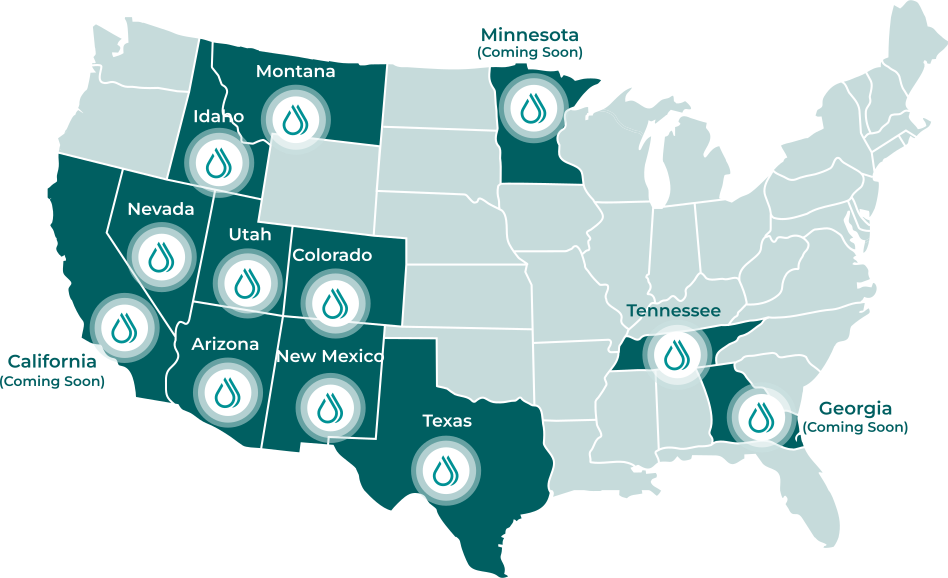
Pure IV delivers POTS support across Arizona, Utah, Nevada, Colorado, Tennessee, New Mexico, Texas, Idaho, and Montana. Same-day service. Licensed medical professionals. Real-time NP oversight. No hidden fees. No driving required.
➤ Book your
POTS Support IV therapy now — same-day service available