IV Therapy for Jet Lag & Travel Recovery
You just landed after a 4-hour flight. You’re supposed to be excited — vacation starts now, or you’ve got a big meeting in the morning. Instead, you’re exhausted, foggy, dehydrated, and your body feels like it’s running on fumes. Your head is pounding. Your sinuses are dry. And despite being tired, you know you won’t sleep well tonight because your internal clock is still set to wherever you came from.
★★★★★ Trusted by 25,000+ satisfied patients
This isn’t just “being tired from traveling.” Air travel creates a specific combination of physical stressors that stack on top of each other: severe dehydration from cabin air, circadian rhythm disruption from crossing time zones, immune suppression from recycled air and close quarters, and nutrient depletion from the metabolic stress of it all. Coffee and a nap can’t fix what’s happening at a physiological level.
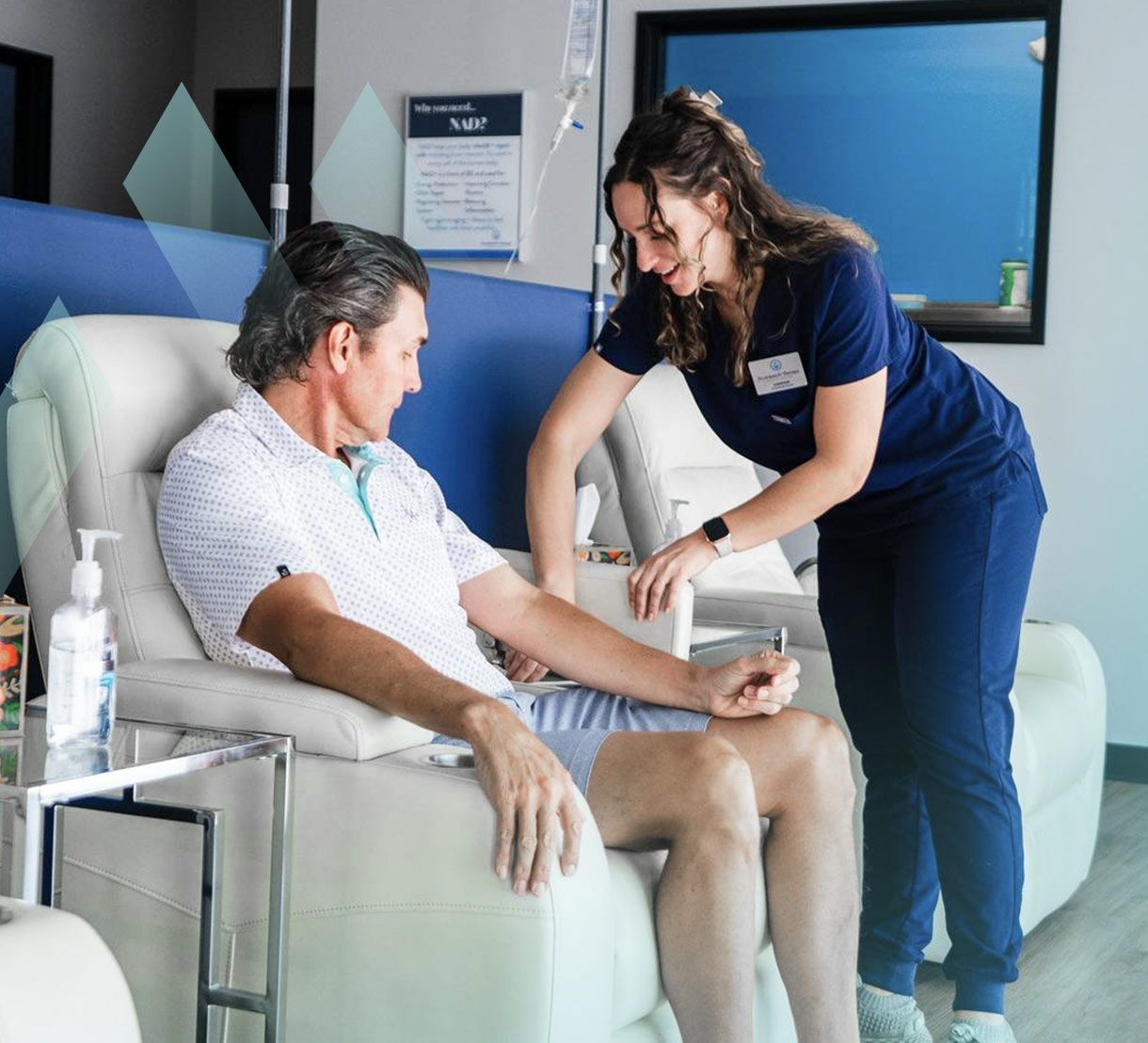
IV therapy can. By delivering a liter of fluids, electrolytes, B vitamins, magnesium, vitamin C, and optional anti-nausea medication directly into your bloodstream, IV therapy addresses every major physical consequence of air travel simultaneously — and most people feel dramatically better within 30 to 45 minutes.
What Air Travel Actually Does to Your Body
Air travel is one of the most physically demanding things we do on a regular basis — and most people don’t realize it because they’re sitting still the entire time. Here are the three major physiological stressors that create the “jet lag” experience:
Stressor #1: Extreme Dehydration
The cabin of a commercial airplane maintains humidity levels between 10 and 20% — drier than the Sahara Desert, which averages about 25%. Every breath you take on a plane pulls moisture from your lungs and airways. Your skin, eyes, nasal passages, and throat are all losing moisture continuously.
On a 5-hour domestic flight, the average person loses approximately 1.5 liters of water. On a 10-hour international flight, that number can reach 2 liters or more. And most people don’t drink nearly enough during the flight to compensate — partly because they don’t want to climb over their seatmate to use the bathroom, and partly because the small cups of water the flight attendant offers aren’t close to what you need.
This dehydration causes headaches, fatigue, brain fog, dry skin, dry eyes, sinus congestion, and constipation. It also thickens your blood (increasing DVT risk on longer flights), reduces kidney function, and impairs cognitive performance. Studies show that even 1 to 2% dehydration reduces mental performance by 10 to 15%.
Stressor #2: Circadian Rhythm Disruption
Your circadian rhythm is a 24-hour internal clock that regulates when you feel awake and when you feel sleepy. It’s controlled by the suprachiasmatic nucleus (SCN) in your brain, which responds primarily to light exposure. When you cross time zones, your SCN is still set to your departure city’s light-dark cycle. It takes roughly one day per time zone crossed for your body to fully adjust.
This mismatch causes more than just sleep problems. Your circadian rhythm also controls cortisol production (your body’s alertness and stress hormone), melatonin production (your sleep hormone), digestive enzyme timing (which is why your stomach feels off), body temperature regulation, blood pressure cycling, and immune cell activity. When your circadian rhythm is disrupted, ALL of these systems are temporarily out of sync.
Eastward travel is typically harder than westward travel because it requires you to advance your clock (go to sleep earlier), which is harder for the human body than delaying it. A flight from Las Vegas to Nashville (2 hours forward) causes noticeable disruption. A flight from Phoenix to London (7 hours forward) can take nearly a week to fully recover from.
Stressor #3: Immune Suppression and Oxidative Stress
Airplane cabins recirculate air in a confined space with 100 to 200+ other people. While modern HEPA filters capture most airborne particles, the close proximity, shared surfaces (tray tables, armrests, lavatory handles), and reduced humidity (which dries out your protective mucous membranes) all increase your exposure to pathogens.
At the same time, the stress of travel — disrupted sleep, dehydration, time pressure, and the physical stress of pressurization changes — suppress your immune function. Studies have shown that long-haul air travel can reduce natural killer cell activity (a key component of immune defense) for up to a week after arrival. Cosmic radiation exposure at cruising altitude also increases oxidative stress, which depletes your body’s antioxidant reserves (particularly vitamin
➤ Just landed? Book your Travel Recovery IV:
The Compounding Problem: Why Jet Lag Feels Worse Than It Should
Each of these stressors is significant on its own. But they compound each other in ways that make the combined effect worse than the sum of its parts:
- Dehydration impairs sleep quality, which makes circadian adjustment harder
- Circadian disruption affects digestive timing, which reduces nutrient absorption from food
- Immune suppression is worsened by dehydration and poor sleep
- Oxidative stress depletes the antioxidants your immune system needs
- Cortisol dysregulation from circadian disruption depletes magnesium and B vitamins
- Magnesium and B vitamin depletion impair energy production, making fatigue worse
This is why jet lag can feel so disproportionately bad compared to the effort of sitting in a chair for a few hours. Your body is fighting multiple battles simultaneously, and each one makes the others harder to win.
How IV Therapy Addresses Every Physical Stressor of Travel
IV Fluids (Lactated Ringer’s): Immediate, complete rehydration that reverses the 1 to 2 liters of fluid loss from your flight. Restores blood volume, improves cognitive function, relieves headache, and supports every other system in your body. This is the single most impactful intervention for travel recovery.
Electrolytes (Sodium, Potassium, Calcium, Lactate): Built into the IV solution. Electrolytes are lost alongside water during flight dehydration. Proper electrolyte balance is critical for nerve function, muscle contraction, heart rhythm, and fluid regulation across cell membranes.
B Complex Vitamins: Travel stress, disrupted eating patterns, and circadian disruption all deplete B vitamins. B vitamins are essential cofactors for energy production (the Krebs cycle), serotonin and melatonin synthesis (which regulate mood and sleep), and nervous system function. Replenishing B vitamins supports both energy during the day and sleep quality at night.
Zofran (Ondansetron) — Anti-Nausea That Also Helps Migraine Pathways: Zofran blocks serotonin (5-HT3) receptors, which are involved in both nausea and migraine pain pathways. This means Zofran doesn’t just stop the vomiting — it may also contribute to pain relief by blocking serotonin-mediated pain signaling. IV delivery works within minutes, which matters when your stomach can’t process an oral anti-nausea pill.
IV Fluids (Lactated Ringer’s) — Rehydration: Dehydration is both a migraine trigger and a symptom amplifier. Restoring blood volume and hydration can provide meaningful relief on its own, especially for dehydration-triggered headaches. Even for migraines with other triggers, hydration supports every other intervention in the IV.
B Complex Vitamins — Preventive Support: Vitamin B2 (riboflavin) has been studied extensively for migraine prevention, with research showing that 400mg daily can reduce migraine frequency by up to 50%. While a single IV won’t replicate a daily supplementation regimen, B vitamins support energy production during the post-migraine recovery phase and replenish stores depleted by the attack.
Vitamin C — Antioxidant and Vascular Support: Reduces oxidative stress and supports healthy blood vessel function, both of which are relevant during the inflammatory vascular changes of a migraine attack.
When to Get Your Travel IV: Pre-Flight vs. Post-Flight vs. Both
Pre-Flight IV (Day of Departure or Day Before)
Starting your trip fully hydrated, nutrient-loaded, and with optimal electrolyte balance gives your body the reserves it needs to handle the physical stress of flying. Pre-flight IVs are especially valuable for long-haul flights (5+ hours), flights to high-altitude destinations (Denver, Park City, Bozeman), red-eye flights where you need to function upon landing, and business travelers who have meetings within hours of arrival.
Post-Flight IV (Day of Arrival)
The most common timing. An IV within a few hours of landing addresses the dehydration, nutrient depletion, and fatigue before they compound into multi-day jet lag. This is particularly effective when you’re arriving at a Pure IV destination — Las Vegas, Nashville, Phoenix, Denver, Park City — and want to start your trip feeling good rather than spending the first day recovering.
Both (The Frequent Traveler Strategy)
Business travelers and frequent flyers who cross time zones regularly often develop a pre-and-post protocol. A pre-flight IV ensures they arrive in better shape; a post-flight IV accelerates recovery. Several of our regular patients in Phoenix and Denver follow this pattern for every cross-country or international trip.
Arriving in a Pure IV Market? Here’s What to Know
Las Vegas: Visitors arrive from all over the world and immediately face a desert climate (low humidity, high heat), plus the temptation to hit the Strip without recovering first. The combination of flight dehydration + desert heat + alcohol + sleep deprivation is a recipe for a miserable first 24 hours. A post-arrival IV at your hotel is the smartest move you can make.
Denver / Colorado Mountains:
You’re not just crossing time zones — you’re gaining 5,000 to 10,000+ feet of elevation. Flight dehydration PLUS altitude dehydration is a double hit. Visitors who fly into Denver and immediately drive to the mountains are at significantly higher risk for altitude sickness if they arrive already depleted.
Nashville: Major destination for bachelor/bachelorette parties, conferences, and music tourism. Groups that get a post-arrival IV are in far better shape for their first night on Broadway than those who try to power through on airport coffee.
Park City / Salt Lake City: Sundance, ski season, and summer mountain activities draw visitors from sea level. Flight + altitude + cold/dry air + physical exertion is a compounding cascade. See our altitude sickness page for additional context.
Phoenix / Scottsdale: Snowbirds, spring training visitors, and business travelers arrive in a climate that will dehydrate them even faster than the airplane did. The transition from a humidified cabin to 15% outdoor humidity and 100°F+ temperatures (seasonally) demands immediate rehydration.
➤ Arriving soon? Schedule your arrival IV now:
Jet Lag Recovery Methods Compared
| Method | Coffee | Melatonin | "Just Push Through" | IV Therapy |
|---|---|---|---|---|
| Fixes Dehydration? | No (diuretic) | No | Slowly, if you drink enough | Yes — immediately |
| Helps Circadian Reset? | Temporarily masks fatigue | Yes (sleep timing only) | Eventually | Supports via B vitamins, magnesium |
| Replaces Nutrients? | No | No | If eating well (unlikely) | Yes — 100% absorption |
| Supports Immune System? | No | No | No | Yes — Vitamin C, zinc, glutathione |
| Time to Feel Better Sensitivity | 20 min (then crash) | Next morning (maybe) | 1–3 days | 30–45 minutes |
What to Expect During a Migraine IV Session
Book before you land.
Schedule your IV for a couple hours after your arrival time. When you land, your provider is already on the way. Many patients book from the airport or even before boarding their departure flight.
A provider meets you at your location.
Hotel, Airbnb, condo, home, or office. Drop your bags, change into something comfortable, and your IV is ready.
NP reviews your treatment in real time.
A licensed Nurse Practitioner approves your IV plan based on your travel details and symptoms.
Relax for 30–45 minutes.
Unpack, scroll your phone, close your eyes. The IV is doing the work.
Go enjoy your trip.
Most patients walk out of their session feeling like a different person than the one who landed. Headache gone, energy restored, brain fog cleared, ready to go.
IV Therapy vs. Oral Migraine Medications: Why Timing Matters
Here’s the critical insight that most people (and most mobile IV companies) miss: oral migraine medications are most effective when taken early — within the first 30 to 60 minutes of symptom onset, before gastric stasis sets in. If you can catch a migraine at the prodrome stage (the warning signs before pain begins), oral triptans and NSAIDs can work well.
But once the migraine is in full swing — once the nausea has started, the pain is throbbing, and you’re photosensitive — gastric stasis has likely set in. At that point, oral medications are significantly less effective. This is the window where IV therapy excels:
| Factor | Oral Medications | IV Therapy |
|---|---|---|
| Absorption during attack | Impaired by gastric stasis (80% of attacks) | 100% — bypasses stomach |
| Speed of relief | 30–60 min (if absorbed) | 15–30 min |
| Works if vomiting? | No | Yes |
| Includes anti-nausea? | Separate medication needed | IV Zofran included |
| Includes hydration? | No | Yes — 1 liter fluids |
| Rebound headache risk? | Yes (with overuse of triptans/NSAIDs) | No (Toradol has low rebound risk) |
| Narcotic risk? | Some prescriptions include opioids | No narcotics used |
IV therapy is most impactful for migraine attacks and dehydration-triggered tension headaches. Cluster headaches are a distinct condition that typically requires specialized neurological treatment, though IV magnesium and hydration can provide supportive care.
Why Choose Pure IV for Travel Recovery?
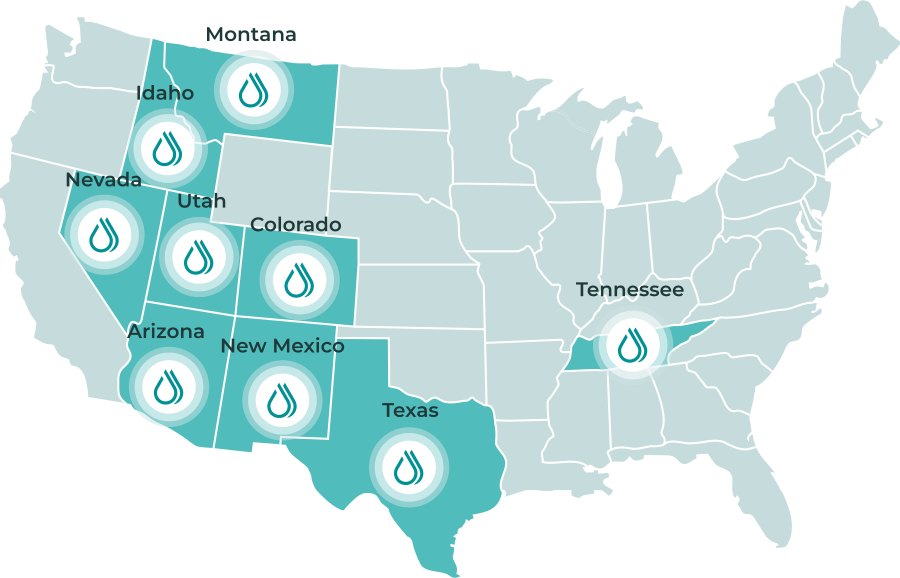
We’re Already Where You’re Going: Pure IV operates in the destinations travelers actually fly to — Las Vegas, Nashville, Denver, Park City, Phoenix, Scottsdale, Salt Lake City, Bozeman, Boise, and Santa Fe. We’re not asking you to find a clinic in an unfamiliar city. We come to your hotel.
Real-Time NP Oversight: Every treatment reviewed and approved by a licensed Nurse Practitioner.
Licensed Providers Only: RN or Paramedic at your door.
Physician-Owned: Clinical-grade protocols.
No Hidden Fees: No travel charges to hotels within our service areas. HSA/FSA eligible.
Same-Day Booking: Book when you land, we’ll be there within a couple hours.

Frequently Asked Questions
How soon after landing should I get an IV?
As soon as practical. The earlier you address dehydration and nutrient depletion, the less they compound into multi-day fatigue. Most patients book their IV for 2 to 3 hours after landing to allow time for baggage, ground transport, and hotel check-in.
Will IV therapy reset my circadian rhythm?
IV therapy doesn’t directly reset your circadian clock — that’s primarily controlled by light exposure and melatonin timing. However, by restoring B vitamins (cofactors for melatonin production), magnesium (which supports sleep quality), and hydration (which affects cortisol regulation), IV therapy creates the conditions for your circadian rhythm to adjust more efficiently. Think of it as removing the obstacles to natural adjustment.
Is this just for long-haul international flights?
No. Even domestic flights of 3 to 5 hours cause significant dehydration and fatigue. Passengers flying coast-to-coast (3-hour time change) or from low elevation to high elevation (sea level to Denver) experience compounding stressors that IV therapy directly addresses. You don’t need to cross 7 time zones to benefit.
Can I get an IV at my hotel?
Yes. We treat patients at hotels, resorts, Airbnbs, condos, and vacation rentals across all of our service areas. Just give us your room number and we’ll come to you.
Should I also use melatonin for jet lag?
Melatonin can help with the sleep-timing component of jet lag, and many travelers use it alongside IV therapy. Melatonin addresses when you fall asleep; IV therapy addresses the dehydration, nutrient depletion, and immune suppression that make you feel terrible while awake. They complement each other well.
I’m traveling with a group. Can you treat multiple people?
Yes. Group travel recovery is one of our most common bookings, especially for bachelor/bachelorette parties arriving in Nashville or Las Vegas, corporate groups arriving for conferences, and families arriving for ski trips. Contact us for group availability.
Does insurance cover travel recovery IV therapy?
Most insurance plans do not cover mobile IV therapy. However, Pure IV services are HSA and FSA eligible. We provide receipts for reimbursement.
Don’t Waste Your First Day Recovering
You didn’t spend money on flights, hotels, and time off from work to spend your first day in bed with a headache. Whether you’re landing in Vegas for a weekend, arriving in Denver for a ski trip, touching down in Nashville for a bachelor party, or coming home from an international flight exhausted — IV therapy gets you from “just landed” to “ready to go” in under an hour.
Pure IV delivers travel recovery directly to your hotel, Airbnb, or home across Arizona, Utah, Nevada, Colorado, Tennessee, New Mexico, Texas, Idaho, and Montana. Same-day service. Licensed medical professionals. Real-time NP oversight. No hidden fees.
➤ Book your Travel Recovery IV now — same-day service available: