IV Therapy for Migraines & Headaches
You’re lying in a dark room. The throbbing is so intense you can feel your pulse in your temples. Light feels like a knife. Sound is unbearable. Your stomach is churning, and the ibuprofen you swallowed 45 minutes ago still hasn’t kicked in — if it’s going to work at all. Welcome to a migraine.
★★★★★ Trusted by 25,000+ satisfied patients
More than 39 million Americans live with migraine disease. It’s not “just a headache.” It’s a complex neurological event that can shut down your entire day — sometimes for days at a time. And one of the most frustrating aspects of a migraine attack? The pills you rely on often stop working once the attack is in full swing.
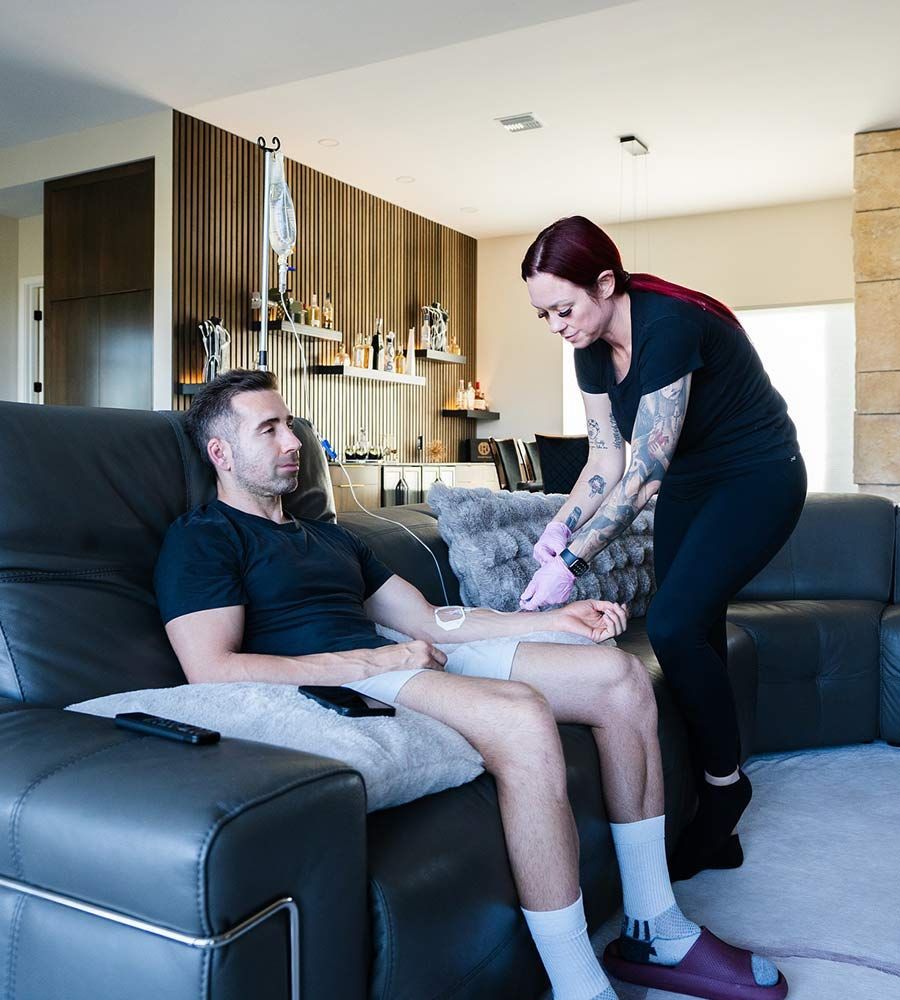
IV therapy addresses this problem directly. By delivering pain medication, anti-nausea medication, magnesium, and fluids straight into your bloodstream, it bypasses the stomach — which during a migraine attack has essentially stopped processing anything you swallow. For many migraine sufferers, this is the difference between hours of suffering and relief within 30 minutes.
What Actually Happens During a Migraine (And Why It’s Not Just a Headache)
Migraines are a neurological disorder, not simply a bad headache. The pain you feel is the result of a cascade of events in your brain and nervous system. Understanding this cascade explains why specific IV ingredients work and why oral medications often fail during an attack.
The Neurovascular Cascade
A migraine begins when neurons in the brain become hyperexcitable — they start firing abnormally. This can be triggered by stress, hormonal changes, certain foods, weather changes, sleep disruption, dehydration, or seemingly nothing at all. Once triggered, a wave of electrical activity called cortical spreading depression (CSD) moves across the surface of the brain. This wave of activity is responsible for migraine aura — the visual disturbances, tingling, or speech difficulties that about 25% of migraine sufferers experience before the pain begins.
The cortical spreading depression activates the trigeminal nerve — the largest cranial nerve and the main pain pathway for the head and face. Once activated, the trigeminal nerve releases inflammatory chemicals called neuropeptides (primarily CGRP — calcitonin gene-related peptide) around the blood vessels of the brain and its surrounding membranes (the meninges). These neuropeptides cause the blood vessels to dilate and become inflamed, which stimulates pain receptors and creates the intense, throbbing, pulsating pain that defines a migraine.
Why Your Stomach Shuts Down (Gastric Stasis)
This is the part that most people — and most mobile IV companies — don’t explain. During a migraine attack, your autonomic nervous system is disrupted. One of the most significant effects is gastric stasis: your stomach essentially stops emptying. Food, water, and medications sit in your stomach without being absorbed.
This is why the ibuprofen, Excedrin, or triptan you swallowed 45 minutes ago isn’t working. It’s not that the medication is ineffective — it’s that the medication is sitting in a paralyzed stomach, not reaching your bloodstream. Studies have shown that gastric stasis occurs in up to 80% of migraine attacks, and it’s the single biggest reason why oral medications fail during a migraine that’s already underway.
This is also why nausea and vomiting are such common migraine symptoms. If your stomach isn’t emptying and you keep adding medication and fluids to it, eventually your body rebels.
IV therapy completely eliminates this problem. Medication goes directly into your bloodstream, bypassing the paralyzed stomach entirely. This is the same reason emergency rooms use IV medication for severe migraine patients — it’s the only reliable delivery method once gastric stasis has set in.
➤ Need migraine relief now? See our Migraine & Headache IV:
Migraine vs. Tension Headache vs. Cluster Headache: Know What You’re Dealing With
| Feature | Migraine | Tension Headache | Cluster Headache |
|---|---|---|---|
| Pain Type | Throbbing, pulsating | Pressing, band-like tightness | Stabbing, excruciating (one-sided) |
| Location | Usually one side | Both sides, forehead, temples | Behind one eye |
| Duration | 4–72 hours | 30 min to several hours | 15 min to 3 hours |
| Nausea/Vomiting | Common | Rare | Sometimes |
| Light/Sound Sensitivity | Yes — often severe | Mild or none | Yes (immediately) |
| Aura | 25% of sufferers | No | No |
| Activity Impact | Severe — often bedridden | Mild to moderate | Severe — pacing, restless |
| IV Therapy Helps? | Yes — highly effective | Yes — especially for dehydration-triggered | Consult neurologist |
IV therapy is most impactful for migraine attacks and dehydration-triggered tension headaches. Cluster headaches are a distinct condition that typically requires specialized neurological treatment, though IV magnesium and hydration can provide supportive care.
Common Migraine Triggers (And How They Connect to IV Therapy)
Understanding your triggers helps explain why IV therapy is such an effective complement to migraine management:
Dehydration: One of the most common and most preventable triggers. Even 1 to 2% dehydration can trigger a migraine in susceptible individuals. Hot climates (Arizona, Nevada, Texas), altitude (Colorado, Utah, Montana), air travel, and alcohol all accelerate dehydration. IV hydration directly addresses this trigger.
Stress: Chronic stress depletes magnesium — and low magnesium is directly linked to migraine frequency and severity. The “let-down” migraine (hitting after a stressful period ends, like a weekend after a hard work week) is one of the most common patterns.
Hormonal changes: Estrogen fluctuations during menstrual cycles are a major trigger for women. About 60% of female migraine sufferers report menstrual migraines. Magnesium levels drop during menstruation, compounding the trigger.
Sleep disruption: Both too little and too much sleep can trigger attacks. Jet lag is a particularly potent trigger because it combines sleep disruption with travel dehydration.
Weather and barometric pressure: Rapid weather changes, especially barometric pressure drops, are a well-documented trigger. This is relevant across all of Pure IV’s mountain and desert markets where weather can shift dramatically.
Alcohol:
Both a dehydration trigger and a direct migraine trigger (particularly red wine, which contains histamine and tyramine). The combination of alcohol plus altitude is especially problematic in our Colorado, Utah, and Montana markets.
How IV Therapy Treats Migraines: Ingredient by Ingredient
Magnesium — The Cornerstone of Migraine IV Therapy: Magnesium is used in emergency rooms worldwide as a first-line treatment for severe migraines. Here’s why: magnesium blocks NMDA receptors in the brain, which are overactive during a migraine attack and amplify pain signals. It also stabilizes blood vessel tone, preventing the excessive dilation and inflammation that cause throbbing pain. It inhibits cortical spreading depression — the wave of abnormal brain activity responsible for migraine aura. And it reduces the release of substance P and other pain-signaling chemicals. Research shows that up to 50% of migraine sufferers have low magnesium levels during an attack, and IV magnesium can abort an acute migraine in a significant percentage of patients. Oral magnesium is far less effective because it’s poorly absorbed and causes diarrhea at therapeutic doses.
Toradol (Ketorolac) — Powerful Anti-Inflammatory Pain Relief: Toradol is a non-narcotic, non-steroidal anti-inflammatory drug (NSAID) that’s significantly more potent than ibuprofen. It’s the same pain medication used in ERs for migraine treatment. Delivered intravenously, it starts working within 15 to 30 minutes and provides relief for up to 24 hours. Unlike opioids, it doesn’t cause sedation, addiction risk, or rebound headaches — all of which are concerns with narcotic migraine treatments.
Zofran (Ondansetron) — Anti-Nausea That Also Helps Migraine Pathways: Zofran blocks serotonin (5-HT3) receptors, which are involved in both nausea and migraine pain pathways. This means Zofran doesn’t just stop the vomiting — it may also contribute to pain relief by blocking serotonin-mediated pain signaling. IV delivery works within minutes, which matters when your stomach can’t process an oral anti-nausea pill.
IV Fluids (Lactated Ringer’s) — Rehydration: Dehydration is both a migraine trigger and a symptom amplifier. Restoring blood volume and hydration can provide meaningful relief on its own, especially for dehydration-triggered headaches. Even for migraines with other triggers, hydration supports every other intervention in the IV.
B Complex Vitamins — Preventive Support: Vitamin B2 (riboflavin) has been studied extensively for migraine prevention, with research showing that 400mg daily can reduce migraine frequency by up to 50%. While a single IV won’t replicate a daily supplementation regimen, B vitamins support energy production during the post-migraine recovery phase and replenish stores depleted by the attack.
Vitamin C — Antioxidant and Vascular Support: Reduces oxidative stress and supports healthy blood vessel function, both of which are relevant during the inflammatory vascular changes of a migraine attack.
IV Therapy vs. Oral Migraine Medications: Why Timing Matters
Here’s the critical insight that most people (and most mobile IV companies) miss: oral migraine medications are most effective when taken early — within the first 30 to 60 minutes of symptom onset, before gastric stasis sets in. If you can catch a migraine at the prodrome stage (the warning signs before pain begins), oral triptans and NSAIDs can work well.
But once the migraine is in full swing — once the nausea has started, the pain is throbbing, and you’re photosensitive — gastric stasis has likely set in. At that point, oral medications are significantly less effective. This is the window where IV therapy excels:
| Factor | Oral Medications | IV Therapy |
|---|---|---|
| Absorption during attack | Impaired by gastric stasis (80% of attacks) | 100% — bypasses stomach |
| Speed of relief | 30–60 min (if absorbed) | 15–30 min |
| Works if vomiting? | No | Yes |
| Includes anti-nausea? | Separate medication needed | IV Zofran included |
| Includes hydration? | No | Yes — 1 liter fluids |
| Rebound headache risk? | Yes (with overuse of triptans/NSAIDs) | No (Toradol has low rebound risk) |
| Narcotic risk? | Some prescriptions include opioids | No narcotics used |
IV therapy is most impactful for migraine attacks and dehydration-triggered tension headaches. Cluster headaches are a distinct condition that typically requires specialized neurological treatment, though IV magnesium and hydration can provide supportive care.
What to Expect During a Migraine IV Session
Book online or call.
We understand that during a migraine, even looking at your phone can be painful. Keep our number saved and our booking page bookmarked. Same-day appointments available.
A provider comes to your dark, quiet room.
Our providers are trained to arrive quietly, keep lights low, and speak softly. We know what a migraine feels like, and we adjust our approach accordingly.
NP reviews your treatment in real time.
A Nurse Practitioner reviews your health information and current medications to ensure no interactions — especially important if you’ve already taken a triptan or other migraine medication.
Relief begins within minutes.
Zofran typically stops nausea within 5 to 10 minutes. Toradol begins reducing pain within 15 to 30 minutes. Magnesium works on the underlying neurovascular mechanisms simultaneously.
30–45 minutes later, the attack is breaking
Most patients report significant relief by the end of the session. Many describe the experience as “the migraine lifting” — the throbbing decreases, the nausea resolves, the light sensitivity eases, and they can start to function again.
When to Go to the ER Instead
Important: Not all headaches are migraines, and some headaches are medical emergencies. Seek emergency care immediately if you experience:
- The “worst headache of your life” — sudden, explosive onset (thunderclap headache)
- Headache with fever, stiff neck, and confusion (possible meningitis)
- Headache after head trauma
- New neurological symptoms: sudden weakness, numbness, vision loss, difficulty speaking, or confusion
- Headache that is dramatically different from your normal pattern
- Headache with seizures
These symptoms can indicate stroke, aneurysm, meningitis, or other life-threatening conditions. Call 911 or go to the nearest ER. Pure IV is designed for migraine and tension headache relief — not for emergency neurological evaluation.
➤ Migraine won’t break? Book your Migraine IV now:

Why Choose Pure IV for Migraine Relief?
Real-Time NP Oversight:
Migraine treatment involves medications that interact with other drugs — especially triptans. Our NP reviews your current medications in real time before approving treatment. This level of oversight is critical and most mobile IV companies don’t offer it.
ER-Level Medications Without the ER:
Toradol, Zofran, and IV magnesium are the same medications used in emergency departments for migraine treatment. You get the same protocol without the fluorescent lights, the 3-hour wait, the noise, and the $2,000+ bill.
Provider Sensitivity Training:
Our providers understand migraine. They arrive quietly, keep the environment dark and calm, and work efficiently to get your IV started with minimal disruption.
No Narcotics:
Pure IV does not use opioids or narcotics for migraine treatment. Toradol provides powerful pain relief without the sedation, addiction risk, or rebound headaches associated with narcotic medications.
Physician-Owned:
Our protocols are set by physicians. Migraine treatment requires clinical judgment about medication selection, dosing, and interaction checking.
No Hidden Fees:
Transparent pricing. No travel charges. HSA/FSA eligible.
Frequently Asked Questions
How fast does IV therapy work for a migraine?
Anti-nausea medication typically works within 5 to 10 minutes. Pain relief from Toradol begins within 15 to 30 minutes. Magnesium works on the underlying neurovascular mechanisms within 15 to 60 minutes. Most patients report significant overall improvement by the end of the 30 to 45 minute session.
Can I get IV therapy if I’ve already taken a triptan (Imitrex, Maxalt, etc.)?
In most cases, yes. Our Nurse Practitioner will review what you’ve taken and when. IV Toradol and Zofran do not interact with triptans. However, timing matters, and your NP will make the appropriate clinical decision. Always tell us exactly what medications you’ve taken and when.
Can IV therapy prevent migraines?
IV therapy is primarily an acute treatment for active migraine attacks. However, regular IV sessions that maintain optimal magnesium levels and hydration may help reduce migraine frequency for some people, particularly those whose migraines are triggered by dehydration or magnesium deficiency. IV therapy is not a substitute for a preventive migraine management plan with your neurologist.
Why not just go to the ER for a migraine?
You absolutely can — and should, if there are any red-flag symptoms. But for a typical migraine attack, the ER experience is often counterproductive: bright fluorescent lights, loud noises, long waits, exposure to other patients, and a bill that can easily exceed $2,000. Pure IV delivers similar medications in a quiet, dark, comfortable environment within a couple of hours of booking — at a fraction of the cost.
Is this safe if I get migraines frequently (chronic migraine)?
IV therapy can be used for individual migraine attacks even if you have chronic migraine (15+ headache days per month). However, if you’re experiencing chronic migraines, we strongly recommend working with a neurologist for a comprehensive preventive treatment plan. IV therapy is a powerful acute rescue tool, but chronic migraine requires a broader strategy.
What about medication overuse headache (rebound headache)?
Medication overuse headache is a real concern with frequent use of triptans, combination analgesics, and opioids. Toradol (ketorolac) has a lower rebound risk than these medications, but it shouldn’t be used more than 5 days in a row. If you’re concerned about rebound headaches, discuss your treatment frequency with your healthcare provider.
Does insurance cover migraine IV therapy?
Most insurance plans do not cover mobile IV therapy. However, Pure IV services are HSA and FSA eligible. We provide receipts for reimbursement. Many migraine patients find the cost worthwhile compared to an ER visit — and especially compared to the lost productivity of a multi-day migraine.
Stop Waiting for Pills That Aren’t Working
If you’re lying in the dark waiting for an oral medication to kick in — knowing in your gut that your stomach has shut down and that pill is just sitting there — IV therapy is the answer. The same medications the ER would give you, delivered in your own quiet, dark room, by a provider who understands what you’re going through.
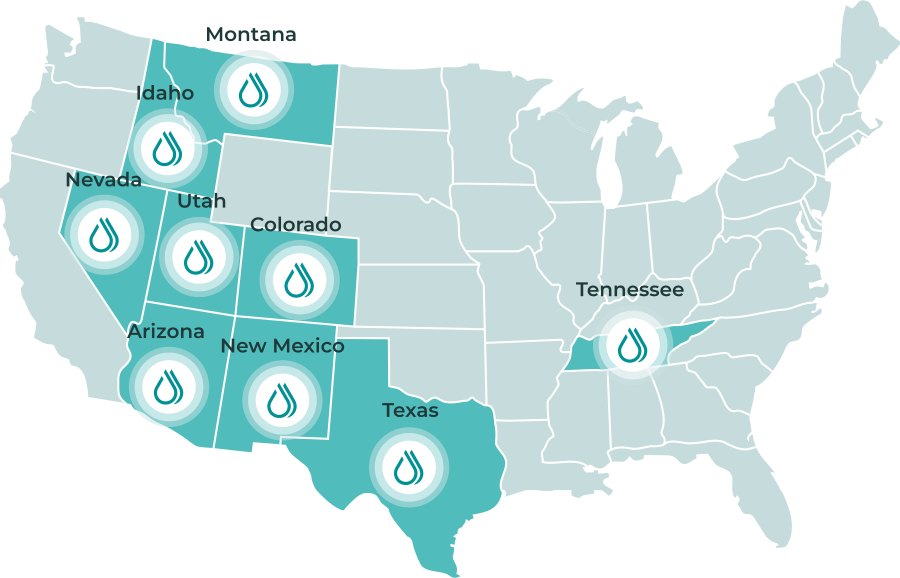
Pure IV delivers migraine relief across Arizona, Utah, Nevada, Colorado, Tennessee, New Mexico, Texas, Idaho, and Montana. Same-day service. Licensed medical professionals. Real-time NP oversight. No hidden fees. No narcotics. No fluorescent lights.
➤ Book your Migraine IV now — same-day service available:
Related Treatments
IV Therapy for Nausea & Vomiting