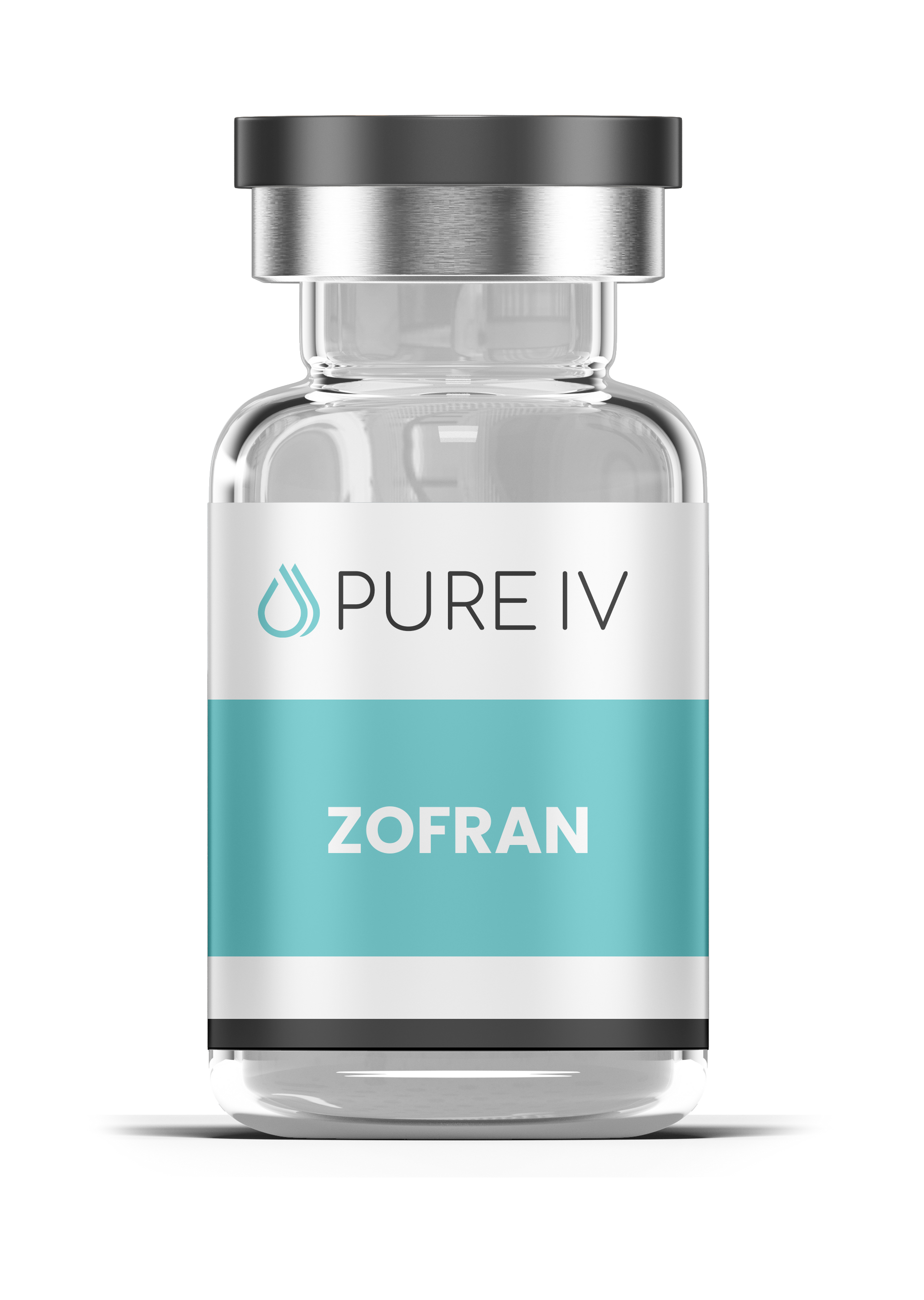
Zofran (Ondansetron) IV
If you’ve ever had surgery, you’ve probably received Zofran. If you’ve been pregnant and dealt with severe morning sickness, your OB may have prescribed it. If you’ve ended up in the ER with food poisoning, they likely pushed it through your IV line within minutes of arrival.
Zofran (generic name: ondansetron) is the most widely used anti-nausea medication in modern medicine. It was originally developed for chemotherapy patients but is now the go-to treatment for nausea and vomiting across nearly every clinical setting. And there’s a very good reason for that: it works fast, it works reliably, and it has fewer side effects than older anti-nausea medications.
★★★★★ Trusted by 25,000+ satisfied patients
How Zofran Stops Nausea — The Serotonin Connection
Most people associate serotonin with mood. But serotonin has a second, less well-known job: it’s the chemical trigger for your vomiting reflex.
Here’s what happens when something makes you nauseous — whether it’s food poisoning, a stomach virus, medication side effects, or motion sickness:
Step 1
Your gut detects something wrong. The enterochromaffin cells lining your intestinal wall release a flood of serotonin.
Step 2
That serotonin binds to 5-HT₃ receptors on your vagus nerve — the nerve highway connecting your gut to your brain.
Step 3
The vagus nerve fires a signal to the vomiting center in your brainstem (the area postrema and nucleus tractus solitarius).
Step 4
Your brain initiates the nausea and vomiting response.
Zofran blocks Step 2. It’s a selective 5-HT₃ receptor antagonist. It sits on the serotonin receptors on your vagus nerve and prevents serotonin from binding. No serotonin signal → no message to the vomiting center → nausea stops.
That’s it. It doesn’t sedate you. It doesn’t slow your gut down. It doesn’t make you drowsy (unlike Dramamine or Phenergan). It specifically blocks the serotonin signal that triggers nausea. That’s why Zofran has become the default choice — it works precisely, with minimal side effects.
The Oral Zofran Paradox
Your doctor prescribed oral Zofran tablets or dissolvable strips for your nausea. Great. Except you’re vomiting everything that enters your stomach. You put the tablet on your tongue. Your stomach rejects it 10 minutes later. The medication never absorbs. You’re right back where you started.
This is the fundamental problem with oral anti-nausea medication: the symptom it’s designed to treat prevents you from taking it.
IV Zofran eliminates this paradox entirely. The medication goes directly into your bloodstream. Your stomach is completely uninvolved. Within 10–15 minutes, the ondansetron reaches therapeutic blood levels and begins blocking the 5-HT₃ receptors. Nausea typically subsides within 15–20 minutes of IV administration.
This is the single strongest argument for IV anti-nausea treatment: when you’re too sick to keep pills down, IV delivery is the only reliable option outside of an emergency room.
IV Zofran vs. Oral Zofran vs. Dissolvable Strips
| Delivery | Time to Effect | Works When Vomiting? | Cost Context |
|---|---|---|---|
| IV ondansetron | 10–15 minutes | Yes — bypasses stomach entirely | Included in Pure IV nausea packages |
| Oral tablet (swallowed) | 30–60 minutes if kept down | Unreliable — may be vomited before absorption | Pharmacy prescription |
| ODT (dissolvable strip) | 20–40 minutes | Better than tablet — absorbs sublingually. But still partially swallowed and may not survive active vomiting. | Pharmacy prescription |
When Our NP Approves Zofran
Zofran is a prescription medication. At Pure IV, every patient’s medical history is reviewed by a licensed Nurse Practitioner in real time before any medication is approved. Here’s what the NP evaluates:
- The cause of your nausea. Nausea from food poisoning, stomach virus, hangover, GLP-1 medications, morning sickness, and post-surgical recovery are all appropriate indications.
- Your medication list. Zofran can interact with certain medications, particularly those that affect the QT interval on an EKG (some antiarrhythmics, certain antibiotics, some antidepressants). Your NP screens for these interactions.
- Your medical history. Patients with Long QT syndrome, severe liver disease, or known ondansetron allergy will not receive Zofran.
This screening process is one of the reasons physician-owned practices like Pure IV offer a higher level of safety than wellness spas or non-medical IV providers. Prescription medications require medical judgment, not just a nurse with a needle.

Common Conditions Zofran Treats
- Stomach virus and food poisoning. The most common reason patients request Zofran from Pure IV. When you can’t stop vomiting, IV Zofran is the fastest relief available outside an ER.
- Hangover nausea. Alcohol irritates the stomach lining and triggers serotonin release from enterochromaffin cells. Zofran blocks the downstream nausea signal.
- GLP-1 medication side effects. Ozempic, Wegovy, and Mounjaro cause nausea through delayed gastric emptying. The food sitting in your stomach triggers serotonin release. Zofran blocks the signal. And because oral Zofran sits in your slowed stomach for hours before absorbing, IV is the clearly superior delivery method for GLP-1 patients.
- Morning sickness. Ondansetron is one of the most commonly prescribed medications for hyperemesis gravidarum (severe pregnancy-related nausea and vomiting). Our NP evaluates each pregnant patient individually.
- Post-surgical nausea. Anesthesia commonly causes nausea. Zofran is the standard prophylactic and treatment medication in surgical settings.
Side Effects and Safety
Zofran has one of the most favorable side effect profiles of any anti-nausea medication. Common side effects include:
Zofran has one of the most favorable side effect profiles of any anti-nausea medication. Common side effects include:
- Headache (the most frequently reported side effect, usually mild).
- Constipation (Zofran can slow bowel motility temporarily).
- Fatigue or dizziness (uncommon at standard doses).
Zofran does NOT typically cause drowsiness — a significant advantage over older anti-nausea medications like promethazine (Phenergan) or diphenhydramine (Benadryl), which can sedate you for hours.
Serious side effects are rare but include QT prolongation (a heart rhythm change) in susceptible patients or at very high doses. This is why NP screening for QT-prolonging medications and cardiac conditions is essential before administration.
Which Pure IV Packages Include This Medication
| Package | Price | Why This Medication Is Included |
|---|---|---|
| Nausea IV | $235 | Zofran as primary anti-nausea treatment |
| Food Poisoning IV | $235 | Zofran for vomiting from contaminated food |
| Stomach Bug IV | $235 | Zofran for viral gastroenteritis |
| GLP-1 Nausea IV | $295 | Zofran for medication-induced nausea |
| Morning Sickness IV | $225 | Zofran for pregnancy nausea (NP-approved case by case) |
| Hangover IV | $275 | Zofran for hangover nausea |
| Migraine IV | $285 | Zofran for migraine-associated nausea |
| Kids Myers Cocktail | $180 | Optional Zofran for pediatric nausea (NP-approved) |
| Available as add-on | Varies | Add Zofran to any IV with NP approval |
FAQ's
Frequently Asked Questions
How fast does IV Zofran work?
Most patients feel relief within 10–20 minutes of IV administration. Some patients report the nausea breaking within 5 minutes. The speed depends on the severity and cause of your nausea, but IV Zofran is the fastest delivery method available.
Is Zofran safe during pregnancy?
Ondansetron is widely prescribed for pregnancy-related nausea and has been used by millions of pregnant women. Some studies have raised questions about first-trimester use, and the FDA classifies it as pregnancy category B. Our NP evaluates each pregnant patient individually, considering gestational age, severity of symptoms, and other medications. This is a conversation between you and your NP, not a blanket yes or no.
Can I request Zofran even if I’m not currently nauseous?
Zofran can be used preventively. If you’re anticipating nausea (GLP-1 dose increase, known motion sickness trigger, post-event recovery), your NP may approve prophylactic Zofran as part of your IV. Discuss this when you book.
Why do you need NP approval for Zofran?
Zofran is a prescription medication. Federal and state law require that prescription medications be authorized by a licensed prescriber after reviewing the patient’s medical history. Our NP performs this review in real time for every patient. This is not a formality — it’s how we ensure your safety by screening for drug interactions and contraindications.