Migraine Cocktail: What It Is and How It Actually Works

Medically reviewed by Allison Lane, MD
• May 20, 2026
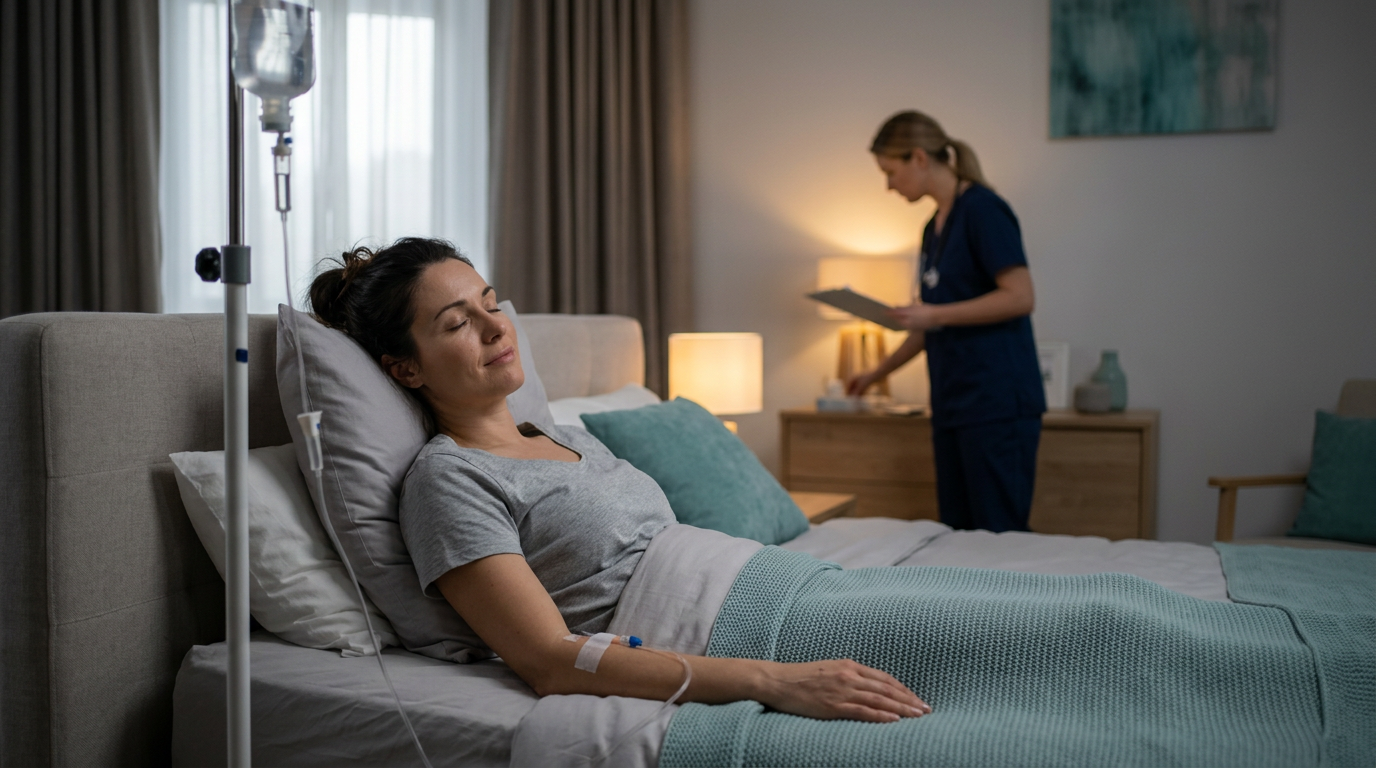
Table of Contents
What Is a Migraine Cocktail? Ingredients, How It Works, and Where to Get One
Joseph Lopez • Pure IV
Medically reviewed by Micaela Strevay, FNP-C, PMHNP-BC.
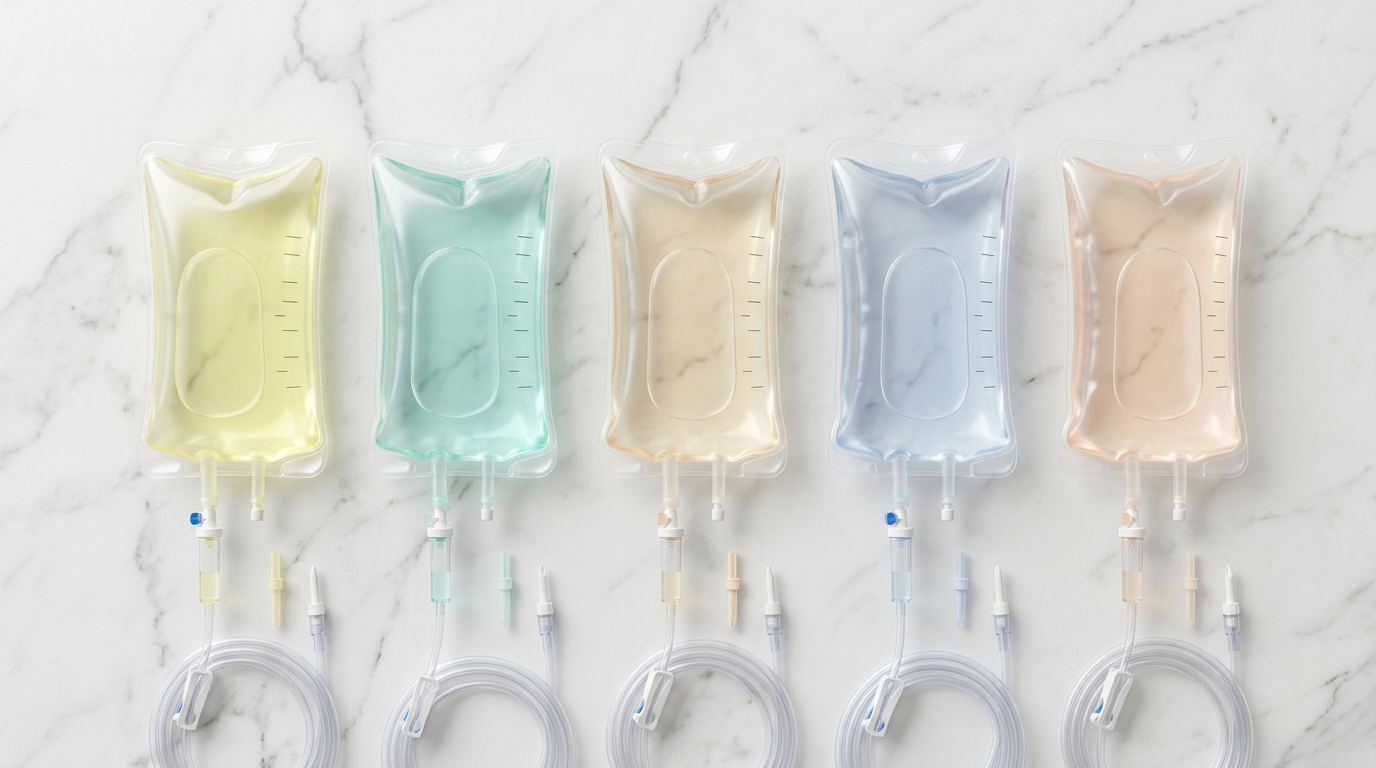
Quick answer: A migraine cocktail is a combination of medications given together to stop a severe migraine attack. The most common version is delivered by IV in an emergency room or medical setting. It typically includes a prescription anti-inflammatory (like Toradol) , an anti-nausea drug , IV fluids , and often magnesium sulfate and a steroid . There is no single fixed formula. Every provider uses a slightly different combination. Most patients feel relief within 15 to 30 minutes. IV bar versions like Pure IV's Migraine IV can deliver the same prescription-strength medications to your door, under nurse practitioner supervision, without the ER wait.
This guide is for general health information. It is not a substitute for medical advice. If this is the worst headache of your life, your first migraine ever, or it comes with fever, stiff neck, vision changes, weakness, or confusion, go to the ER immediately or call 911.
It's day three of a migraine that just won't break.
You've already taken ibuprofen. Excedrin. You've been in a dark room with a cold cloth over your eyes. Nothing has worked. The nausea is bad enough that swallowing another pill feels like a risk. You're wondering if you need to go to the ER, or if there's another option.
There is. It's called a migraine cocktail.
This article covers what's actually in one, how each ingredient works, the difference between the ER version and what a medically supervised IV bar provides, and what you can try at home if you don't have IV access right now.
If you've ever wanted to understand what causes migraines at a biological level, that post is a good starting point. This article focuses on the treatment.
What Is a Migraine Cocktail?
A migraine cocktail is a combination of medications given at the same time to stop an active migraine attack. The word "cocktail" just means a mix. It's not a single drug. It's a protocol.
According to the American Migraine Foundation, the term is used loosely by both patients and providers. Dr. Jennifer Robblee, a neurologist at Barrow Neurological Institute, notes that the cocktail refers broadly to whatever combination a provider gives together to abort a migraine. The specific drugs can vary.
It's an abortive therapy. The goal is to stop the attack that's happening right now, not to prevent the next one.
About 40 million Americans live with migraine, roughly one in seven adults. Migraine drives approximately 1.2 million ER visits per year, costing the U.S. economy more than $36 billion annually. The migraine cocktail is one of the most common tools used to manage the worst attacks.
Why There's No Single "Official" Recipe
If you search for the migraine cocktail recipe, you'll get different answers depending on the source. That's not a bug. It's accurate.
Practical Neurology reports that more than 20 different IV medications are used for acute headache treatment in outpatient and hospital settings. There is no standardized migraine cocktail. Every provider tailors the combination to the patient.
What providers do agree on: giving all medications upfront together (called stratified care) works better than adding drugs one at a time and waiting to see what happens. Research from PMC confirms that stratified care outperforms stepped care for migraine outcomes.
There is a well-studied ER protocol that most emergency providers lean on. Here's what's in it.
What's in the ER Migraine Cocktail?
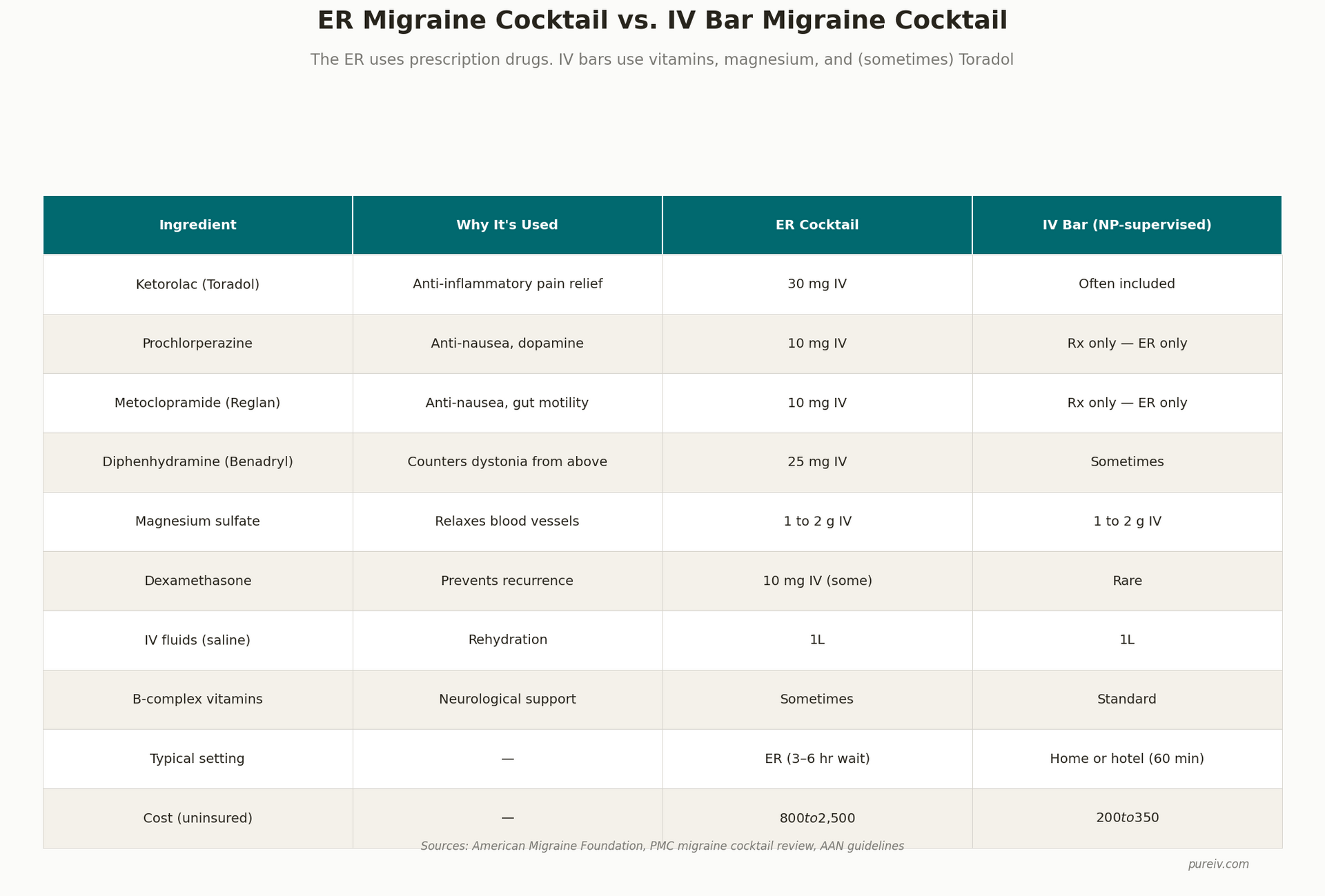
The published clinical protocol, documented in Canadian Family Physician and available on PubMed Central, gives a specific "Box 1" ER recipe. It looks like this:
- 1L normal saline (IV fluids)
- Prochlorperazine 10mg IV (anti-nausea)
- Diphenhydramine 25mg IV (anti-akathisia)
- Ketorolac 30mg IV (anti-inflammatory)
- Dexamethasone 10mg IV (steroid, for preventing recurrence)
- Sometimes: Magnesium sulfate 2g IV (especially for aura or when other drugs fail)
Here's what each one actually does.
Ketorolac (Toradol)
Ketorolac, sold under the brand name Toradol, is a non-opioid anti-inflammatory drug. It works by blocking COX-1 and COX-2 enzymes, which cuts off your body's production of prostaglandins. Prostaglandins are the chemicals that drive pain and inflammation.
The IV form hits fast. It bypasses your digestive system entirely, so there's no wait for your stomach to absorb it. Per NCBI's StatPearls on migraine, IV NSAIDs like ketorolac are a core part of emergency migraine treatment. The standard dose is 30mg IV (or 60mg IM if given as a shot instead).
Ketorolac is the anti-inflammatory backbone of the cocktail. It goes after the pain directly.
Prochlorperazine (Compazine) or Metoclopramide (Reglan)
These two drugs are often used interchangeably. Both are dopamine antagonists (they block D2 receptors in the brain).
The obvious reason they're in the cocktail: they stop nausea. Migraines frequently cause vomiting, and you can't keep oral medications down when that's happening.
The less obvious reason: both drugs have independent anti-migraine properties. Prochlorperazine (Compazine) and metoclopramide (Reglan) don't just stop nausea. They help break the migraine itself by blocking the dopamine pathways involved in migraine attacks. The clinical evidence supports both as effective standalone migraine treatments, not just nausea helpers.
Metoclopramide also improves gastric motility. Migraines cause gastric stasis (your stomach slows down nearly to a stop), which is part of why oral medications absorb so poorly during an active attack.
Diphenhydramine (Benadryl)
Benadryl is in the migraine cocktail for one specific reason: to protect you from akathisia.
Akathisia is a restless, jittery, can't-sit-still feeling that prochlorperazine and metoclopramide can cause in some patients. It's a known side effect of dopamine-blocking drugs. It's uncomfortable enough that some patients describe it as worse than the migraine.
A randomized controlled trial documented in PMC found that adding diphenhydramine reduces the risk of akathisia by 61%. That's why Benadryl is in the bag. Not because it treats the migraine, but because it makes the other drugs safer and more tolerable.
Magnesium Sulfate
Magnesium deserves more credit than it gets in migraine treatment.
Studies show that many migraine sufferers have low magnesium levels. During a migraine attack, serum magnesium drops further. Magnesium sulfate given by IV blocks NMDA-coupled channels in the brain and relaxes smooth muscle in blood vessels. Both mechanisms are directly relevant to migraine.
In a randomized clinical trial, 2g IV magnesium combined with metoclopramide produced significantly greater pain reduction than metoclopramide alone. A separate RCT found that magnesium sulfate provided significant pain relief in 65.7% of patients, compared to 34.3% for a dexamethasone/metoclopramide combination.
The IV route matters here too. Oral magnesium supplements absorb slowly and inconsistently. IV magnesium corrects a deficiency in minutes.
Dexamethasone
Dexamethasone is a corticosteroid. It does NOT reduce your pain in the moment. That's a common misunderstanding.
Here's what it actually does: it prevents the migraine from coming back.
Per the PMC clinical protocol, dexamethasone has a number needed to treat (NNT) of nine for preventing migraine recurrence within 72 hours. NNT of nine means for every nine patients who receive it, one person avoids a return migraine who otherwise would have had one. That's a meaningful benefit for a drug that adds little to the acute cocktail's side-effect profile.
It doesn't cut the pain in the moment. It keeps the migraine from coming back.
IV Fluids (1L Normal Saline)
Dehydration is both a migraine trigger and an amplifier. It makes an active migraine worse. National data shows that 48.1% of migraine ER visits include IV fluid administration.
The saline bag does three things: it rehydrates you, it dilutes and delivers the medications evenly, and it supports blood pressure stability during treatment. If you're nauseated and haven't been able to keep liquids down, a liter of IV fluids alone can make a noticeable difference.
If dehydration is part of your picture, Pure IV's dehydration IV addresses that directly.
How Fast Does a Migraine Cocktail Work?
Most patients feel some relief within 15 to 30 minutes. Full pain reduction usually happens within 30 to 60 minutes, depending on which medications are used and how severe the migraine is.
The IV route is the reason it works that fast. When you swallow a pill, your stomach has to absorb it first. During a migraine, that process slows dramatically because of gastric stasis. Pills that normally absorb in 30 minutes might take two hours, or not absorb well at all.
IV delivery bypasses all of that. The medication goes directly into your bloodstream. There's no absorption delay. That's not a minor advantage; it's why the IV cocktail exists as a treatment category in the first place.
Dexamethasone operates on a longer timeline. It works over the next 24 to 72 hours to prevent recurrence. You likely won't feel it during the infusion.
ER Migraine Cocktail vs. IV Bar Migraine Cocktail: What's the Difference?
This distinction matters. The two are not the same, and confusing them can lead to choosing the wrong setting for your situation.
What the ER can do that an IV bar cannot:
The ER can run diagnostics. If your headache is caused by something other than a migraine (meningitis, a subarachnoid hemorrhage, a brain bleed), they can catch it. They can prescribe any medication in any class, including drugs not offered elsewhere.
The ER is also a loud, bright, chaotic environment. For someone with a severe migraine, fluorescent lights and noise are misery on top of misery. Wait times often run two to five hours.
Cost without insurance: typically $800 to $2,500 or more, once you add facility fees, physician fees, and any imaging or lab work.
What a medically supervised IV bar offers:
A qualified IV bar, one with actual physician or NP oversight and not just vitamins and saline, can replicate much of the ER protocol in a quieter, more comfortable setting.
Pure IV operates under licensed nurse practitioner supervision on every treatment. That oversight is what makes prescription medications like Toradol possible. Without a licensed prescriber in the loop, an IV bar can only offer OTC-equivalent ingredients: magnesium, B vitamins, saline. That's a very different product.
Pure IV's migraine bag includes: prescription NSAID (Toradol), anti-nausea medication, antihistamine, steroid, magnesium sulfate, B-complex vitamins, amino blend, and 1L IV fluids. The price is $285. HSA and FSA cards are accepted.
What an IV bar cannot do:
No diagnostic capability. Pure IV is not for your first-ever migraine. It's not for headaches with red-flag symptoms. If something neurological is happening, you need an ER, full stop.
Pure IV is best for established migraine patients who know what their migraines feel like, whose current attack is not responding to oral medications, and who want prescription-strength abortive treatment in a calm, familiar setting.
Practical Neurology notes that outpatient infusion centers are a cost-effective alternative to the ER for appropriate patients. The key word is appropriate. Know which category you're in.
A note on narcotics: Pure IV does not use opioids or narcotics. Opioids are generally not recommended for migraine and can worsen long-term headache patterns. The prescription medications we use are anti-inflammatory and anti-nausea drugs. These are the same classes used in evidence-based ER protocols.
Who Should Get a Migraine Cocktail, and Who Shouldn't
Good candidates
- Established migraine patients with a known diagnosis
- Current attack lasting 72 hours or more (this is called status migrainosus )
- Attacks not responding to oral medications like triptans or NSAIDs
- Patients who can't keep oral medications down due to nausea
- People whose migraines are triggered or worsened by dehydration
- Patients for whom triptans are contraindicated (more on that below)
The American Migraine Foundation identifies 72 hours as the clinical threshold that typically triggers IV cocktail treatment.
Who should go to the ER instead
Go to the ER if any of these apply:
- This is the worst headache of your life
- This is your first migraine ever
- Your headache came on suddenly and severely (thunderclap headache)
- You have fever, stiff neck, or light sensitivity that came with the headache
- You have vision changes, weakness, confusion, or trouble speaking
- You're pregnant and having a severe headache
These symptoms need diagnostic evaluation, not an IV cocktail.
Contraindications to specific ingredients
NCBI StatPearls notes several important contraindications:
- Triptans (an alternative treatment, not in the standard ER cocktail) are contraindicated in hemiplegic or basilar migraine, uncontrolled hypertension, ischemic heart disease, and pregnancy.
- NSAIDs like ketorolac should be avoided in patients with kidney problems, active GI bleeding, or in the third trimester of pregnancy.
- Prochlorperazine and metoclopramide are used with caution in patients with Parkinson's disease or other movement disorders.
Always tell your provider your full medication list and medical history before any IV treatment.
Can You Make a Migraine Cocktail at Home?
You can approximate one. You can't replicate the IV version.
The OTC version most people know is essentially the Excedrin Migraine formula: 250mg acetaminophen + 250mg aspirin + 65mg caffeine, taken together. WebMD confirms this combination is the standard OTC migraine cocktail. About one in five users get complete relief within two hours. About half see at least a 50% reduction in symptoms.
If you can't take aspirin, an alternative oral version is: ibuprofen + caffeine (a cup of coffee works) + oral magnesium glycinate + water. Drink water first. Dehydration makes everything worse.
The honest limitation of the oral approach: your stomach is working against you during a migraine. Gastric stasis (the slowing of stomach emptying during migraine attacks) means oral drugs absorb poorly. A pill that normally takes 30 minutes to kick in might take two hours when a migraine is active, or not absorb well at all.
Don't use acute migraine medications more than 10 days per month. More frequent use increases your risk of medication overuse headache (MOH), also called a rebound headache. If you're treating that often, talk to a neurologist about a prevention plan.
How Much Does a Migraine Cocktail Cost?
Here's the honest breakdown:
| Setting | Typical Cost | Notes |
|---|---|---|
| ER (with insurance) | $500–$1,000+ copay | Plus imaging, labs if ordered |
| ER (no insurance) | $800–$2,500+ | Facility fee + physician fee |
| Pure IV mobile IV | $285 | Prescription meds, NP oversight, at your location |
| Other IV bars | $150–$300 | Variable; some without prescription meds |
| Urgent care (Toradol shot) | $100–$500 | Some offices offer IM ketorolac |
| OTC (home) | $5–$15 | Excedrin Migraine or equivalent |
A PubMed study put the mean ER cost for migraine-related care at $775 per visit in 2010. That number is significantly higher today with inflation and rising facility fees. The same study estimated annual U.S. ER costs for migraine at $700 million.
For patients with a known migraine diagnosis who don't need diagnostic workup, a medically supervised mobile IV is a meaningful cost savings over the ER, with the added benefit of treatment in your own environment.
Getting a Migraine Cocktail Without the ER
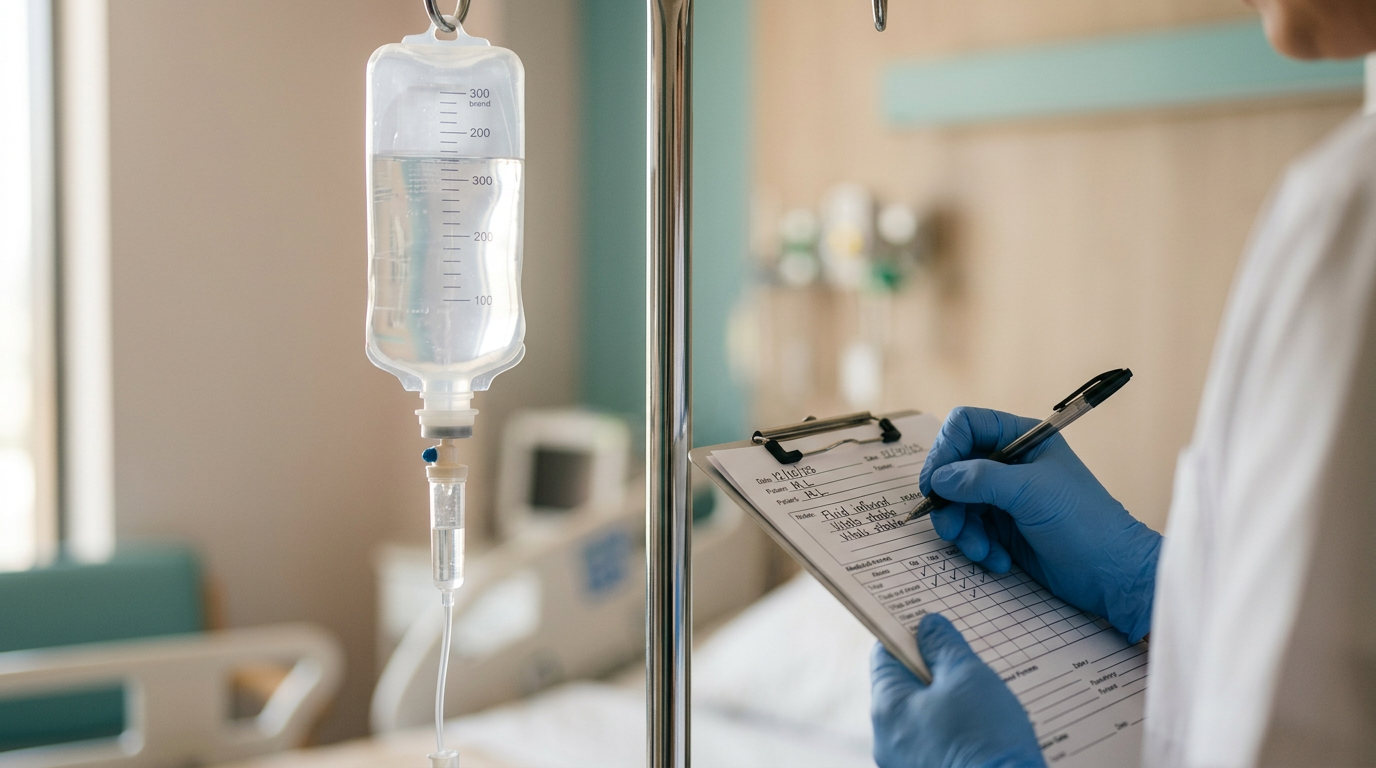
Driving to the ER with a migraine is miserable. Bright lights, the sound of a busy waiting room, a two-to-five-hour wait. All of it makes the attack worse.
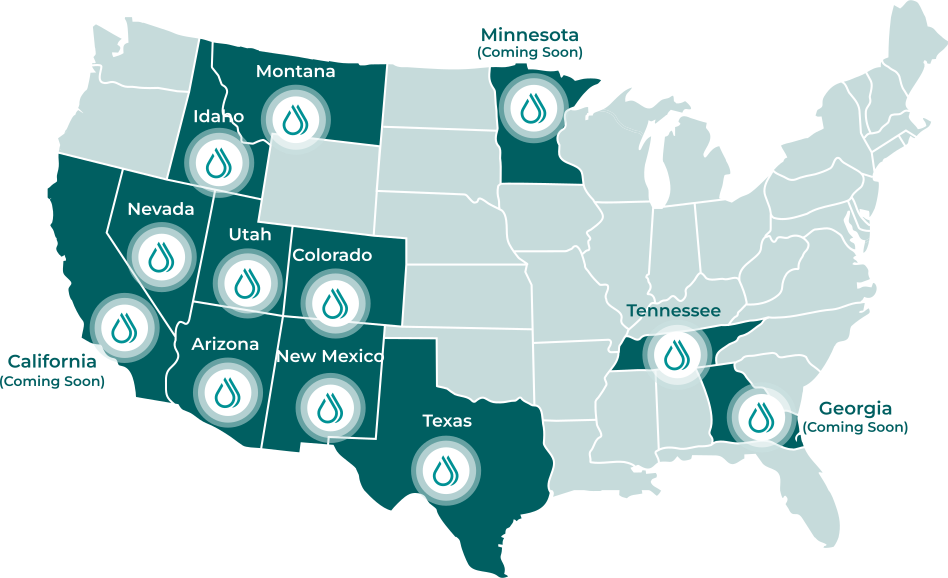
Pure IV brings the treatment to you. Our Migraine IV is available in Nevada, Arizona, Utah, Colorado, New Mexico, Texas, Idaho, Montana, and Tennessee. A licensed NP reviews your health history before every treatment. The bag includes prescription anti-inflammatory medication (Toradol), anti-nausea medication, antihistamine, steroid, magnesium sulfate, B vitamins, amino blend, and 1L of IV fluids.
No ER wait. No driving while in pain. No narcotics.
For patients who get migraines frequently, a monthly Myers Cocktail IV focused on magnesium and B vitamins may help reduce frequency and severity over time. Preventive IV therapy is a different conversation from abortive treatment. But it's worth having if you're dealing with chronic migraines.
If you're in Las Vegas , Scottsdale , Salt Lake City , or Denver , same-day appointments are usually available. Call or book online and we'll come to your home, hotel, or office.
Frequently Asked Questions
How long does a migraine cocktail take to work?
Most patients feel relief within 15 to 30 minutes of starting IV treatment. Full pain reduction usually happens within 30 to 60 minutes. Dexamethasone works on a longer timeline: it prevents the migraine from coming back over the next 24 to 72 hours, rather than cutting the pain in the moment.
Can you get a migraine cocktail outside of the ER?
Yes. Some urgent care clinics offer ketorolac injections. Medically supervised IV bars like Pure IV can deliver a prescription-strength migraine cocktail to your home or hotel. The key is whether a licensed provider is overseeing the treatment and whether prescription medications like Toradol are included. IV bars without NP or physician oversight can only offer OTC-equivalent ingredients.
Is a migraine cocktail safe during pregnancy?
Not all ingredients are safe during pregnancy. NSAIDs like ketorolac are contraindicated in the third trimester. Ergotamines are off the table entirely during pregnancy. IV magnesium is commonly used in obstetric settings and is generally considered safe. Always consult your OB before any migraine treatment during pregnancy.
What is the difference between a migraine cocktail and a Myers Cocktail?
A migraine cocktail is designed to stop an active migraine attack. It includes prescription anti-inflammatory and anti-nausea medications with a fast-acting IV delivery. A Myers Cocktail IV is a general wellness IV: B vitamins, vitamin C, calcium, magnesium. It's better suited for general hydration, prevention, and recovery. Not for stopping a migraine that's already happening.
How much does a migraine cocktail cost without insurance?
ER migraine treatment without insurance typically runs $800 to $2,500 or more once you add facility fees, physician fees, and possible imaging. Per PubMed data, the average ER migraine visit cost $775 in 2010. It's higher today. Pure IV's mobile migraine cocktail costs $285, includes prescription-strength medications under NP supervision, and comes to your location. HSA and FSA cards are accepted.
Can medication overuse headaches happen from migraine cocktails?
Yes. Using any acute migraine medication more than 10 days per month raises your risk of medication overuse headache (MOH), also called a rebound headache. This applies to OTC medications like Excedrin and to prescription treatments. If you're reaching for acute treatment that often, talk to a neurologist about a prevention strategy.
Ready to Skip the ER?
If you have an established migraine diagnosis and your current attack isn't responding to oral medications, you don't have to sit in an ER waiting room.
Pure IV delivers prescription-strength migraine treatment to your home, hotel, or office, with real NP oversight on every single infusion. Book your Migraine IV online or call us directly. Same-day appointments are available in most of our service areas.
Sources
- American Migraine Foundation — What Is a Migraine Cocktail
- PMC — Treatment of Acute Migraine in the Emergency Department (Canadian Family Physician)
- NCBI StatPearls — Migraine Headache
- JHRLMC — Magnesium Sulfate RCT for Acute Migraine
- Magnesium Sulfate and Acute Migraine: A Randomized Clinical Trial
- Practical Neurology — IV Treatment of Headache at Outpatient Infusion Centers
- PMC — Headache-Related Emergency Department Visits
- PubMed — Cost of Emergency Department Migraine Visits
- American Migraine Foundation — What Is Migraine
- Virtual Headache Specialist — ER Migraine Cocktail Recipe and Home Options
Dr. Allison Lane is a board-certified physician who focuses on clear communication, patient safety, and personalized treatment plans. She works closely with our team to ensure care is safe based on each person’s medical history, needs, and goals. Her clinical interests include sports medicine, emergency medicine, and tactical medicine.
Dr. Lane has extensive experience providing medical support for athletes and major events. She is the Medical Director for the Tucson Roadrunners and has served as a team physician for University of Arizona athletics and multiple professional and community sports organizations. She also works as a ringside physician for boxing and MMA events.
She’s also active in community service and medical training, helping teach CPR, Narcan use, Stop the Bleed, and basic first aid. At Pure IV, Dr. Lane's focus is on medical compliance, patient safety, and helping scale Pure IV on the medical side.
Education & Training:
- University of Arizona College of Medicine (2010)
- Emergency Medicine Residency, University of Arizona (2013)
- Primary Care Sports Medicine Fellowship, University of Arizona (2014)
Recent Posts