Dehydration Headache: Causes, Symptoms, and Fast Relief

Medically reviewed by Allison Lane, MD
Joseph Lopez • May 20, 2026

Table of Contents
Dehydration Headache: What's Causing It and How to Make It Stop
Quick answer: Yes, dehydration causes headaches. When your body loses more fluid than it takes in, your brain tissue contracts slightly and pulls away from the skull. That pull puts pressure on pain-sensitive membranes, and that pressure is what you feel pounding in your head. Most dehydration headaches respond to water, electrolytes, and rest within one to two hours. Moderate to severe cases respond fastest to IV fluids.
This guide is for general health information. It is not a substitute for medical advice. If you have a headache with confusion, fainting, or a heart rate over 120 BPM, call 911 or visit an emergency room.
Your head is pounding. You feel it behind your eyes. Moving makes it worse. You haven't had much water today, maybe not since last night.
That's a dehydration headache. And your body is telling you exactly what it needs.
This guide explains what's happening inside your head, how to tell it apart from a migraine or tension headache, and how to get rid of it fast. It also covers the scenarios where a glass of water alone won't be enough.
What Is a Dehydration Headache?
A dehydration headache is head pain caused directly by not having enough fluid in your body. It falls into the category of secondary headaches, meaning something external causes it rather than it being a condition on its own. The International Headache Society classifies it as a "water deprivation headache."
The key word is reversible. Fix the dehydration, and the headache goes away. Per the Cleveland Clinic , a dehydration headache resolves once your brain rehydrates and returns to its normal position.
Even mild dehydration triggers it. Losing just 1 to 2% of your body weight in fluid is enough to cause symptoms including head pain, according to research published in ACSM's Health and Fitness Journal. For a 150-pound person, that's roughly 1.5 to 3 pounds of fluid.
Why Does Dehydration Cause a Headache?
Your Brain Actually Shrinks
Your brain is about 75% water, per Migraine Canada. When you're dehydrated, it loses volume. It contracts slightly and pulls away from the walls of the skull. That pulling creates tension on the meninges, which are the three protective layers wrapped around your brain and spinal cord.
Here's what most people don't know: your brain has no pain receptors. The ache comes entirely from the meninges, which are loaded with them. Fluid shifts during dehydration create traction on this lining, and that traction signals pain, per Harvard Health and a 2021 Mayo Clinic review in Current Pain and Headache Reports.
That's also why movement makes it worse. When you bend forward or stand up quickly, the traction intensifies. The Cleveland Clinic specifically notes that a dehydration headache worsens with those movements, which is a useful diagnostic clue.
Blood Volume, Sodium, and Pain Sensitivity
Dehydration also reduces blood volume and lowers blood pressure. Less blood moving through the brain means less oxygen delivery, which compounds the pain. Functional MRI studies in dehydrated subjects show enhanced activation of the brain's pain networks, per Arca and Halker Singh (2021). Your pain threshold drops across the board.
Sodium matters too. Your body holds water and sodium in constant balance. Drinking large amounts of plain water without replacing electrolytes can dilute sodium levels, a condition called hyponatremia. Low sodium causes its own neurological symptoms, including headache and confusion. Migraine Canada notes that electrolytes still need to come from somewhere even when you're drinking plenty of water.
What Does a Dehydration Headache Feel Like?
The pain is usually a dull, generalized ache. It can be on one side, both sides, the front, the back, or it can feel like your whole head is heavy. Some people describe it as low-grade throbbing.
Dehydration Headache Symptoms Checklist
Beyond the head pain, these signs point to dehydration as the cause:
- Dark yellow or amber urine (pale yellow means you're hydrated; dark means you need more fluid)
- Dry or sticky mouth
- Intense thirst
- Fatigue or low energy
- Dizziness when standing
- Less urination than usual
- Headache that gets worse when you stand up, bend over, or move suddenly
The urine color test is one of the most practical tools you have. No lab required. If your urine looks like apple juice, drink water now. If it's closer to pale lemonade, you're in a reasonable range, per Cleveland Clinic guidance.
Dehydration Headache vs. Migraine vs. Tension Headache
Most online guides describe what a dehydration headache feels like but skip the comparison. Here's how to tell the three most common head pain types apart.
| Feature | Dehydration Headache | Tension Headache | Migraine |
|---|---|---|---|
| Location | All over, or front/back/sides | Band across forehead and neck | Usually one side |
| Pain quality | Dull ache or mild throbbing | Tight, squeezing pressure | Throbbing, pulsating |
| Worsens with movement? | Yes: bending, shaking head | Sometimes | Yes |
| Response to water | Improves in 30 to 120 min | No real improvement | No significant improvement |
| Associated symptoms | Dark urine, dry mouth, thirst, dizziness | Neck and shoulder tension | Nausea, light/sound sensitivity, aura |
| Duration if untreated | 30 min to a few hours | 30 min to 7 days | 4 to 72 hours |
Quick test: drink 16 to 20 oz of water with electrolytes and rest for 30 minutes. If the headache eases, dehydration was likely the cause. If it doesn't move, something else may be going on.
The Dehydration-Migraine Connection
These two overlap more than most people realize. About one in three people with migraine identify dehydration as a trigger, per the American Migraine Foundation. For some, even a slight fluid deficit kicks off a full attack.
The relationship also runs the other way. Migraine causes vomiting in many people, and vomiting causes rapid fluid loss, which worsens the migraine. WebMD calls this bidirectional: dehydration triggers migraine, and migraine drives more dehydration.
A study of 256 women with migraine found that those drinking at least 2 liters of fluid per day had fewer attacks, shorter duration, and less severe pain, per Arca and Halker Singh (2021). Staying hydrated is active migraine management.
If your dehydration headache is tipping into full migraine territory (throbbing on one side, nausea, sensitivity to light and sound), our migraine IV is the fastest path to relief.
How to Relieve a Dehydration Headache Fast
No competitor gives you a timed plan. Here's exactly what to do and when.
10 Minutes: First Moves
Drink 16 to 20 oz of water. Do it slowly. Chugging cold water on an empty stomach can trigger cramping and make things worse.
Add electrolytes. A packet of oral rehydration solution, an electrolyte tablet, or a small pinch of salt stirred into your water will help. Your body needs sodium to hold onto the fluid you're drinking, per Migraine Canada.
Lie down in a cool, quiet room. Close the blinds. Reduce sensory input. Let your body focus on rehydrating.
If you have an OTC pain reliever available, ibuprofen or acetaminophen, take it now. It won't fix the dehydration, but it can reduce the pain while fluids kick in.
1 Hour: If It's Lingering
Drink another 12 to 16 oz of fluid. Broth, coconut water, or a diluted sports drink all work here. They provide sodium and potassium alongside the water. WebMD notes that foods with high water content help too: yogurt is about 70% water, cottage cheese around 80%.
Per Harvard Health, drinking 16 to 32 oz of water typically resolves mild cases within one to two hours. One study found that people with dehydration-triggered migraine attacks got relief within 30 minutes of drinking fluids.
Stay out of the sun and avoid exercise. Let your body repair, not strain.
4 Hours: When Water Alone Won't Fix It
If you've been drinking steadily and the headache hasn't improved in three to four hours, oral fluids may not be enough. Your dehydration may be moderate to severe. Or nausea is preventing you from keeping fluids down.
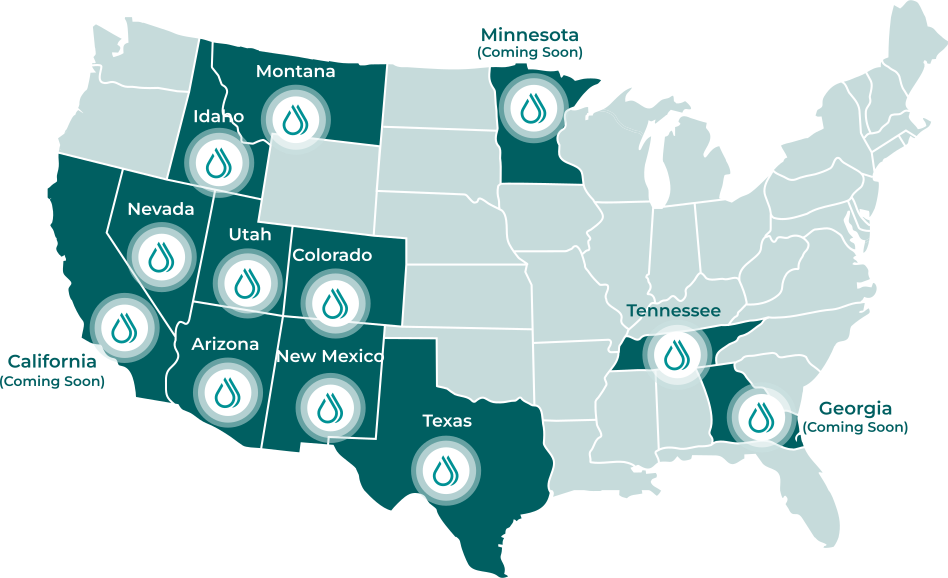
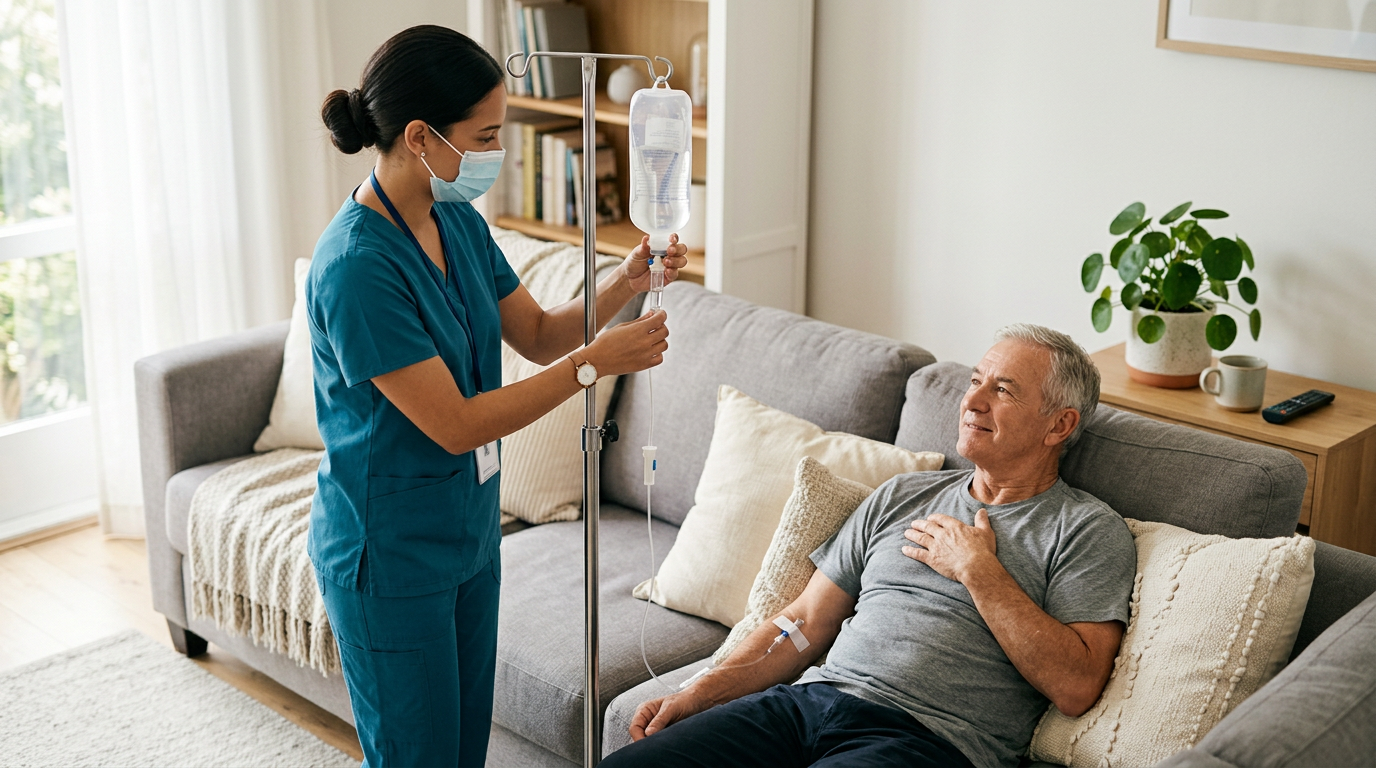
This is when IV hydration makes a real difference. If you're in Las Vegas , Phoenix , Scottsdale , or Denver , Pure IV can come to your hotel, home, or office. A dehydration IV delivers a full liter of saline with electrolytes directly into your bloodstream. Most people feel better within 15 to 45 minutes of starting the drip.
Dehydration Headache Scenarios: Situation by Situation
Different causes of dehydration call for different approaches.
Hangover Headache
Alcohol is a diuretic. It tells your kidneys to flush more water than usual, which is why you wake up with a pounding head and a dry mouth after a night out. But according to Arca and Halker Singh (2021), alcohol's effect on headache goes deeper than simple dehydration. It also provokes oxidative stress and impairs how blood vessels in the brain regulate themselves.
Up to 60% of people with migraine identify alcohol as a headache trigger, per the same research. A hangover headache is dehydration, acetaldehyde toxicity, and vascular disruption happening at the same time.
For hangover-driven dehydration headaches, plain water isn't enough. You need B vitamins (especially thiamine), sodium, and volume. A banana bag IV contains thiamine, folate, magnesium, B-complex vitamins, and saline. It was designed exactly for this situation. Read more in our banana bag hydration guide.
If nausea is also in the picture, our 2-day hangover guide has the full breakdown. A hangover IV is the fastest option when your stomach won't cooperate.
Exercise and Heat
Sweating during exercise can push fluid loss to one liter per hour or more in hot conditions. If you're training outdoors in Phoenix in July, running in Dallas summer heat, or pushing hard in a dry Las Vegas gym, that fluid evaporates off your skin before you notice how much you're losing.
Thirst lags behind actual fluid loss. By the time you feel thirsty, you may already be 1 to 2% dehydrated, the threshold for headaches and cognitive decline, per Riebl and Davy (2013).
Start hydrating before your workout, not during. Drink 16 to 24 oz of water two hours before intense exercise in the heat. After a long session, replace fluids and sodium together. Every pound lost equals roughly 16 oz of fluid to recover.
High Altitude: Denver, Las Vegas, Salt Lake City, Boise
At altitude, air is thinner and drier. Your body works harder to breathe, and every breath carries water vapor out with it. You lose fluid through respiration at a faster rate than at sea level.
Denver sits at 5,280 feet. Salt Lake City is at 4,226 feet. Boise is at 2,730 feet. Even Las Vegas, at 2,001 feet, combines mild altitude with desert-dry air and intense heat. Fly in from sea level and your body is playing catch-up before you've even picked up your luggage.
If you've just arrived in one of these cities and your head starts throbbing by evening, drink two full glasses of water before blaming anything else. Our altitude sickness IV therapy guide goes deeper on the altitude-dehydration overlap.
Illness: Vomiting, Diarrhea, Fever
When you're sick, your body loses fluid from multiple directions: sweating with fever, losing fluid through vomiting and diarrhea, and often not taking in enough to keep up.
A dehydration headache during illness is a warning sign. MedlinePlus lists confusion, fainting, and rapid heartbeat as emergency signs of severe dehydration during illness.
If you can keep fluids down, use small, frequent sips of water or an oral rehydration solution. If you cannot keep anything down, IV fluids are necessary. The gut pathway is closed. The bloodstream is the only way in.
When Water Won't Work: IV Hydration for Dehydration Headaches
Most dehydration headaches respond to oral fluids. But when your stomach won't cooperate, or you've been dehydrated for hours, drinking alone is often a losing battle.
IV hydration delivers fluid and electrolytes directly into the bloodstream. There's no digestion lag and no concern about keeping it down. Per Harvard Health, IV fluids are necessary when vomiting prevents oral rehydration. MedlinePlus confirms that severe dehydration is treated with IV fluids containing salt.
Pure IV brings that treatment to you. You don't have to drive anywhere when your head is pounding.
If you're in Las Vegas after a night out, in Scottsdale after a day in 110-degree heat, or in Denver adjusting to altitude, a dehydration IV gets you from feeling terrible to feeling functional in one session. Most people notice improvement well before the bag is empty.
For dehydration headaches crossing into migraine territory (throbbing on one side, nausea, light sensitivity), a Myers Cocktail adds magnesium, B vitamins, and vitamin C to the saline. Magnesium has direct clinical support as a migraine treatment.
How to Prevent a Dehydration Headache
Prevention is simpler than treatment.
Drink consistently throughout the day. Aim for about 2 liters per day, per Migraine Canada. One cup every two hours during waking hours works without any counting.
Watch your urine color. Pale yellow means you're in range. Dark yellow or amber means drink more now. No lab test needed.
Add electrolytes in hot conditions, during exercise, or after drinking alcohol. Plain water is good. Water with sodium and potassium is better when your body is losing more than usual.
Start hot-weather and high-altitude days ahead of thirst. In Las Vegas in summer, you can lose significant fluid just walking from a casino to a parking lot. Drink a glass before you head out.
If you get migraines, hydration is part of your treatment plan. The American Migraine Foundation links higher daily fluid intake to reduced migraine severity and frequency. Dehydration is one of the most controllable triggers you have.
When to Go to the ER
Most dehydration headaches are uncomfortable but not dangerous. These signs are different.
Call 911 or go to the emergency room if your headache comes with any of the following:
- Confusion or disorientation. You can't think clearly or don't know where you are.
- Fainting or near-fainting.
- Rapid heart rate above 120 BPM.
- Vision problems or blurred vision.
- No urination in more than eight hours.
- Inability to keep any fluids down for several hours.
- A sudden, severe headache unlike any you've had before. This is called a thunderclap headache and is a medical emergency regardless of hydration status. Call 911.
The Cleveland Clinic and MedlinePlus both flag these as emergency indicators. Don't wait them out at home.
If you're not at emergency level but can't keep fluids down, call Pure IV. That's exactly the gap mobile IV therapy fills: too sick for home remedies, not sick enough for the ER.
Frequently Asked Questions
How long does a dehydration headache last?
Most resolve within 30 minutes to 3 hours with treatment. Mild cases often clear up in under 2 hours after drinking 16 to 32 oz of water plus electrolytes, per Harvard Health. Severe cases may need IV fluids.
Where is a dehydration headache located?
Anywhere: front, back, sides, or all over. It usually feels like a dull ache or low-grade throbbing that worsens when you stand up, bend forward, or move quickly, per the Cleveland Clinic.
Can dehydration cause migraines?
Yes. About one in three people with migraine cite dehydration as a trigger, per the American Migraine Foundation. For some, even a minor fluid deficit is enough to start a full attack.
What's the fastest way to get rid of a dehydration headache?
Drink 16 to 20 oz of water with electrolytes. Lie down in a cool, quiet space. Take an OTC pain reliever if needed. If it's not improving after an hour, consider IV hydration. A dehydration IV typically brings relief within 15 to 45 minutes.
When should I go to the ER for a dehydration headache?
Go immediately if you have confusion, fainting, a heart rate above 120 BPM, vision problems, or cannot keep fluids down, per the Cleveland Clinic and MedlinePlus. A sudden severe headache that came on all at once is also an emergency. Call 911.
Does IV therapy help dehydration headaches?
Yes, and faster than oral fluids for moderate to severe cases. IV hydration bypasses the stomach and delivers saline and electrolytes directly to the bloodstream. Most people feel significant improvement within 15 to 45 minutes, per Harvard Health.
Get Relief Today
If you've been drinking water for hours and the headache isn't letting up, or if nausea is making it impossible to stay hydrated, Pure IV can help. Our mobile team comes to your hotel, home, or office in Las Vegas , Phoenix , Scottsdale , Denver , and across our full service area. A dehydration IV takes about 30 to 45 minutes. Most people feel better before the bag is done.
Sources
- Arca KN and Halker Singh RB. "Dehydration and Headache." Current Pain and Headache Reports , 2021. https://pmc.ncbi.nlm.nih.gov/articles/PMC8280611/
- Cleveland Clinic. "Dehydration Headache: What It Is, Symptoms and Treatment." Updated February 2025. https://my.clevelandclinic.org/health/diseases/21517-dehydration-headache
- Harvard Health Publishing. "Can Dehydration Cause Headaches?" Dr. Howard LeWine. https://www.health.harvard.edu/diseases-and-conditions/can-dehydration-cause-headaches
- American Migraine Foundation. "Top 10 Migraine Triggers." https://americanmigrainefoundation.org/resource-library/top-10-migraine-triggers/
- MedlinePlus, U.S. National Library of Medicine. "Dehydration." https://medlineplus.gov/dehydration.html
- WebMD. "Migraine and Dehydration." Jennifer Nelson and Kim Painter, 2024. https://www.webmd.com/migraines-headaches/migraine-dehydration-link
- Migraine Canada. "Hydration and Migraine." https://migrainecanada.org/hydration-and-migraine/
- Riebl SK and Davy BM. "The Hydration Equation." ACSM's Health and Fitness Journal , 2013. https://pmc.ncbi.nlm.nih.gov/articles/PMC4207053/
Dr. Allison Lane is a board-certified physician who focuses on clear communication, patient safety, and personalized treatment plans. She works closely with our team to ensure care is safe based on each person’s medical history, needs, and goals. Her clinical interests include sports medicine, emergency medicine, and tactical medicine.
Dr. Lane has extensive experience providing medical support for athletes and major events. She is the Medical Director for the Tucson Roadrunners and has served as a team physician for University of Arizona athletics and multiple professional and community sports organizations. She also works as a ringside physician for boxing and MMA events.
She’s also active in community service and medical training, helping teach CPR, Narcan use, Stop the Bleed, and basic first aid. At Pure IV, Dr. Lane's focus is on medical compliance, patient safety, and helping scale Pure IV on the medical side.
Education & Training:
- University of Arizona College of Medicine (2010)
- Emergency Medicine Residency, University of Arizona (2013)
- Primary Care Sports Medicine Fellowship, University of Arizona (2014)
Recent Posts