Banana Bag IV: What's In It and Who Needs One

Medically reviewed by Allison Lane, MD
Joseph Lopez • May 13, 2026
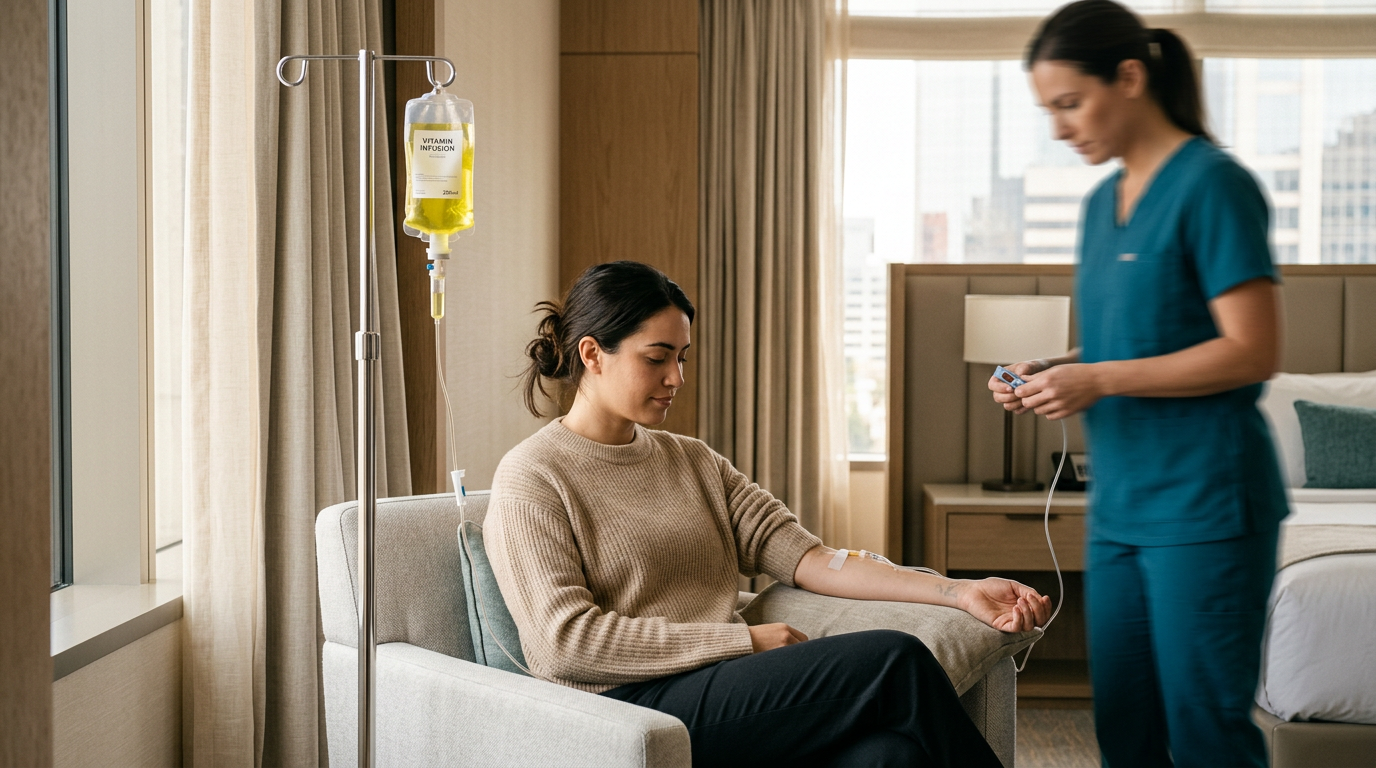
Table of Contents
Quick answer: A banana bag is a 1-liter IV drip containing thiamine (B1), folic acid (B9), magnesium sulfate, and a multivitamin (MVI) dissolved in normal saline. It gets its yellow color from riboflavin in the multivitamin, not potassium as many people assume. Hospitals have used it for decades to treat alcohol use disorder and malnutrition. Today, mobile IV services bring the same clinical-grade formula to your home, hotel room, or office.
I've spent years working alongside ER nurses and critical care professionals. In that world, the banana bag is routine. Nurses hang them almost without thinking. Patients ask about the yellow bag. Most of them get a two-word answer: "vitamins, mostly."
That answer isn't wrong. But it leaves out a lot.
What's actually in a banana bag? Why does it exist? Is the standard formula even adequate? Who should get one, who should skip it, and what does it cost outside a hospital? This is the guide that covers all of it.
What Is a Banana Bag?
A banana bag is an IV drip that combines four nutrients in a liter of fluid. The four ingredients are thiamine (vitamin B1), folic acid (vitamin B9), a multivitamin for infusion, and magnesium sulfate. The whole thing runs through an IV line directly into your bloodstream.
According to Wikipedia's clinical reference on the banana bag , hospitals typically infuse the bag over 4–8 hours at a slow, controlled rate. Wellness and mobile IV providers deliver a similar formulation in 45–60 minutes at a faster rate suited to otherwise healthy adults.
The term "banana bag" gets used two ways. In a hospital, it almost always means the standard four-ingredient protocol for a patient with alcohol use disorder or malnutrition. In a wellness setting, it can mean a broader formulation that adds vitamin C, B12, glutathione, or zinc on top of the base formula.
Both versions share the same core goal: replenish nutrients that the body has burned through or can't absorb on its own.
Why Is It Called a Banana Bag?
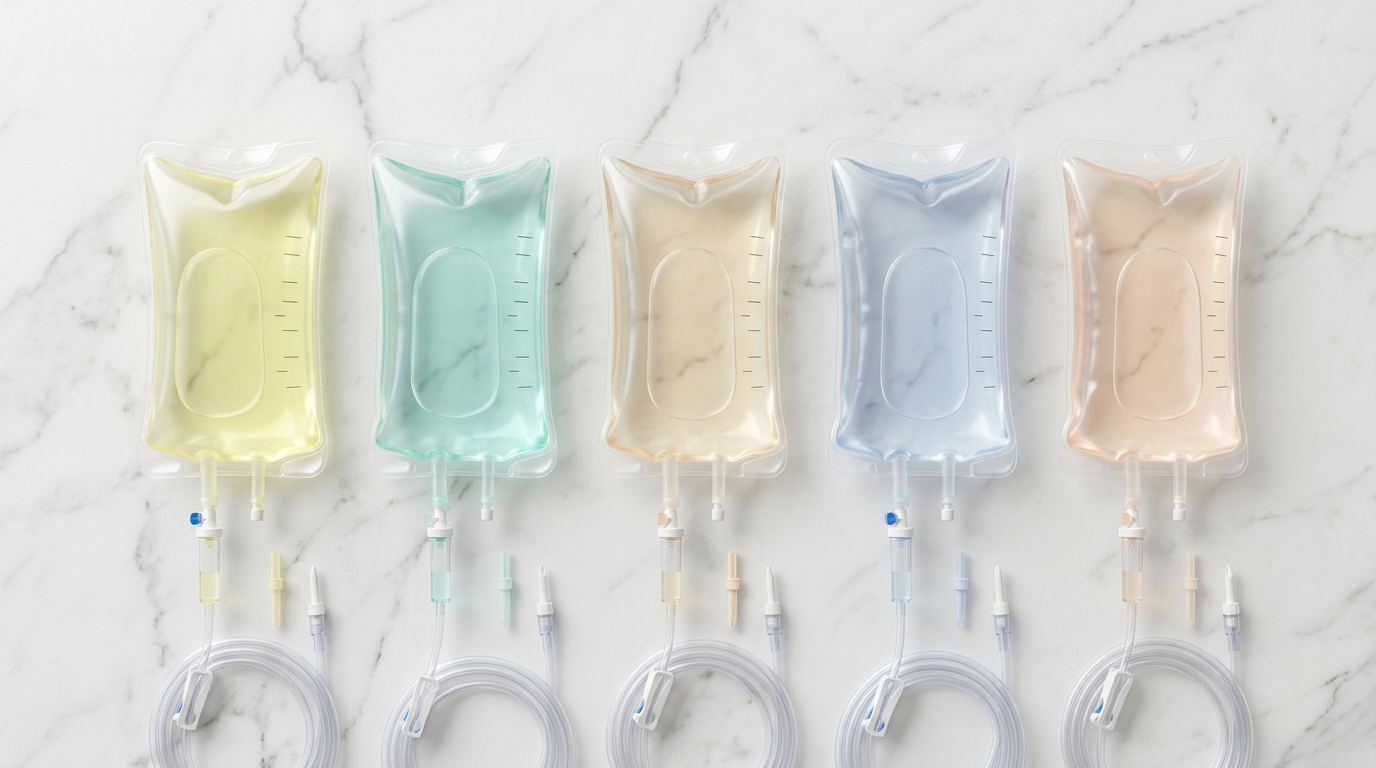
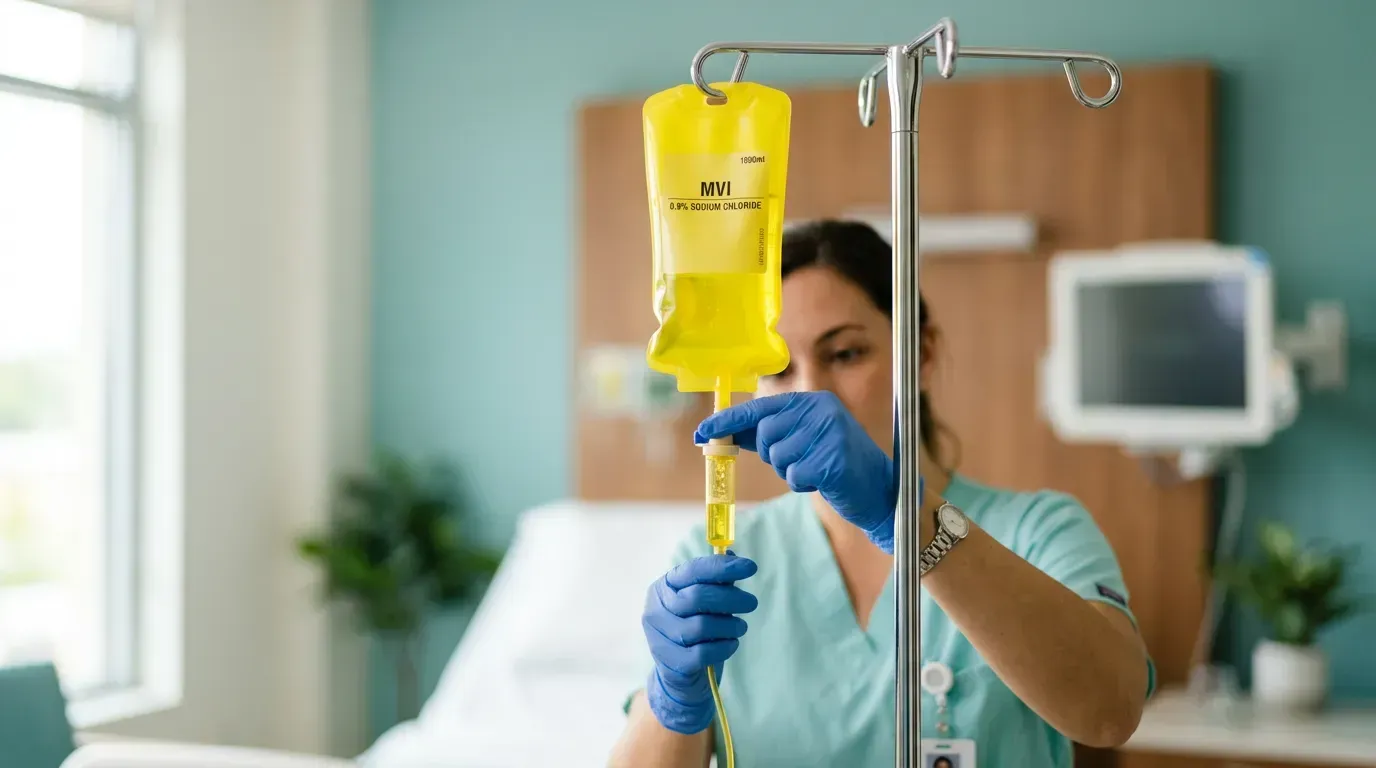
The name is purely visual. When you mix riboflavin (vitamin B2) from the multivitamin and the yellow-green color of folic acid into a clear saline bag, the fluid turns bright yellow. It looks like a ripe banana hanging on an IV pole.
Rapid Recovery Room's clinical explainer is one of the clearest on this point: the color comes from riboflavin, not potassium. Most banana bags contain zero potassium. The myth about potassium persists, but it isn't true.
Hospital staff picked up the nickname organically. No one trademarked it. No one put it in a medical textbook. It spread through ERs and ICUs because it was an easy shorthand for a specific set of vitamins ordered for a specific type of patient. The more formal name you'll see in clinical literature is "alcohol withdrawal IV" or "nutritional replenishment bag." Some providers call it a rally pack.
What's In a Banana Bag? Exact Ingredients and Doses
There is no federal law that defines what must be in a banana bag. Rapid Recovery Room notes this directly: "no rule or regulation" governs the name. That means the formulas you see at different clinics can vary. But the standard hospital version is well established. Here is what is in it and why each ingredient matters.
| Feature | Hospital | Wellness (Pure IV) |
|---|---|---|
| Thiamine (B1) | 100 mg IV | 100 mg IV |
| Folic acid | 1 mg IV | 1 mg IV |
| Multivitamin (MVI) | 1 ampule | B-complex blend |
| Magnesium sulfate | 1 to 3 g IV | 1 to 2 g IV |
| Base fluid | 1L Normal Saline | 1L Normal Saline |
| Infusion time | 4 to 8 hours | 30 to 60 minutes |
| Setting | ICU or ER | Home, hotel, office |
| Primary use | Alcoholic, malnourished | Hangover, recovery, wellness |
| Cost (out of pocket) | $500 to $2,000+$ | $200 to $400 |
| Insurance billable | Yes | Usually no |
Source: Flannery et al. 2016 (Crit Care Med), StatPearls thiamine deficiency reviewpureiv.com
Thiamine (Vitamin B1): 100 mg
Thiamine is the most important ingredient in the bag. Full stop.
Your body can only store 30–50 mg of thiamine at a time. According to StatPearls on NIH , those stores deplete within about four weeks if you stop taking thiamine in through food. Alcohol makes this worse. Chronic alcohol use damages the gut lining and reduces thiamine absorption. You can eat a thiamine-rich diet and still run low if you drink heavily.
When thiamine drops too low, the brain starts to fail. The result is Wernicke encephalopathy (WE), a neurological emergency. The classic three warning signs are eye movement problems (nystagmus or ophthalmoplegia), mental confusion, and loss of coordination. StatPearls notes that the full three-symptom triad is rare in practice. Most WE patients present with only one or two signs, which means the condition gets missed. Untreated Wernicke's progresses to Korsakoff syndrome, which causes severe memory loss that is largely permanent.
Here is where it gets complicated. The 100 mg dose in the standard banana bag was not chosen based on clinical trials. A 2016 review published in Critical Care Medicine by Flannery, Adkins, and Cook at the University of Kentucky found that 100 mg is pharmacokinetically inadequate for ICU patients with alcohol use disorder. Thiamine at that dose does not reach the therapeutic levels needed to protect the brain in critically ill patients. The paper recommends 200–500 mg IV thiamine every eight hours on day one for severe cases. The Hospitalist's physician critique confirms the same thing: the 100 mg dose "was apparently chosen arbitrarily in the 1950s."
For wellness patients recovering from a hangover or general depletion, 100 mg still replenishes what a typical adult needs. The debate is specifically about ICU patients with serious alcohol use disorder, not healthy adults seeking recovery support.
Folic Acid (Vitamin B9): 1 mg
Folic acid is essential for making and repairing DNA, producing red blood cells, and supporting cell division. Deficiency is very common in people with alcohol use disorder because alcohol blocks folate absorption in the gut.
The clinical evidence for IV folate in banana bags is thinner than you might expect. The Hospitalist's review points out that standard multivitamin ampules already contain about 400 mcg of folate, so the added 1 mg IV folic acid may be redundant in many patients. Still, folate deficiency is real in this population, and 1 mg IV is safe. It also contributes to the bag's color.
Magnesium Sulfate: 1 to 3 g
Magnesium does more than relax muscles. It is a cofactor for hundreds of enzymatic reactions in the body, including the conversion of thiamine into its active form, thiamine pyrophosphate. Smith et al.'s 2020 review in the Journal of Pharmacy Technology explains this directly: hypomagnesemia causes "thiamine refractoriness," meaning thiamine supplementation won't work correctly if magnesium is also low. You need both.
The standard hospital banana bag contains 1–3 g of magnesium sulfate. Flannery 2016 recommends 64 mg/kg (roughly 4–5 g) for ICU patients. For wellness use, 1–2 g is appropriate and gives most adults the relief they are looking for: easing muscle tension, reducing headache, improving energy.
Multivitamin for Infusion (MVI): 1 Ampule
The multivitamin ampule is the source of the yellow color. It contains a mix of fat-soluble and water-soluble vitamins: riboflavin (B2), niacin (B3), B6, B12, vitamin C, vitamin D, vitamin E, vitamin K, and pantothenic acid. When riboflavin hits the saline, the whole bag turns yellow.
Flannery 2016 is blunt: there is no published evidence that the MVI component does anything meaningful in the clinical banana bag context. That doesn't mean vitamins are useless. It means the evidence base for adding a multivitamin to a hospital drip for alcohol withdrawal specifically has never been formally tested. For wellness patients in a non-emergency setting, a broad spectrum of vitamins supports overall replenishment and is widely used by mobile IV providers.
The Base: Normal Saline or D5W
The carrier fluid is usually 0.9% normal saline (1 liter). Some hospital protocols use D5W (dextrose 5% in water), which adds a small amount of glucose. D5W is generally avoided in patients at risk for Wernicke's as a first step, because glucose can precipitate a thiamine crisis if given before thiamine is on board. For wellness use, normal saline is the standard carrier.
Why Was the Banana Bag Created? The Clinical Origin Story
The banana bag started in hospital wards, not wellness clinics. In the mid-20th century, physicians treating patients with chronic alcohol use disorder needed a fast way to correct the nutrient deficiencies that came with years of drinking. These patients often presented malnourished, confused, and unable to eat. IV nutrition was the only practical option.
The four-ingredient formula became routine in emergency medicine and critical care by the 1970s and 1980s. Nurses hung the yellow bags so frequently for AUD patients that the slang took hold. The banana bag became shorthand for an entire clinical picture: a patient drinking heavily, depleted of B vitamins, on the edge of neurological crisis.
The formula has barely changed since then. That is both its strength and its limitation. A 2025 clinical review published in PMC confirms that thiamine remains chronically underused in hospital settings even today, especially in alcoholic patients who present with non-withdrawal diagnoses like sepsis or traumatic brain injury. The standard bag exists because it's easy to order and fast to hang. Whether it's optimal is a different question, and researchers have been asking it.
Who Actually Needs a Banana Bag?
Medical Indications: Alcohol Use Disorder and Malnutrition
The original clinical target was patients with alcohol use disorder (AUD). Chronic heavy drinking creates a predictable nutritional crisis. Thiamine absorption drops. Folate absorption drops. Magnesium gets excreted in excess through the kidneys. The combined effect is a body that is depleted of the exact nutrients needed to protect the brain and nervous system.
According to StatPearls on NIH , the populations with the highest clinical need for thiamine replenishment via IV include:
- People with chronic alcohol use disorder
- Bariatric surgery patients (especially post-gastric bypass)
- Severely malnourished patients
- Patients on prolonged diuretic therapy
- Pregnant women with hyperemesis gravidarum (severe, persistent vomiting)
- ICU patients with acute magnesium deficiency
The Hospitalist cites autopsy data suggesting Wernicke's encephalopathy may have a 12.5% prevalence among alcoholics, far higher than clinical diagnoses suggest. Most cases go undetected during life. That is why IV thiamine is given empirically in ER settings without waiting for lab results to confirm deficiency.
If you've been drinking heavily for years, tell your provider before getting any IV therapy. That changes the formulation, the dose, and possibly the setting.
Other Clinical Uses: Bariatric Surgery, Hyperemesis, ICU
Bariatric surgery patients face a similar problem. The surgical rerouting of the digestive tract reduces thiamine absorption significantly. Praharaj et al. 2021 confirms that parenteral thiamine is required in these cases because the gut can no longer reliably absorb nutrients from food or oral supplements.
Pregnant women with hyperemesis gravidarum need IV thiamine when persistent vomiting blocks all oral nutrition. That requires OB clearance first. In the ICU, banana bag formulations are also used for magnesium repletion in patients who can't eat or who are losing electrolytes through aggressive diuretic use.
Wellness Uses: Hangovers, Dehydration, Athletes
Outside the hospital, the banana bag has found a much larger audience. Most people who get one at a mobile IV clinic are recovering from a hangover, treating dehydration after illness, or replenishing after intense physical exertion.
This is a legitimate use. A heavy night of drinking depletes B vitamins, drops magnesium, and dehydrates you at the same time. Oral rehydration works, but it's slow when your stomach is already irritated. IV delivery bypasses the gut entirely and delivers fluid and nutrients directly to the bloodstream. Our hangover IV service is the most direct option for this situation. For more on the hydration mechanics, see our banana bag hydration guide.
Athletes in high-altitude cities like Denver or Albuquerque, or endurance athletes after a race, often experience similar depletion. Altitude sickness IV therapy is a related use case where the magnesium and B-vitamin replenishment in a banana bag can ease the physical effects of rapid altitude gain.
Hospital Banana Bag vs. Wellness Banana Bag: What's Different?
The core ingredients are the same. The context, dose, timing, and add-ons are where they diverge.
A hospital banana bag is infused slowly over 4–8 hours. The rate is slow because the patient is often fragile: malnourished, possibly in withdrawal, with stressed kidneys or a stressed heart. The goal is correction of a deficiency in a controlled setting with monitoring.
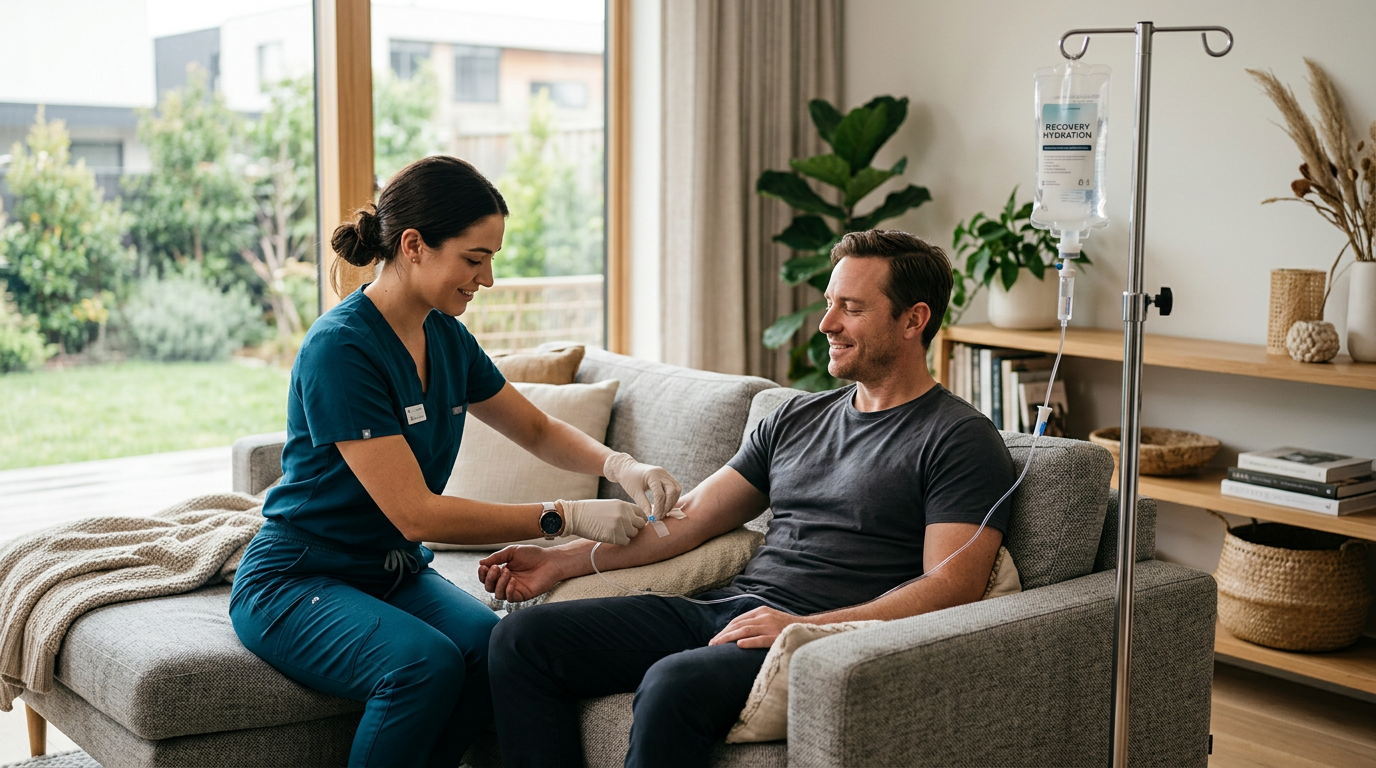
A wellness banana bag runs in 45–60 minutes. Mobile IV Nurses' clinical overview confirms this range. The patient is otherwise healthy. The goal is fast replenishment. An RN screens the patient first, checks vitals, and monitors throughout.
Wellness banana bags often include add-ons not found in the hospital version. Vitamin C supports immune function and acts as an antioxidant. Glutathione helps the liver clear out toxins like acetaldehyde. Zinc supports immune response. Anti-nausea medication like Zofran can be added for hangover patients who can't keep food or water down.
The key difference that matters most: a hospital banana bag is a medical necessity. A wellness banana bag is clinical-grade recovery support. Both are real. Both have value. The setting and severity define which you need.
Banana Bag for Hangovers: Does It Actually Work?
Yes, for the right reasons.
A hangover is not just dehydration. It is dehydration plus electrolyte loss plus B-vitamin depletion plus the toxic effect of acetaldehyde on your liver plus disrupted sleep. The banana bag addresses most of those at once. The saline restores fluid volume. The magnesium replaces what you lost through urination. The thiamine and B vitamins support energy metabolism while your liver is still working overtime to clear the alcohol.
What the banana bag doesn't fix: the acetaldehyde your liver still needs to process, and the lost sleep. No IV changes the speed at which your liver breaks down toxins. But you feel better faster because the fluid and electrolyte deficits are corrected in 45 minutes instead of the 3–4 hours it takes to drink enough water.
If your hangover includes nausea, check out our guide on how to get rid of hangover nausea fast , which walks through step-by-step remedies including when IV therapy makes the most sense. For hangovers lasting 48 hours or more , a banana bag with anti-nausea medication is often the fastest route back to functional.
Also worth knowing: understanding how long you stay drunk helps set realistic expectations. The banana bag speeds recovery from the post-alcohol phase. It cannot speed up how fast your liver metabolizes the alcohol still in your system.
How Fast Does a Banana Bag Work?
Most people notice an improvement during the infusion itself, typically 20–30 minutes in. By the time the bag is empty (45–60 minutes for a wellness session), most patients report feeling 60–80% better. Full effects continue to build over the following hour as the body puts the nutrients to use.
Banana Bag vs. Myers Cocktail: What's the Difference?
These two IV drips get confused all the time. One competitor even credited the banana bag to Dr. John Myers, which is flat wrong.
Dr. John Myers was a Baltimore physician who developed his formula in the 1970s and 1980s for treating chronic conditions: asthma, fibromyalgia, fatigue, depression, and migraines. The Myers cocktail is built around magnesium, calcium, B vitamins, and high-dose vitamin C. The goal is systemic support for people managing long-term health issues, not acute deficiency correction.
The banana bag has a different origin. It came out of hospital medicine for malnutrition and alcohol use disorder. Its emphasis is on thiamine and folate, not vitamin C and calcium. HydraMed's comparison of banana bags and Myers cocktails covers the historical distinction well.
In practice at wellness clinics, the two formulas have drifted toward each other. Many providers add vitamin C to their banana bag. Many Myers cocktails include B vitamins. The overlap is real.
Here is the simple version:
| Banana Bag | Myers Cocktail | |
|---|---|---|
| Origin | Hospital / AUD treatment | Baltimore clinic / chronic conditions |
| Core goal | Thiamine + folate + magnesium replenishment | Magnesium + calcium + vitamin C for chronic support |
| Primary use today | Hangover recovery, acute depletion | Fatigue, migraines, immune support, fibromyalgia |
| Calcium | No | Yes |
| Thiamine emphasis | Yes | Lower emphasis |
The choice depends on what you're after. For a severe hangover or post-drinking recovery, the banana bag formula fits better. For ongoing energy, immune support, or migraine management, the Myers cocktail is often the better call. If you're not sure, see our guide on the best IV drip for energy to compare options.
Pure IV offers both. Neither is better in every situation.
Side Effects and Contraindications
Who Should Not Get a Banana Bag IV?
Not everyone is a good candidate. AZ IV Medics' pharmacist-authored contraindication guide outlines the key restrictions:
Do not get a banana bag IV if you have:
- Severe kidney failure (your kidneys can't clear excess electrolytes or fluid)
- Severe congestive heart failure (extra fluid volume stresses a failing heart)
- A known allergy to B vitamins or IV preservatives
Get clearance first if you have:
- Mild-to-moderate kidney disease (possible with slower infusion and adjusted dosing)
- Pregnancy (requires OB approval; banana bags are used for hyperemesis under medical supervision, but clearance is required)
- Pediatric patients (weight-based dosing is required)
- Age 65 or older with multiple medical conditions (slower infusion rates)
This is why a licensed RN screens every patient before infusion. At Pure IV, all infusions are administered by registered nurses. The screening conversation is not a formality. It is the safety step that makes the rest possible.
What Side Effects Are Possible?
Side effects are uncommon when the banana bag is administered correctly. Here is what can happen:
Mild and expected:
- Flushing or warmth during infusion (usually from magnesium)
- A cooling sensation in the arm near the IV site
- Minor bruising or soreness at the needle site
- Slightly metallic taste (from the B vitamins)
Rare but real:
- Nausea if the infusion runs too fast
- Fluid overload in patients with compromised kidney or heart function
- Rare anaphylaxis to B-vitamin components or preservatives. The NHS's thiamine safety page describes the signs: sudden swelling of the lips, mouth, or throat; difficulty breathing; rapid heart rate; skin color changes. If any of these occur, call 911.
For a deeper look at IV therapy risks and how to minimize them, see our IV therapy side effects page.
How Much Does a Banana Bag Cost?
Cost varies significantly based on where you get it.
Mobile IV / wellness provider: $150–$400. Vida-Flo lists their banana bag IV at $199 retail ($49 for members). Pure IV's pricing is in the same range and varies by market and any add-ons selected. This typically includes the RN's time, the bag, all medications added, and travel to your location.
Hospital emergency room: $500–$2,000+. The IV itself may cost $100–$300 in materials, but the hospital adds an ER facility fee, a separate physician fee, nursing time, and any additional tests ordered. If you came in for a hangover and left with a $1,400 bill, the banana bag wasn't the expensive part. The ER visit was.
A hospital visit is the right call in a medical emergency. Severe confusion, uncontrolled vomiting you can't stop, signs of alcohol withdrawal seizures, or chest pain: those require an ER. For a severe hangover or nutrient replenishment in a healthy adult, mobile IV brings clinical-grade care without the facility bill.
Where to Get a Banana Bag Near You
Mobile IV vs. ER: Choosing the Right Setting
The clearest way to think about it: if you're in danger, go to the ER. If you're depleted and miserable but not in danger, mobile IV is the faster, more comfortable, and far less expensive option.
A licensed RN comes to you. You stay in your hotel room, your home, or your office. You don't sit in an ER waiting room for two hours. The whole session, from arrival to bag empty, takes about 60–90 minutes.
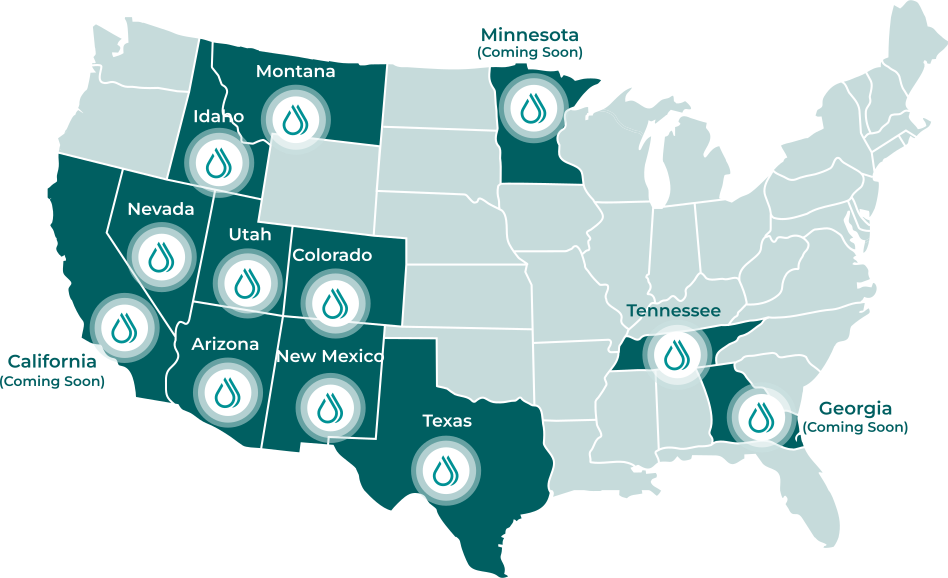
Pure IV's banana bag IV service is delivered by registered nurses across Nevada, Arizona, Utah, Colorado, New Mexico, Texas, Idaho, Montana, and Tennessee. Every nurse is a licensed RN. That matters. Some mobile IV services use paramedics or medical assistants for IV placement. Pure IV's RN-only model means you have the same clinical standard at your bedside that you'd have in a hospital setting.
Demand is highest in a few predictable places. Las Vegas is pool days, big pours, and back-to-back nights. Nashville is bachelorette weekends on Music Row. Scottsdale and Phoenix are 105°F pool days paired with cocktails. Denver and Salt Lake City are high-altitude markets where your body works harder just to compensate for thin air. Dallas , Austin , Albuquerque , and Boise round out the footprint.
If you flew in from sea level, drank, and now feel like you got hit by a bus, that's not a coincidence. Altitude sickness IV therapy explains why altitude amplifies dehydration and what to do about it.
If you want to explore all IV therapy options together, see our IV treatments hub and our IV therapy packages.
Frequently Asked Questions
What is in a banana bag IV?
A standard banana bag contains thiamine (100 mg), folic acid (1 mg), a multivitamin for infusion, and magnesium sulfate (1–3 g), all in 1 liter of normal saline or D5W. Wikipedia's banana bag reference confirms this composition. Wellness providers often add vitamin C, B12, glutathione, and zinc as optional components.
Why is it called a banana bag?
The name comes from the bright yellow color of the IV solution, caused by riboflavin (B2) in the multivitamin and folic acid. Rapid Recovery Room's explainer is clear: potassium does not cause the color, and most banana bags contain no potassium at all. Hospital staff nicknamed the yellow bag after the fruit.
Does a banana bag have alcohol in it?
No. A banana bag contains vitamins, minerals, and saline. There is no alcohol in the formula. The confusion probably comes from the historical use of banana bags to treat alcohol withdrawal in hospitals.
What does a banana bag taste like?
IV fluids are delivered directly into the bloodstream, so you don't taste anything the way you would with an oral drink. Some patients notice a slightly warm or metallic sensation during infusion from the magnesium and B vitamins, but there is no distinct flavor.
How long does a banana bag IV take?
A wellness banana bag takes 45–60 minutes. Hospital banana bags run over 4–8 hours at a slower rate suited to fragile patients.
How much does a banana bag cost?
Mobile IV and wellness providers typically charge $150–$400. In a hospital emergency room, the same treatment can run $500–$2,000+ once ER facility fees, physician fees, and tests are added.
Ready to Book a Banana Bag?
If you're dealing with a rough morning, recovering from a big event, or just running low after a demanding week, Pure IV's licensed RNs come to you. No waiting room. No facility fees. Just clinical-grade IV therapy at your door.
Book your banana bag IV service or explore our full range of IV therapy packages to find the right fit for your situation.
Sources
- Flannery et al. 2016 — "Unpeeling the Evidence for the Banana Bag," Critical Care Medicine (PubMed)
- StatPearls — Vitamin B1 (Thiamine) Deficiency, NIH/NCBI
- Smith et al. 2020 — Thiamine Dosing for Alcohol-Induced Wernicke's Encephalopathy, PMC
- Praharaj et al. 2021 — High-dose thiamine strategy in Wernicke-Korsakoff syndrome, PMC
- Thiamine Use in Hospitalized Patients 2025 — PMC
- The Hospitalist — "Challenging Dogma: The banana bag," Hickman 2023
- NHS — Side effects of thiamine
- Wikipedia — Banana bag
- AZ IV Medics — Electrolyte Essentials in Banana Bags: A Pharmacist's Guide
- Rapid Recovery Room — Exactly WHAT is a banana bag?
- HydraMed — How Are Banana Bags and Myers Cocktails Different?
- Vida-Flo — Banana Bag Infusion Pricing
- Mobile IV Nurses — What Is a Banana Bag IV?
- Pure IV Utah — IV Therapy Side Effects
This guide is for general health information. It is not a substitute for medical advice. If you have chest pain, severe confusion, difficulty breathing, or signs of a medical emergency, call 911 or go to an emergency room immediately.
Dr. Allison Lane is a board-certified physician who focuses on clear communication, patient safety, and personalized treatment plans. She works closely with our team to ensure care is safe based on each person’s medical history, needs, and goals. Her clinical interests include sports medicine, emergency medicine, and tactical medicine.
Dr. Lane has extensive experience providing medical support for athletes and major events. She is the Medical Director for the Tucson Roadrunners and has served as a team physician for University of Arizona athletics and multiple professional and community sports organizations. She also works as a ringside physician for boxing and MMA events.
She’s also active in community service and medical training, helping teach CPR, Narcan use, Stop the Bleed, and basic first aid. At Pure IV, Dr. Lane's focus is on medical compliance, patient safety, and helping scale Pure IV on the medical side.
Education & Training:
- University of Arizona College of Medicine (2010)
- Emergency Medicine Residency, University of Arizona (2013)
- Primary Care Sports Medicine Fellowship, University of Arizona (2014)
Recent Posts