What Is an IV Drip Bar? (The Complete Guide)

Medically reviewed by Allison Lane, MD
Joseph Lopez • May 13, 2026

Table of Contents
Quick answer: An IV drip bar is a walk-in wellness clinic where a registered nurse delivers fluids, vitamins, and minerals directly into your bloodstream through a small IV catheter in your arm. Sessions run 45–60 minutes, cost $100–$300 on average, and are not covered by insurance. You sit in a comfortable chair, get your drip, and walk out. No hospital. No waiting room. No prescription needed at most locations.
It's 11 a.m. on a Saturday. You're in Las Vegas after a long night. Your head is pounding, your stomach is empty, and the thought of drinking water sounds like work. You walk into a clean, low-lit lounge, sit down in a leather recliner, and 45 minutes later a nurse removes the IV line and you walk out feeling like yourself again.
That's an IV drip bar.
The concept has gone from niche celebrity treatment to a growing industry in cities like Las Vegas, Denver, Scottsdale, Nashville, and Austin. There are now thousands of IV drip bar locations across the country, and the questions people ask about them are real and reasonable: What's in the bag? Is it safe? Is it worth the money? Who should skip it entirely?
This guide answers all of it.
What Is an IV Drip Bar?
An IV drip bar is a clinic where you receive intravenous hydration therapy outside a hospital setting. A licensed nurse inserts a small catheter into a vein in your arm and connects it to a bag of fluid. That fluid flows directly into your bloodstream over 45–60 minutes.
The "bar" part of the name refers to the lounge setup. Think recliners, ambient lighting, maybe some music. It's designed to feel more like a spa than a medical office, even though real medical professionals are doing the work.
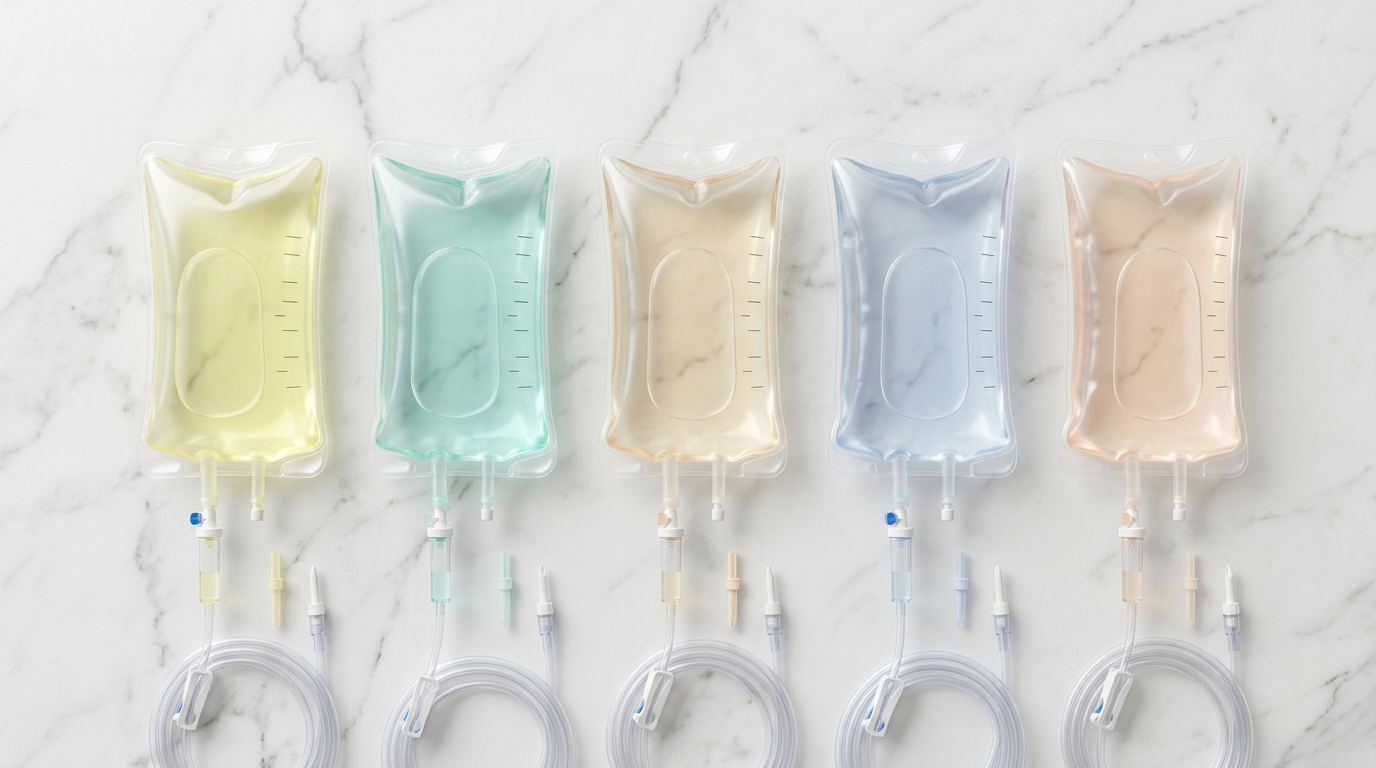
The fluids typically include saline or Lactated Ringer's (the same base fluids used in hospitals) mixed with vitamins, minerals, antioxidants, or medications depending on which drip you choose.
IV Drip Bar vs. Hospital IV vs. Urgent Care: What's the Difference?
A hospital IV is used for medical emergencies. Dehydration, surgical recovery, medication delivery. You don't choose what goes in the bag, and you're not there by choice.
An urgent care IV is somewhere in the middle. You go because you're sick enough to need help, but not sick enough for the ER.
An IV drip bar is elective. You go because you want to feel better faster, recover from a tough workout, prep for a flight, or just get a nutrient boost. You pick the drip from a menu. A nurse administers it. You leave and go about your day.
The ingredients are different, the setting is different, and the intent is different. But the delivery method, a needle in your vein and a bag on a pole, is exactly the same.
How an IV Drip Bar Works: From Check-In to Checkout
The process is straightforward. Here's what to expect.
What to Expect During Your First Visit
You walk in and either check in at the front desk or fill out a short health intake form. This form matters. A good drip bar will ask about current medications, medical history, allergies, and whether you have any conditions that make IV therapy risky.
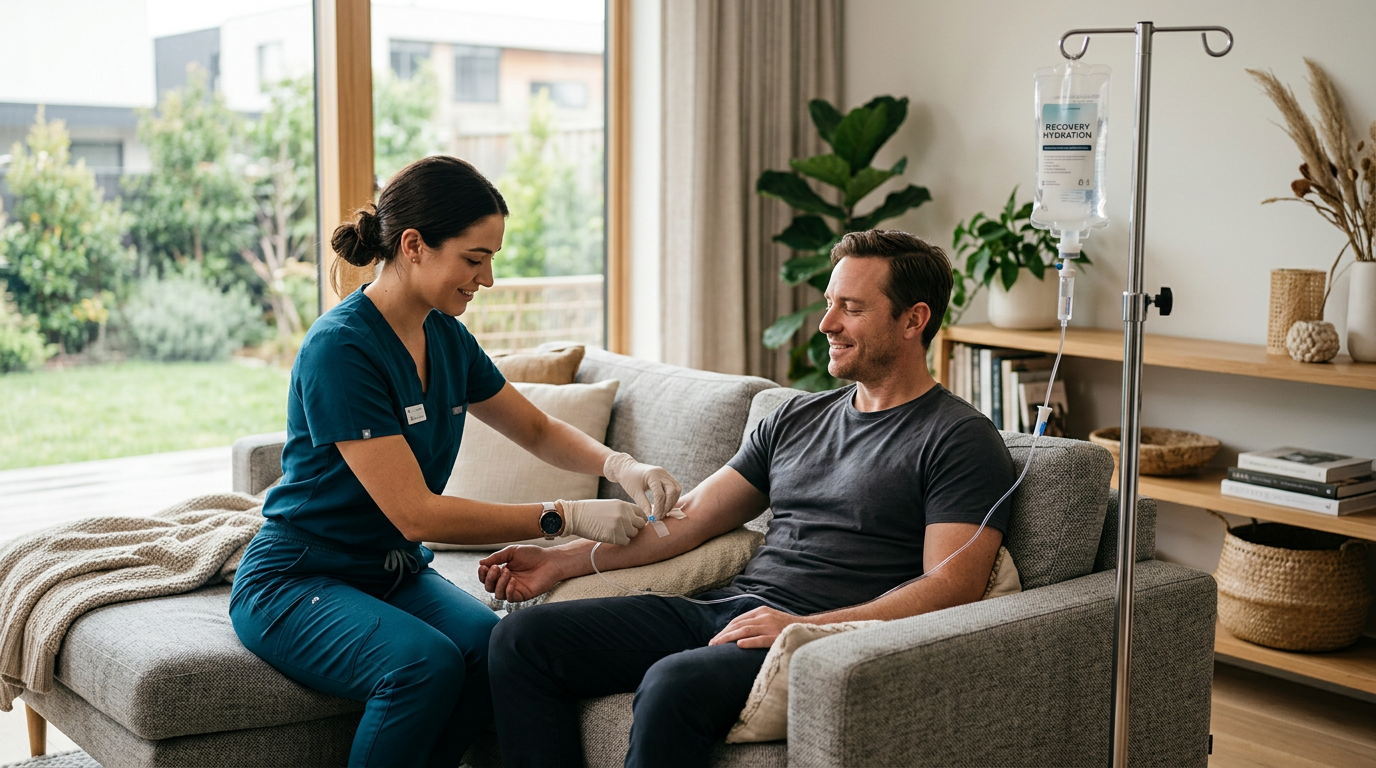
Once you're checked in, a registered nurse reviews your intake and confirms which drip you're getting. They'll find a vein, clean the skin with an antiseptic wipe, and insert a small IV catheter. Most people feel a brief pinch and then nothing.
The bag is hung on an IV pole next to your chair. You sit back. The drip runs on gravity and a flow regulator. You can read, scroll your phone, watch something, or just close your eyes.
When the bag is empty, the nurse flushes the line with a small amount of saline, removes the catheter, and applies a bandage. You're done.
How Long Does a Session Take?
Most standard drips take 45–60 minutes from needle to removal. A hydration-only drip might finish in 30 minutes. A Myers' cocktail typically runs 45–60 minutes.
A NAD+ therapy session can take 2–3 hours depending on the dose, because NAD+ needs to drip slowly to avoid side effects like chest tightness or nausea.
You do not need recovery time afterward. You walk out and return to normal activity.
What's in the Bag? The IV Drip Bar Menu Explained
This is where most guides fall short. Let's go through the actual ingredients in each major drip type.
| Drip | Key Ingredients | Best For | Typical Cost |
|---|---|---|---|
| Myers Cocktail | B-complex, vit C, magnesium, calcium | Energy, immune, general wellness | $150$ to $250$ |
| Banana Bag | Thiamine, folate, MVI, magnesium | Hangovers, severe dehydration | $200$ to $400$ |
| Immune Boost | High-dose vit C, zinc, B-complex | Cold, flu, immune support | $175$ to $275$ |
| NAD+ | NAD+ 250–500 mg, B-complex | Cellular energy, mental clarity | $400$ to $1,000$ |
| Beauty Glow | Glutathione, biotin, vit C | Skin, hair, antioxidant | $200$ to $350$ |
| Hydration Only | Normal saline 1L, electrolytes | Pure rehydration | $125$ to $200$ |
Myers' Cocktail: The Classic
The Myers' cocktail is the most well-known IV drip in the wellness world. It was developed by Dr. John Myers, a Baltimore physician who first administered it in the 1970s. Dr. Alan Gaby later documented over 15,000 treatments using the formula with no severe adverse reactions, according to WebMD.
The standard ingredients, per Olympia Pharmacy , are:
- Magnesium chloride
- B-complex vitamins (B1, B2, B3, B5, B6)
- Hydroxocobalamin (B12)
- Calcium gluconate
- Ascorbic acid (vitamin C)
Common add-ons include glutathione and zinc. The session runs 45–60 minutes. Typical cost is around $190.
People use it for energy, chronic fatigue, immune support, migraines, and fibromyalgia. The evidence base is growing, though Harvard Health and other mainstream medical sources note that large clinical trial data is still limited for healthy individuals.
Banana Bag: Hangover and Alcohol Recovery
The banana bag gets its name from its yellow color. That color comes from riboflavin (vitamin B2), which tints the saline solution bright yellow. Hospitals have used banana bags for decades to treat patients with severe alcohol-related nutrient deficiencies.
At an IV drip bar, the formula is adapted for recovery use. A typical banana bag IV contains thiamine (B1), folic acid, magnesium, B-complex vitamins, and a saline base. It's the go-to for hangover IV drip sessions. Anti-nausea medication (Zofran) and pain relief (Toradol) are frequently added.
You can read more about exactly what's in a banana bag on the Pure IV blog.
NAD+ Therapy: Cellular Energy and Anti-Aging
NAD+ stands for nicotinamide adenine dinucleotide. Every cell in your body needs it to make energy. Your levels drop naturally as you get older.
IV NAD+ therapy delivers 250–750 mg directly into the bloodstream, bypassing digestion entirely. Sessions take 2–3 hours because the infusion must run slowly. Common uses include brain fog, chronic fatigue, addiction recovery support, and general anti-aging protocols.
It costs $300–$400 or more. It is also one of the most studied IV drips. Ongoing research looks at its effects on brain health and cell repair.
Immune Boost Drip: High-Dose Vitamin C and Zinc
The immune boost drip centers on high-dose vitamin C. Orally, your gut can only absorb vitamin C up to a certain point. IV delivery bypasses that limit entirely. A 2025 review in Cureus found that IV vitamin C can reach blood levels up to 100 times higher than oral supplements.
This drip typically includes high-dose vitamin C (10,000–25,000 mg), zinc, glutathione, and B12. People use it before travel, during cold and flu season, or after a period of illness. Typical cost is around $175.
Beauty and Inner Glow Drip: Glutathione and Biotin
Glutathione is the body's main antioxidant. It helps with skin tone, liver detox, and cell protection. Biotin supports hair, skin, and nails. Together, they form the core of most beauty or glow drips.
This formula usually includes glutathione, biotin, high-dose vitamin C, and B-complex vitamins. People use it for skin brightness, pre-event prep, or as a recovery drip after illness. Typical cost is around $200.
Hydration-Only Drip: Just Saline and Electrolytes
Sometimes the body just needs fluid. A hydration-only drip is exactly what it sounds like: normal saline or Lactated Ringer's solution, possibly with added electrolytes like potassium and magnesium.
This is the most affordable option, usually $85–$150. It is commonly used for post-workout recovery, food poisoning, heat exhaustion, or altitude adjustment. If you're in Denver or Salt Lake City and you just landed from sea level, a dehydration IV can help your body adjust to altitude faster. Read more about using IV therapy for altitude sickness.
Add-Ons and Boosters
Most IV drip bars let you add individual ingredients to any base drip. Common add-ons include:
- Toradol (ketorolac): a non-opioid anti-inflammatory for pain and headaches, including migraine IV protocols
- Zofran (ondansetron): anti-nausea medication
- Magnesium : muscle relaxation, migraine prevention
- Glutathione : antioxidant push, skin and liver support
- B12 injection : quick energy boost, separate from the drip
Each add-on typically costs $15–$40 on top of the base drip price.
How Much Does an IV Drip Bar Cost?
Here is a general price breakdown based on national averages:
| Drip Type | Typical Price Range |
|---|---|
| Hydration only | $85–$150 |
| Banana bag / hangover | $130–$175 |
| Myers' cocktail | $175–$220 |
| Immune boost | $150–$225 |
| Beauty / glow | $175–$250 |
| NAD+ therapy | $300–$435+ |
Urban clinics tend to charge 20–30% more than rural ones. Mobile IV services often add a $50–$100 convenience fee on top of in-clinic rates, though that fee is often offset by the time you would have spent driving, parking, and waiting.
The effects typically last one to two weeks, though this varies by lifestyle and treatment type.
Does Insurance Cover It?
Almost never. IV drip bar therapy is considered elective wellness, not medically necessary treatment. Major insurance plans do not cover it. There are rare exceptions, such as IV therapy for a diagnosed condition like Crohn's disease or post-bariatric malabsorption, but those cases require a physician's order and a clinical setting.
HSA and FSA accounts may cover IV therapy in some cases. Check with your plan administrator.
Are Memberships Worth It?
Many IV drip bars offer monthly memberships in the $100–$200 range that include one drip per month and a discount on additional sessions. If you plan to go once a month regularly, a membership usually saves money. If you go occasionally, pay per session.
Is an IV Drip Bar Safe? What the Research Says
IV therapy is generally safe when performed by licensed professionals using sterile, pharmacy-grade compounds. The key phrase is "when performed correctly."
IV nutrients reach nearly 100% absorption compared to 20–30% for oral supplements, per a 2025 review in Cureus. For healthy people, the same review notes the evidence is still "limited and largely anecdotal."
A 2024 survey of health professionals raised concerns about clinics skipping pre-treatment lab work and called for clearer, consistent standards.
IV therapy has real uses and a solid safety record in skilled hands. The risk comes from unskilled hands.
The FDA's Position on IV Hydration Clinics
The FDA has made its concerns clear. In a 2021 guidance document , the FDA documented serious infections at IV hydration clinics. One case: a 50-year-old went to the hospital with septic shock after a home IV infusion from a clinic with no sterile prep area. Inspectors also found staff filling syringes without gloves, in street clothes, outside any clean environment.
In 2024, the FDA sent a warning letter to an online vendor selling IV fluids without a prescription. IV fluids are prescription drugs. They are not products you can buy for home use without a license.
In July 2023, five federal and professional bodies held a joint webinar on IV hydration clinic risks. More than 700 state regulators attended. The message: IV products must be given by licensed professionals, and state agencies need to inspect these businesses.
This is not a reason to avoid IV therapy. It is a reason to choose your provider carefully.
Real Risks to Know Before You Book
A Harvard Medical School editorial by Dr. Robert Shmerling lists the known risks: injection-site infections and superficial thrombophlebitis (a small clot in a vein near the skin). He also points out that for most healthy people, mild dehydration or jet lag is handled just fine by drinking water.
High-dose vitamin C can raise kidney stone risk in people with kidney disease, according to WebMD. Too much potassium can cause a dangerous heart rhythm problem. Fluid overload is a real risk for people with heart or kidney conditions.
These are real risks. They are also manageable with a health intake, a licensed provider, and pharmacy-grade compounds.
Who Should NOT Use an IV Drip Bar
Some people should skip IV therapy entirely and talk to a doctor instead.
Do not get IV therapy if you have any of the following:
- Kidney disease or kidney failure. Your kidneys regulate fluid and electrolyte balance. Adding IV fluids on top of compromised kidneys can cause dangerous electrolyte shifts or fluid overload.
- Congestive heart failure. Your heart cannot handle extra fluid volume without strain.
- Liver failure. The liver processes many of the vitamins in IV drips. A failing liver cannot handle the load.
- Active blood infection (sepsis or bacteremia). Introducing an IV line during an active infection creates a direct pathway for bacteria to reach the bloodstream.
- G6PD deficiency. This enzyme deficiency makes high-dose vitamin C dangerous. It can trigger hemolytic anemia.
- Hemochromatosis. This condition causes excess iron storage. Some IV formulas can worsen it.
- Severe, uncontrolled high blood pressure. Adding fluid volume to a hypertensive system increases cardiovascular risk.
- Medically restricted fluid or sodium intake. If your doctor has told you to limit fluids or sodium, an IV drip is a direct contradiction of that order.
If you are pregnant, on blood thinners, or managing a chronic condition, consult your doctor before booking. A reputable drip bar will ask about all of this on intake. If they don't, that's a red flag.
How to Vet an IV Drip Bar: 9 Questions to Ask
The quality gap between a great IV drip bar and a bad one is significant. Here are nine questions that separate the two.
- Are the nurses registered and licensed? Your IV should be administered by a registered nurse (RN) or nurse practitioner (NP), not a medical assistant or aesthetician. Ask directly.
- Is there a physician or NP medical director? IV therapy is a medical procedure. A licensed medical director should oversee protocols, sign off on standing orders, and be available for complications.
- Where do your compounds come from? IV fluids and vitamin compounds should come from an FDA-registered 503B compounding pharmacy. This is the standard for hospital-grade sterile preparations. Ask the name of the pharmacy.
- Do you do a health intake before every session? Every session should include a brief health screening. Conditions like kidney disease, heart failure, or current medications can change what's safe to administer.
- Do you have emergency protocols on-site? Allergic reactions to IV vitamins are rare but possible. A responsible clinic has epinephrine available and staff trained in emergency response.
- Are your prices transparent? You should see a clear menu with prices before you sit down. Hidden fees or pressure to upgrade are warning signs.
- 7. Is the facility clean and clinical? It should look clean. Needles should be single-use, opened in front of you. IV bags should be intact and labeled.
- Do you have reviews and a physical address? Check Google reviews. Look for consistent, specific feedback about staff and cleanliness, not just general praise.
- Will you tell me if this drip is not right for me? A good provider will turn you away if your intake form raises concerns. If they never say no to anyone, that's a problem.
IV Drip Bar vs. Mobile IV Therapy: Which Is Right for You?
An IV drip bar brings the IV room into a lounge setting. Mobile IV therapy brings it to wherever you are.
Here's how they compare:
| Factor | IV Drip Bar | Mobile IV (Pure IV) |
|---|---|---|
| Location | You go to them | Nurse comes to you |
| Setting | Lounge or clinic | Your home, hotel, or office |
| Wait time | 15–30 min typical | Scheduled arrival |
| Menu options | Preset menu | Fully customizable |
| Privacy | Shared lounge space | One-on-one, private |
| Cost | Base price | Base price + $50–$100 travel fee |
| Best for | Social experience, urban walk-in | Illness, hangover, post-surgery recovery, travel |
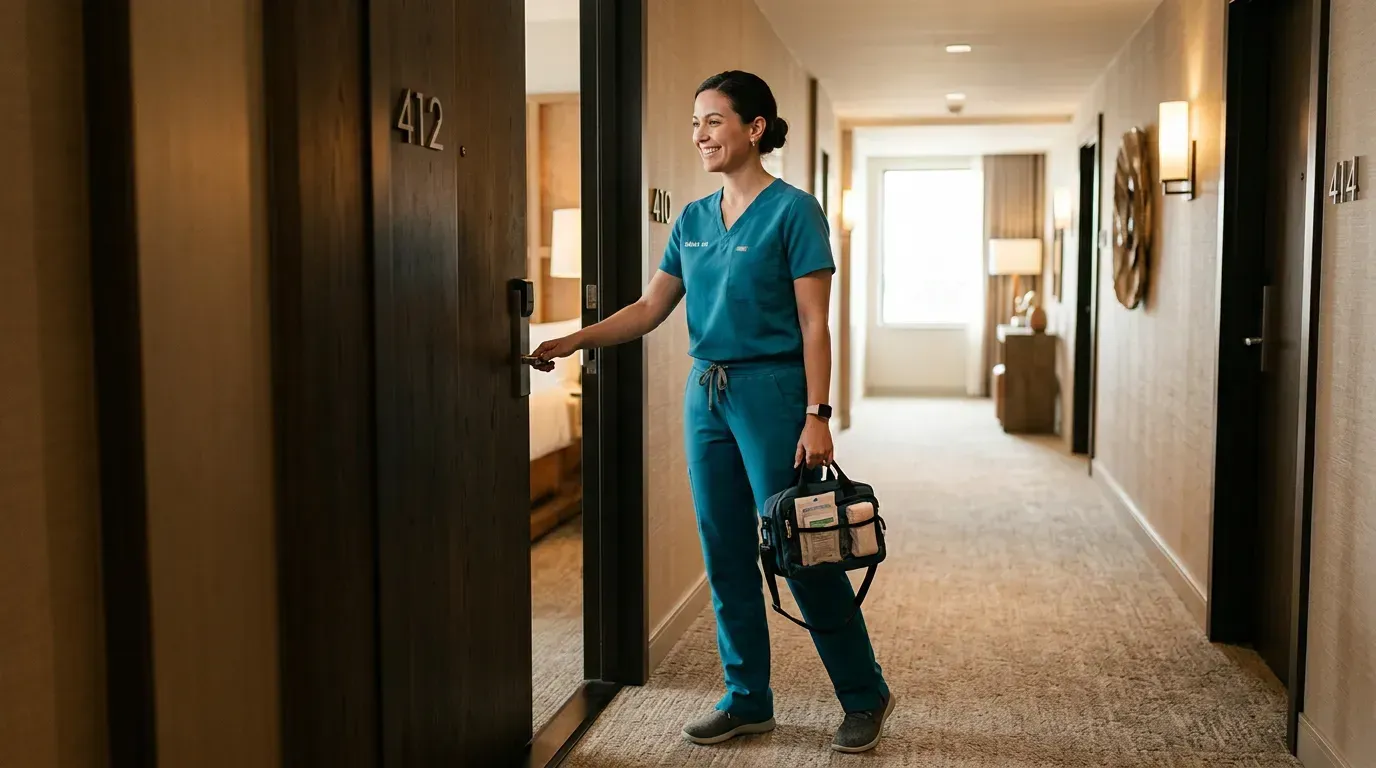
A drip bar works well when you want the experience of going somewhere. Or if you're in an unfamiliar city and want a quick walk-in session. Or if you're new to IV therapy and want to see a real clinic.
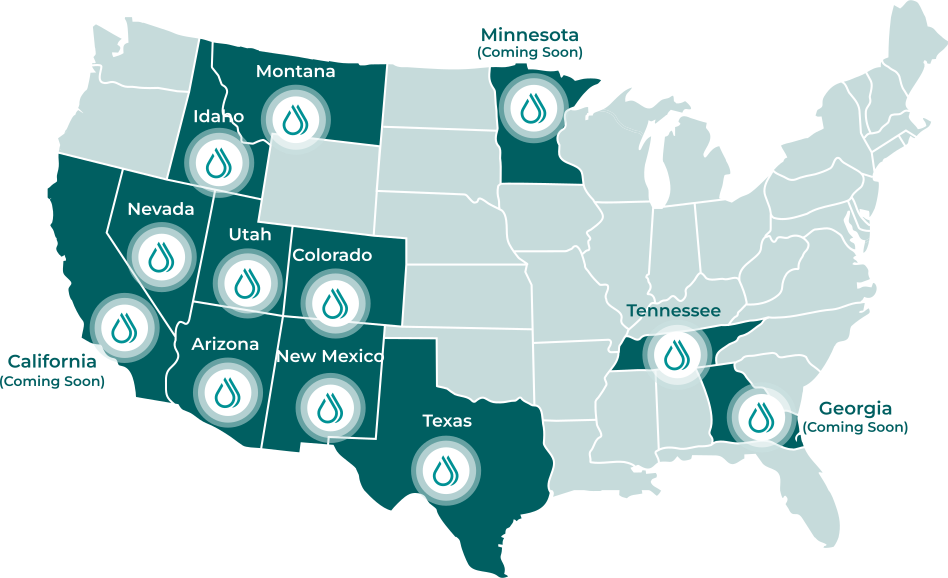
Mobile IV works better when you're too sick to drive. Or when you're hungover and leaving the house sounds impossible. Or when you want full privacy and a drip built around your needs. Pure IV's nurses are available across Nevada, Arizona, Utah, Colorado, New Mexico, Texas, Idaho, Montana, and Tennessee. In Las Vegas after a long weekend or in Denver adjusting to altitude, the experience is the same: a licensed RN, a pharmacy-grade drip, and no waiting room.
An IV drip bar brings the IV room to a lounge chair. Pure IV brings it to your couch.
Frequently Asked Questions
What does an IV drip bar do?
An IV drip bar delivers fluids, vitamins, minerals, and sometimes medications directly into your bloodstream through a small catheter in your arm. The process takes 45–60 minutes and is administered by a registered nurse. The goal is faster absorption than oral supplements, which only deliver 20–30% of nutrients to the bloodstream compared to nearly 100% via IV.
Is IV drip bar therapy safe?
Yes, with the right provider. When administered by a licensed RN under physician supervision, using compounds from an FDA-registered 503B pharmacy, IV therapy has a strong safety record. The risk rises sharply with unlicensed providers, improperly sourced compounds, or skipped health screenings. The FDA has documented serious infections at clinics that did not follow sterile protocols. Vet your provider before you book.
How much does an IV drip bar cost?
Basic hydration drips start around $85–$150. Myers' cocktail averages around $190. Specialty drips like NAD+ run $300–$435 or more. Mobile IV services may add a $50–$100 convenience fee. Insurance does not cover elective IV therapy, but HSA/FSA accounts may apply in some cases.
Who should not get IV therapy?
People with kidney disease, congestive heart failure, liver failure, active blood infections, or G6PD deficiency should not get IV therapy. Anyone with medically restricted fluid or sodium intake needs physician approval first. A good drip bar will catch these on the intake form. If a clinic does not ask about your medical history, skip it.
What is the difference between an IV drip bar and mobile IV therapy?
A drip bar is a fixed location: you go to them. Mobile IV therapy sends a licensed nurse to your home, hotel, or office. Both use the same drips and the same safety standards. Mobile is better when you're sick, hungover, or unable to travel. A drip bar is better when you want the walk-in lounge experience or are in an unfamiliar city.
How long does an IV drip bar session take?
Standard drips finish in 45–60 minutes. A hydration-only drip may take as little as 30 minutes. NAD+ infusions run 2–3 hours because the infusion rate must stay slow to avoid side effects. You do not need any recovery time. You leave and return to normal activity right away.
Ready to Book?
If you are curious whether IV therapy is right for you, Pure IV's licensed nurses are available for walk-in and mobile appointments across Las Vegas, Scottsdale, Phoenix, Denver, Salt Lake City, Albuquerque, Dallas, Austin, Nashville, Boise, and more.
No upsell. No pressure. Just a licensed nurse, a pharmacy-grade drip, and the treatment your body actually needs. Book your session here or call us to ask questions first.
Sources
- FDA: Compounding Concerns at IV Hydration Clinics (October 2021, updated 2024)
- FDA: Warning Letter to ivsupplyclinic.com (February 2024)
- Alangari, A. "To IV or Not to IV." Cureus, PMC (June 2025)
- Karasiewicz et al., "Health Professionals' Perspectives on IV Therapies." Healthcare, PMC (February 2024)
- NABP/FSMB/NCSBN/FDA/FTC Joint Statement on IV Hydration Clinics (July 2023)
- Shmerling, R. "Drip bar: Should you get an IV on demand?" Harvard Health Blog (2018)
- WebMD: IV Vitamin Therapy: Does It Work? (2024)
- Olympia Pharmacy: What Is a Myers' Cocktail? (February 2025)
This guide is for general health information. It is not a substitute for medical advice. If you have chest pain, difficulty breathing, or signs of an allergic reaction during an IV session, call 911 immediately.
Dr. Allison Lane is a board-certified physician who focuses on clear communication, patient safety, and personalized treatment plans. She works closely with our team to ensure care is safe based on each person’s medical history, needs, and goals. Her clinical interests include sports medicine, emergency medicine, and tactical medicine.
Dr. Lane has extensive experience providing medical support for athletes and major events. She is the Medical Director for the Tucson Roadrunners and has served as a team physician for University of Arizona athletics and multiple professional and community sports organizations. She also works as a ringside physician for boxing and MMA events.
She’s also active in community service and medical training, helping teach CPR, Narcan use, Stop the Bleed, and basic first aid. At Pure IV, Dr. Lane's focus is on medical compliance, patient safety, and helping scale Pure IV on the medical side.
Education & Training:
- University of Arizona College of Medicine (2010)
- Emergency Medicine Residency, University of Arizona (2013)
- Primary Care Sports Medicine Fellowship, University of Arizona (2014)
Recent Posts