Best Electrolyte Drinks for Food Poisoning: A Complete Guide

Medically reviewed by Allison Lane, MD
Joseph Lopez • May 20, 2026

Table of Contents
Best Electrolyte Drinks for Food Poisoning: What Actually Works
This guide is for general health information. It is not a substitute for medical advice. If you cannot keep any fluids down, have bloody diarrhea, a fever above 103°F, or feel confused and dizzy, call 911 or go to urgent care.
Quick answer: The best electrolyte drinks for food poisoning are oral rehydration solutions (ORS) like Pedialyte , DripDrop , or a homemade ORS . Not Gatorade. The CDC explicitly states that sports drinks "do not replace the losses correctly and should not be used for the treatment of diarrheal illness." This guide shows you exactly what's in each drink, why it matters, and when to skip the drinks entirely and get IV fluids.
It's 2 a.m. You're on the bathroom floor. Your stomach is twisting, and you can't tell if you need to throw up again or run to the toilet. Every time you take a sip of water, your body rejects it. That's food poisoning, and it hits about 48 million Americans every year. Roughly one in six people.
The single most important thing you can do is replace what you're losing. Not just water. Electrolytes. And the drink you reach for matters more than most people realize.
Here's what to know and what to drink.
Why Food Poisoning Wipes Out Your Electrolytes
When you vomit and have diarrhea at the same time, your body loses more than water. You lose sodium, potassium, and chloride at a rate plain water can't fix.
Sodium controls how much water your cells hold. Potassium keeps your heart beating steadily and your muscles working. Chloride helps maintain the right fluid balance in your blood. Lose enough of all three and your body starts to struggle with basic functions.
According to the NIH's National Institute of Diabetes and Digestive and Kidney Diseases, "replacing lost fluids and electrolytes is the most important treatment for food poisoning." Not antibiotics. Not anti-nausea pills. Fluids and electrolytes first.
Plain water doesn't have those minerals. Drink only water when you're badly dehydrated, and you can actually dilute the sodium left in your blood, making things worse. That's why the type of drink you choose is not a small detail.
The Gold Standard: What the WHO Says You Should Drink
The World Health Organization and UNICEF have spent decades studying what works best for diarrheal illness. Their answer is an oral rehydration solution (ORS), and they've defined the exact formula that works.
According to the WHO and GH Supply Chain ORS formula documentation, the standard low-osmolarity ORS contains:
- Sodium: 75 mmol/L (about 575 mg per liter)
- Potassium: 20 mmol/L (about 780 mg per liter)
- Glucose: 75 mmol/L (about 13.5g per liter)
- Total osmolarity: 245 mOsm/L
That glucose-to-sodium ratio is not arbitrary. It activates a protein in your gut called SGLT1 (sodium-glucose cotransporter 1). This protein grabs one glucose molecule and two sodium ions at the same time and pulls them across your intestinal wall. Water follows automatically. This process works even when your gut is in active distress, which is exactly why ORS can rehydrate you during food poisoning when plain water can't.
The Merck Manual confirms that this reduced-osmolarity formula, adopted globally since 2002, is the clinical standard for rehydration therapy.
The WHO credits oral rehydration therapy with saving millions of lives from diarrheal illness worldwide. That's the drink you want when you're sick.
Best Electrolyte Drinks for Food Poisoning: Ranked and Compared
Not all electrolyte drinks are equal. Some are formulated for athletic sweat loss. Some are designed for diarrheal illness. Some are just sugar water with a trace of sodium. The difference shows up clearly in the numbers.
| Drink | Sodium (mg/serving) | Potassium (mg/serving) | Sugar (g/serving) | ORS-Aligned? |
|---|---|---|---|---|
| WHO ORS (per liter) | ~575 mg | ~780 mg | ~13.5g | YES — gold standard |
| Pedialyte Classic (per liter) | ~1,035 mg | ~780 mg | ~25g | YES |
| DripDrop ORS (per packet/8 oz) | 330 mg | 185 mg | 7g | YES |
| Liquid IV (per packet/16 oz) | 500 mg | 370 mg | 11g | CLOSE |
| LMNT (per packet) | 1,000 mg | 200 mg | 0g | PARTIAL |
| Gatorade Thirst Quencher (12 oz) | ~160 mg | ~45 mg | 21g | NO |
| Homemade ORS (per liter) | ~575 mg | ~0 mg (add banana) | ~25g | YES |
Pedialyte: Best Overall for Food Poisoning
Pedialyte is the closest widely available product to the WHO ORS formula. It has 2 to 3 times more sodium than Gatorade and half the sugar. Its sodium-to-glucose ratio is calibrated to activate the sodium-glucose cotransport mechanism, so your gut can actually absorb it during active illness.
According to Pedialyte's own clinical data, it contains no more than 25g of sugar per liter compared to about 58g in leading sports drinks. That lower sugar load matters. High sugar in a drink pulls water into your intestine through osmosis, which makes diarrhea worse, not better.
Pedialyte comes in powder packs, ready-to-drink bottles, and freezer pops (useful if you can't keep liquid down but can suck on ice). It's widely available at pharmacies and most grocery stores. This is the go-to.
DripDrop ORS: Best Clinically Formulated Option
DripDrop was developed by a doctor who worked in field medicine and designed it specifically to match ORS standards. Each packet delivers 330 mg sodium, 185 mg potassium, and only 7g of sugar in 8 ounces of water.
It uses the sodium-glucose cotransport mechanism by design. The low sugar keeps osmotic pressure low so your intestines pull in fluid rather than push it out. For someone dealing with active vomiting and diarrhea, DripDrop is one of the best choices available without a prescription.
It also tastes better than most ORS products, which helps when your stomach is already rebelling against everything.
Liquid IV: Good, But Watch the Sugar
Liquid IV markets itself as following WHO ORS guidelines, and the sodium and potassium numbers are reasonable: 500 mg sodium and 370 mg potassium per serving in 16 ounces of water.
The issue is the 11g of sugar per packet. That's not as high as Gatorade, but it's higher than DripDrop or the WHO benchmark. For mild food poisoning, Liquid IV can work. For severe diarrhea, the extra sugar could worsen fluid loss through osmotic effects.
If Liquid IV is what you have on hand, use it. Just dilute it in a full 16 ounces (the full serving size, not a smaller amount) to keep the sugar concentration down.
LMNT: High Sodium, Zero Sugar (Use With Caution)
LMNT delivers 1,000 mg sodium per packet, which is more than any ORS product, and 200 mg potassium. It has zero sugar, which sounds appealing.
The catch is that zero sugar means no sodium-glucose cotransport. Without glucose paired with sodium at the right ratio, your gut can't use its most efficient absorption pathway. LMNT can still help replace sodium, but it won't rehydrate you as efficiently as an ORS during active diarrhea.
LMNT works well for electrolyte maintenance during recovery once vomiting has stopped. It's not the best choice at the peak of illness.
Gatorade: Not the Right Tool for Diarrheal Illness
This one surprises most people. Gatorade is everywhere, it's cheap, it tastes good, and it feels like the obvious choice. But the numbers tell a different story.
Gatorade Thirst Quencher in a 12-oz serving has about 160 mg of sodium and only 45 mg of potassium. That sodium is roughly one-sixth of what Pedialyte delivers per liter. And its 21g of sugar per 12 oz translates to about 58g per liter, more than twice the sugar in a WHO ORS.
"Sports drinks such as Gatorade do not replace the losses correctly and
should not be used for the treatment of diarrheal illness.
"
That warning appears in CDC guidance for healthcare professionals treating diarrheal illness. The Healthline Pedialyte vs. Gatorade analysis confirms the gap: Pedialyte has 16% of the daily value of sodium per serving versus Gatorade's 7%.
Gatorade was formulated to replace sweat during athletic activity. Sweat has a different electrolyte profile than fluid lost through diarrhea and vomiting. Using it for food poisoning is like using the wrong key in a lock. It might go in, but it won't open anything.
Homemade ORS: Free and Effective
If you have nothing in the house but water, sugar, and salt, you can make an ORS that closely matches the WHO formula. The WHO-recommended recipe is:
- 1 liter of clean water
- 6 teaspoons of sugar
- 1/2 teaspoon of salt
Mix thoroughly and sip slowly. Do not adjust the ratios. Too much salt can raise your sodium to dangerous levels. Too much sugar pulls fluid into your intestine and worsens diarrhea.
Add a mashed banana or a small amount of orange juice for potassium. This won't be as precise as a packaged ORS, but it activates the same sodium-glucose cotransport mechanism and will help your body absorb fluid.
What NOT to Drink When You Have Food Poisoning
Some drinks make food poisoning worse. Avoid all of these:
Coffee and caffeine. Caffeine stimulates the colon and speeds up gut movement. If your intestines are already in overdrive, caffeine makes it worse. This includes energy drinks and caffeinated soda.
Alcohol. Alcohol is a diuretic. It makes your kidneys flush more water, adding to the dehydration you're already fighting.
Full-strength fruit juice. High in sugar and low in sodium. The sugar osmotic effect can worsen diarrhea. Dilute juice 50/50 with water at minimum if that's your only option.
Milk and dairy. Vomiting and diarrhea often cause temporary lactose sensitivity. Dairy can irritate your gut when it's already inflamed.
Plain water in large amounts. Water alone won't restore electrolytes. Drinking large amounts of plain water when your sodium is already low can dilute it further. Sip water between ORS doses, but don't rely on it alone.
According to Medical News Today, these drinks are consistently flagged in clinical guidance as things to avoid during food poisoning recovery.
How to Drink When Your Stomach Won't Cooperate
You know what to drink. The harder question is how to drink it when everything you swallow comes right back up.
The answer: small amounts, slowly.
Start with one tablespoon of ORS every five minutes. That's it. One tablespoon. If you can hold that down for 20 minutes, increase to two tablespoons every five minutes. Gradually work up to small sips every few minutes.
Do not gulp. Gulping fills your stomach too fast, triggers the gag reflex, and starts the cycle over.
If you can't keep even a tablespoon down, try ice chips instead. Let them melt on your tongue. This delivers small amounts of fluid without the volume that triggers vomiting.
The Cleveland Clinic recommends diluted oral rehydration solutions over sports drinks for better electrolyte balance, and specifically notes that warning signs requiring medical care include being unable to keep anything down for 24 to 48 hours.
Food Poisoning Recovery Timeline: 24 Hours, 48 Hours, 72 Hours
Food poisoning doesn't feel the same hour to hour. Here's what to expect and what to do at each stage.
Hours 0 to 12: Acute phase. This is the worst of it. Vomiting and diarrhea are most intense. Focus entirely on not getting more dehydrated. Sip ORS one tablespoon at a time. Skip solid food entirely. Rest. Keep a bucket nearby.
Hours 12 to 24: Stabilization. Vomiting usually slows or stops. Diarrhea may continue but ease slightly. Increase your ORS intake now that you can hold more down. Try bland, soft foods like plain crackers or toast if your stomach allows. Avoid dairy, fat, and spicy food.
Hours 24 to 48: Early recovery. Most healthy adults start to feel significantly better in this window, according to the Cleveland Clinic's food poisoning recovery guide. Continue ORS alongside bland foods. Avoid caffeine and alcohol for at least another 24 hours. You may feel tired and weak. That's normal.
Hours 48 to 72: Full recovery for most. If you had a bacterial infection like Salmonella or Campylobacter, symptoms can last four to seven days. If you're still unable to eat, still having diarrhea, or your fever is rising, see a doctor.
The Mayo Clinic recommends seeing a doctor if diarrhea lasts more than three days, fever is above 103°F, or you see blood in your stool or vomit.
Signs You Need More Than an Electrolyte Drink
Most food poisoning passes on its own. But there are warning signs that mean your body needs more help than a drink can give.
Call a doctor or go to urgent care if you have:
- Diarrhea or vomiting that has lasted more than 24 hours without improvement
- Dark yellow or brown urine (a sign of serious dehydration)
- No urination for five or more hours
- Dizziness or lightheadedness when you stand up
- Confusion, disorientation, or unusual sleepiness
- Fever above 103°F
- Blood in your vomit or stool
- Can't keep any liquid down after six to eight hours of trying
Children, older adults, pregnant women, and people with weakened immune systems are at higher risk and should seek medical care sooner than a healthy adult would, according to the NIH. The Mayo Clinic specifically lists severe dehydration. Including thirst, dry mouth, dark urine, and dizziness. As reasons to seek medical attention immediately.
When Oral Rehydration Isn't Enough: IV Fluid Therapy

Sometimes the stomach is too far gone to absorb anything. You sip the ORS and it comes right back up. You try ice chips and those come up too. You haven't urinated in hours. You're dizzy every time you stand.
That's when oral rehydration has failed, and IV fluids become necessary.
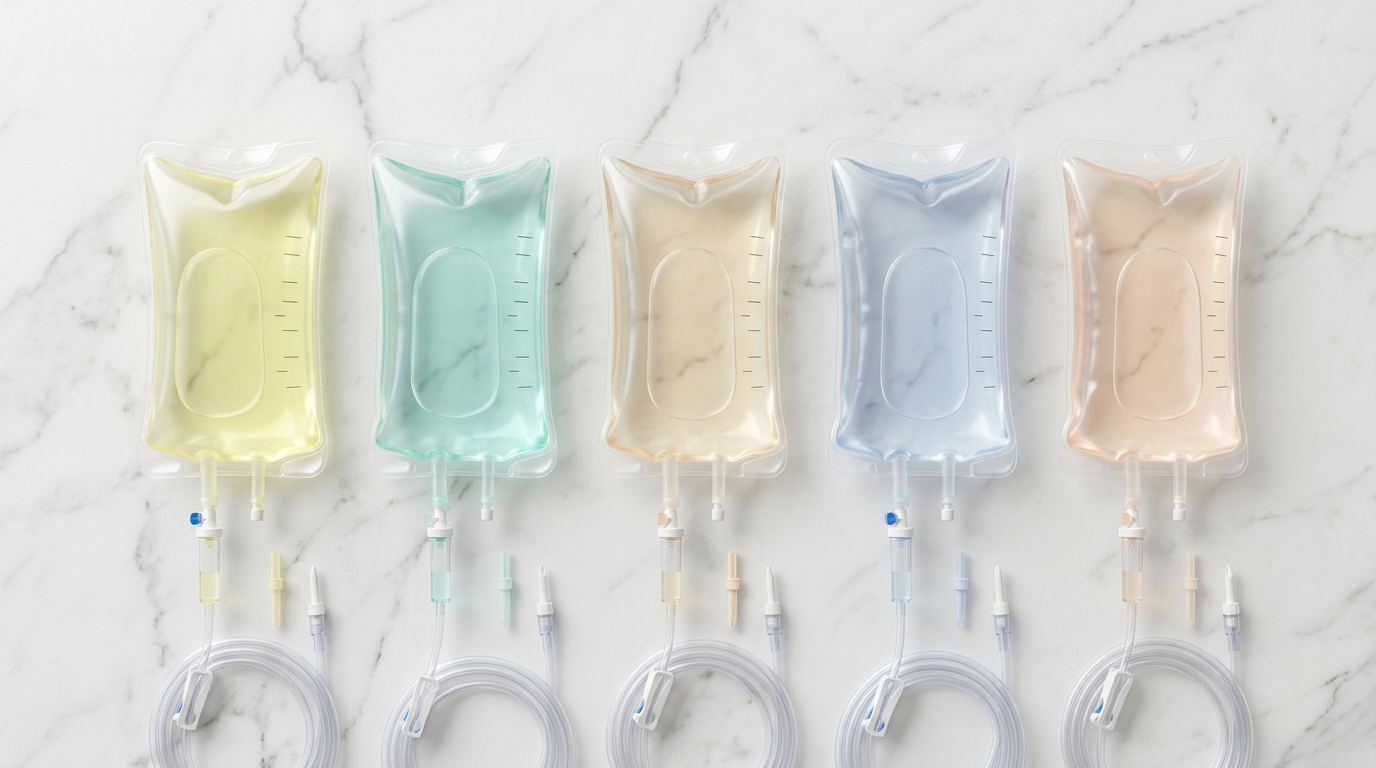
IV therapy bypasses your gut entirely. The fluids and electrolytes go directly into your bloodstream, with 100% absorption and no digestion required. Most people who receive IV fluids during a food poisoning episode start feeling meaningfully better within 30 to 60 minutes, as noted on the Pure IV food poisoning IV therapy page.
The Mayo Clinic confirms that serious dehydration may require IV fluids delivered through a vein, sometimes with a hospital stay.
A dehydration IV typically includes saline (sodium chloride), potassium, and additional electrolytes to replace exactly what your body has lost. If vomiting has been severe, a banana bag IV adds B vitamins, including thiamine (B1), which vomiting depletes alongside electrolytes. You can read more about how banana bag hydration works and why it's useful for illness recovery.
You don't have to go to an emergency room to get IV fluids. Pure IV offers mobile IV at home, in your hotel, or wherever you are. If you're too dizzy and nauseous to drive, that matters. A nurse comes to you, sets up the drip, and you rest in your own space while the fluids do their work.
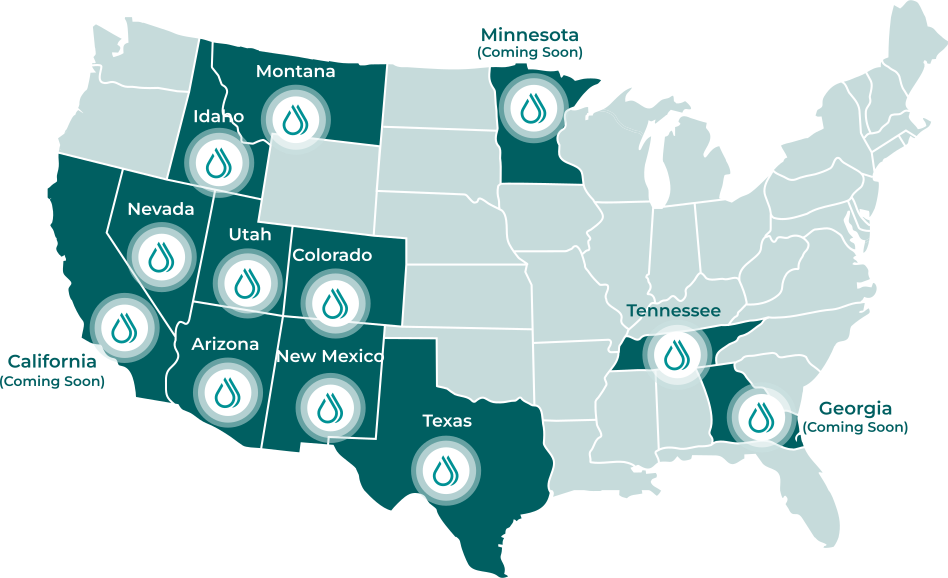
Pure IV serves Las Vegas, Scottsdale, Phoenix, Denver, Salt Lake City, Dallas, Austin, Albuquerque, Boise, and Nashville. These are markets where heat, travel, and restaurant dining combine to make food poisoning a common problem.
If you've been throwing up for six or more hours and can't keep anything down, this is the right call. Read more about our nausea and vomiting IV options or see our full guide on how to get rid of nausea fast.
Frequently Asked Questions
What is the best electrolyte drink for food poisoning?
Oral rehydration solutions like Pedialyte or DripDrop are the medical gold standard. The CDC explicitly states that sports drinks like Gatorade are not designed for diarrheal illness. ORS products have the right balance of sodium, potassium, and glucose to activate the absorption mechanism your gut uses even during active illness.
Is Pedialyte or Gatorade better for food poisoning?
Pedialyte is better. It has two to three times more sodium, half the sugar, and is formulated to the WHO ORS standard. According to the Healthline Pedialyte vs. Gatorade analysis, Pedialyte has 16% of the daily value of sodium per serving compared to Gatorade's 7%. High sugar in Gatorade can worsen diarrhea through osmotic effects.
Can you make your own electrolyte drink for food poisoning?
Yes. The WHO homemade ORS recipe is 1 liter of clean water, six teaspoons of sugar, and half a teaspoon of salt. Mix well and sip slowly. Do not change the ratios. Too much sugar or salt makes dehydration worse, not better. Add a mashed banana for potassium.
What drinks should you avoid with food poisoning?
Avoid coffee, caffeinated soda, alcohol, full-strength juice, milk, and any high-sugar drink. Medical News Today notes that caffeine stimulates the colon and worsens diarrhea. Alcohol causes additional fluid loss. Dairy can irritate an already inflamed gut.
When should you go to the ER or get IV fluids for food poisoning?
If you cannot keep fluids down after six to eight hours, have dark urine or no urination for five or more hours, feel dizzy when you stand, or are confused, seek help. The Mayo Clinic lists these as signs of serious dehydration requiring immediate attention. Children, elderly, and immunocompromised people should not wait as long as healthy adults.
How long does food poisoning last?
Most cases resolve in 12 to 48 hours in healthy adults, according to the Cleveland Clinic. Bacterial infections like Salmonella or Campylobacter can last four to seven days. If symptoms worsen after three days, you have a fever above 103°F, or you see blood, see a doctor.
Get Rehydrated Faster With Pure IV
If you've been sick for hours and can't keep anything down, oral rehydration has limits. Pure IV brings medical-grade IV hydration directly to your home, hotel, or office. No ER wait. No driving while dizzy. A nurse arrives with everything needed, and most patients feel significantly better within an hour. Book a mobile IV session or call us to talk through your options.
Sources
- CDC — Food Safety for Healthcare Professionals
- CDC — Food Poisoning Statistics
- NIH / NIDDK — Treatment for Food Poisoning
- Mayo Clinic — Food Poisoning Symptoms
- Mayo Clinic — Food Poisoning Diagnosis and Treatment
- Cleveland Clinic — Vomiting 101 and Recovery
- Cleveland Clinic — How Long Food Poisoning Lasts
- WHO — Oral Rehydration Salts
- GH Supply Chain — ORS Formula Composition
- Merck Manual — Oral Rehydration Therapy
- Healthline — Pedialyte vs. Gatorade: What's the Difference?
- Pedialyte — Stomach Bug and Food Poisoning
- Medical News Today — What to Eat and Drink After Food Poisoning
- Pure IV Utah — Food Poisoning IV Fluid Therapy
Dr. Allison Lane is a board-certified physician who focuses on clear communication, patient safety, and personalized treatment plans. She works closely with our team to ensure care is safe based on each person’s medical history, needs, and goals. Her clinical interests include sports medicine, emergency medicine, and tactical medicine.
Dr. Lane has extensive experience providing medical support for athletes and major events. She is the Medical Director for the Tucson Roadrunners and has served as a team physician for University of Arizona athletics and multiple professional and community sports organizations. She also works as a ringside physician for boxing and MMA events.
She’s also active in community service and medical training, helping teach CPR, Narcan use, Stop the Bleed, and basic first aid. At Pure IV, Dr. Lane's focus is on medical compliance, patient safety, and helping scale Pure IV on the medical side.
Education & Training:
- University of Arizona College of Medicine (2010)
- Emergency Medicine Residency, University of Arizona (2013)
- Primary Care Sports Medicine Fellowship, University of Arizona (2014)
Recent Posts