

How Your Body Fights a Cold, Explained

Joseph Lopez • July 17, 2026

Share this article

Exploring the Benefits and Risks f NAD IV

Medically reviewed by Allison Lane, MD

Joseph Lopez July 17, 2026

How Your Body Fights a Cold, Explained

Table of Contents

To understand why IV therapy helps when you’re sick, you need to understand what your immune system is actually doing during an infection. It’s not just “fighting a virus.” It’s running a massive, resource-intensive operation that burns through your body’s reserves.

Phase 1: Detection and the Inflammatory Response (Hours 0–24)

The moment a virus enters your body (usually through your nose, mouth, or eyes), your innate immune system — the first line of defense you’re born with — detects the invader. Sentinel cells in your tissues called macrophages and dendritic cells recognize the virus and sound the alarm by releasing inflammatory chemicals called cytokines.


These cytokines trigger the inflammatory response — which is responsible for most of the symptoms you associate with being sick. Your body temperature rises (fever) to create an environment hostile to the virus. Blood vessels dilate to allow more immune cells to reach infected areas (causing redness and swelling). Mucus production increases to trap and flush out viral particles (congestion, runny nose). Your brain receives signals to rest and conserve energy (fatigue, body aches, loss of appetite).


This inflammatory response isn’t your enemy — it’s your immune system working exactly as designed. But it’s incredibly resource-intensive. Your body needs vitamin C, zinc, magnesium, and B vitamins to produce and activate the immune cells driving this response.

Phase 2: The Adaptive Response (Days 2–7)

While your innate immune system holds the line, your adaptive immune system — the precision-targeted defense — is building virus-specific weapons. T cells learn to recognize and kill infected cells. B cells produce antibodies that tag the virus for destruction. This process takes several days, which is why colds and flu typically last 7 to 10 days.


During this phase, your body is manufacturing billions of new immune cells. Each of these cells requires nutrients to build. Zinc is essential for T cell maturation and function. Vitamin C accumulates in white blood cells at concentrations 50 to 100 times higher than in blood plasma — meaning your immune cells are aggressively pulling vitamin C from your bloodstream to fuel their activity. B vitamins power the metabolic machinery that produces new immune cells. Glutathione protects immune cells from the oxidative damage caused by the very free radicals they use to kill infected cells.

Phase 3: Recovery and Cleanup (Days 7–14+)

After your immune system defeats the virus, it has to clean up the battlefield — removing dead cells, reducing inflammation, and repairing damaged tissue. This is why you still feel tired and “off” for days after the worst symptoms pass. Your body is rebuilding, and it needs nutrients and hydration to do so. The lingering fatigue, brain fog, and weakness that follow a cold or flu are signs that your body’s reserves are depleted.

Give your immune system what it needs — Try our immune boost IV therapy

Woman with light brown hair, smiling, wearing a blue shirt and dark blazer, headshot.

Allison Lane, MD

Medical Director

Co-Owner

Let's Connect!

Dr. Allison Lane is a board-certified physician who focuses on clear communication, patient safety, and personalized treatment plans. She works closely with our team to ensure care is safe based on each person’s medical history, needs, and goals. Her clinical interests include sports medicine, emergency medicine, and tactical medicine.

Dr. Lane has extensive experience providing medical support for athletes and major events. She is the Medical Director for the Tucson Roadrunners and has served as a team physician for University of Arizona athletics and multiple professional and community sports organizations. She also works as a ringside physician for boxing and MMA events.


She’s also active in community service and medical training, helping teach CPR, Narcan use, Stop the Bleed, and basic first aid. At Pure IV, Dr. Lane's focus is on medical compliance, patient safety, and helping scale Pure IV on the medical side.

Education & Training:

  • University of Arizona College of Medicine (2010)
  • Emergency Medicine Residency, University of Arizona (2013)
  • Primary Care Sports Medicine Fellowship, University of Arizona (2014)

Recent Posts

IV Vitamin Therapy: Benefits, Cost, and What to Expect
By Joseph Lopez June 1, 2026
IV vitamin therapy delivers vitamins straight to your bloodstream. See costs, drip types, side effects, and what to expect from your first session.
How to Cure a Hangover Fast: The Real Recovery Guide
By Joseph Lopez June 1, 2026
No hangover cure exists — but you can cut recovery from 24 hrs to under one. 30-minute protocol, myth busting, and when IV therapy is worth it.

Mobile IV Therapy: At-Home the IV Drip Service Explained
By Joseph Lopez June 1, 2026
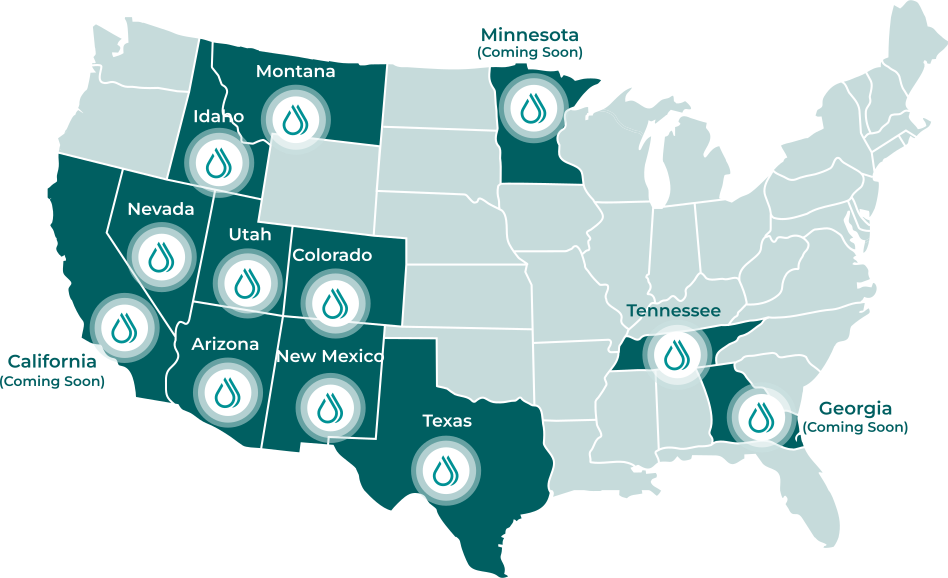
Feel better fast with mobile IV therapy delivered directly to your home, hotel, or office. Same-day service by licensed RNs in 9 states. Book online now!

Best Electrolyte Drinks for Food Poisoning: A Complete Guide
By Joseph Lopez May 20, 2026
Vomiting and diarrhea drain your electrolytes fast. Find out which drinks actually work — and when to skip them and get IV fluids instead.

Dehydration Headache: Causes, Symptoms, and Fast Relief
By Joseph Lopez May 20, 2026
Learn why dehydration causes headaches, how to spot them, and get fast relief — from water and electrolytes to IV hydration when nothing else works.

Migraine Cocktail: What It Is and How It Actually Works
May 20, 2026
A migraine cocktail is a mix of IV drugs used to stop severe migraines. Learn what's in it, how it works, and where to get it — including mobile delivery.
Show More