What Biohacking Actually Is — and Why Beginners Are Getting It Wrong
Biohacking for beginners is simpler than it sounds: it means making small, deliberate changes to your lifestyle — sleep, nutrition, light exposure, movement — and tracking how your body responds.
Here's a quick-start overview:
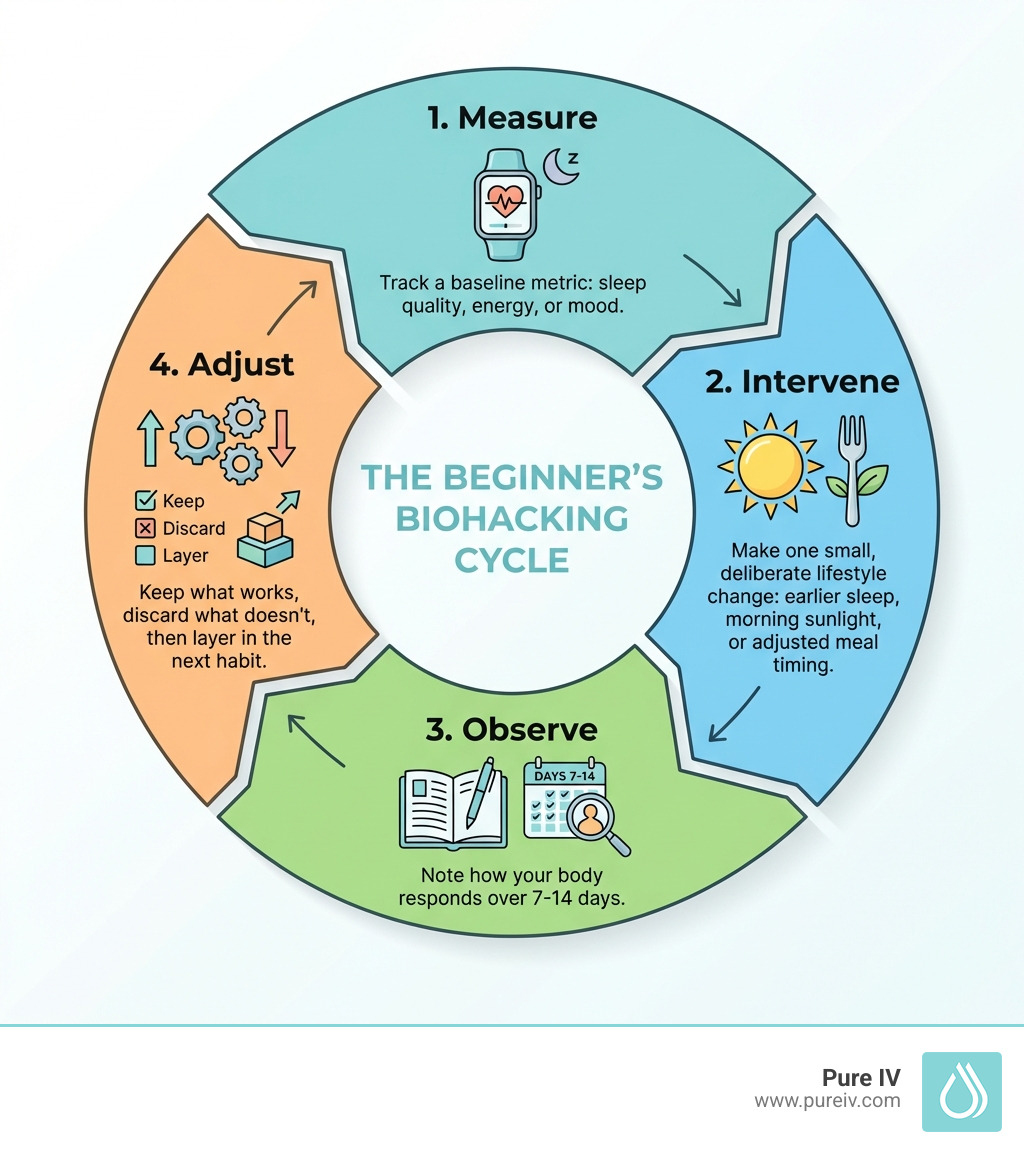
| Step | What to Do |
|---|---|
| 1. Start with basics | Optimize sleep, morning light, and meal timing |
| 2. Track one metric | Energy, sleep quality, or mood on a 1-10 scale |
| 3. Change one variable | Hold everything else steady for at least a week |
| 4. Observe and adjust | Keep what works, drop what doesn't |
| 5. Layer in more | Add new habits only after the first one sticks |
You don't need expensive gadgets. You don't need a lab coat. And you definitely don't need to implant microchips under your skin.
What you do need is a little curiosity and a willingness to pay attention to how your body actually feels — day to day, habit to habit.
Most people pushing through fatigue, brain fog, or that 3 p.m. energy crash are already experimenting. They're just not doing it intentionally. Biohacking is simply making that process deliberate.
Up to 72% of people respond differently to the same diet or exercise plan due to genetic and metabolic differences. That's not a small margin — it means generic health advice fails most people, most of the time. Biohacking gives you a framework to figure out what actually works for you.
I'm Dr. Allison Lane, board-certified emergency medicine physician and Medical Director of Pure IV, and my background in sports medicine has given me a front-row seat to how targeted, data-informed interventions — the core of biohacking for beginners — can dramatically shift energy, recovery, and performance. In the sections below, I'll walk you through exactly where to start, what to prioritize, and how to avoid the common mistakes that derail most beginners before they see results.
What is Biohacking? Core Principles for Beginners
At its heart, biohacking is the art and science of changing the environment around you and inside you so you have full control of your biology. It treats the human body not as a black box, but as a complex system that can be "optimized" rather than just kept at "normal" levels.
For those just starting biohacking for beginners, there are three core pillars to understand:
- Self-Experimentation: You are the lead scientist in the laboratory of your own life. Because Personal Omics Profiling reveals dynamic molecular and medical phenotypes that are unique to you, what works for a fitness influencer might not work for your specific genetic makeup.
- Nutrigenomics: This is the study of how your food interacts with your genes. It’s the idea that food isn't just fuel; it's information that tells your cells what to do.
- Informed Decision-Making: Biohacking relies on data. This starts with baseline testing —knowing your starting point through blood work, sleep scores, or even just a daily energy journal—to ensure you aren't just guessing.
While you might hear stories about "Grinder" biohacking—people who implant magnets or RFID chips under their skin—that is the extreme edge of the movement. For most of us, biohacking is about using science-backed lifestyle tweaks to feel 10% better every single week.
The Foundation: Biohacking for Beginners Through Lifestyle
Before you buy a single supplement, you must master your environment. Your body runs on an internal clock known as the circadian rhythm. When this rhythm is disrupted by artificial blue light from screens at night or high cortisol spikes from morning stress, your mitochondria (the power plants of your cells) suffer.
One of the most effective entry points for biohacking for beginners is adjusting when you eat. The 16/8 method for weight management involves fasting for 16 hours and eating during an 8-hour window. This triggers metabolic flexibility, teaching your body to burn fat for fuel instead of constantly relying on sugar.
If you find yourself struggling with the mid-afternoon slump even after adjusting your diet, you might need a cellular recharge. At Pure IV, we often see clients in cities like Phoenix or Las Vegas who use Energy IV services to bypass digestive hurdles and deliver B-vitamins and electrolytes directly to the bloodstream, providing an immediate boost to mitochondrial health.
Sleep: The Original Biohack for Beginners
Sleep is the foundation of all regeneration. Without it, no amount of "hacking" will work. During deep sleep and REM cycles, your brain literally flushes out metabolic waste.
To optimize your sleep hygiene:
- Keep it cool: Research suggests the ideal sleeping temperature is around 68°F.
- Kill the blue light: Use a "digital sunset" by turning off screens or wearing blue-light-blocking glasses two hours before bed.
- Mineral Support: Magnesium is a powerhouse for relaxation. Many biohackers find that the Myers Cocktail Explained as an IV infusion helps replenish magnesium and B-vitamins more effectively than oral supplements, leading to deeper, more restorative rest.
Nutrition and Metabolic Flexibility
Biohacking nutrition isn't about "dieting"; it's about triggering beneficial biological processes like autophagy —your body’s way of cleaning out damaged cells.
To stabilize your blood sugar and reduce insulin resistance, many beginners start their day with Bulletproof coffee(coffee blended with grass-fed butter and MCT oil) to provide steady energy without an insulin spike. We recommend focusing on an anti-inflammatory diet rich in healthy fats and high-quality proteins. If you are looking for more structured support in managing your metabolic health, our Weight Loss Services utilize modern tools like Semaglutide and Tirzepatide to help reset your body's relationship with fuel.
Advanced Yet Accessible: From Fasting to Cold Plunges
Once your lifestyle foundations are solid, you can experiment with hormesis —the concept that brief, controlled bursts of stress can make your body stronger.
Common hormetic hacks include:
- Cryotherapy and Cold Plunges: Brief cold exposure increases norepinephrine, boosting focus and reducing inflammation. A 30-60 second cold rinse at the end of your shower is a perfect way to start.
- Infrared Saunas: These use light to heat your body directly, triggering "heat shock proteins" that help repair damaged cells and support detoxification.
- Red Light Therapy: Specific wavelengths (600-900 nm) are absorbed by mitochondrial chromophores in your skin, potentially boosting energy production at a cellular level.
For those pushing their physical limits in places like Denver or Salt Lake City, our Athletic Recovery IV is a favorite "hack" to flush out lactic acid and rehydrate after intense training or heat exposure.
| Benefit | Cold Exposure (Cryo/Ice) | Heat Exposure (Sauna) |
|---|---|---|
| Inflammation | Dramatically reduces acute swelling | Reduces chronic joint stiffness |
| Mood | Instant dopamine/norepinephrine spike | Promotes deep relaxation/GABA |
| Recovery | Best for muscle soreness | Best for cardiovascular health |
| Cellular | Activates brown fat | Triggers heat shock proteins |
Intermittent Fasting and Cellular Repair
Fasting is perhaps the oldest biohack in history. When you enter a fasted state, your levels of growth hormone can increase by up to five times, which helps preserve muscle and burn fat. More importantly, research on fasting and cellular autophagy shows that giving your digestive system a break allows your cells to perform essential waste removal.
To maintain electrolyte balance during a fast, especially in dry climates like Tucson or Albuquerque, ensure you are staying hydrated with mineral-rich water.
Mindset and Cognitive Enhancement
Biohacking isn't just physical; it's mental. Heart Rate Variability (HRV) is a key metric biohackers use to measure stress resilience. A higher HRV usually means your nervous system is balanced and ready for a challenge.
You can "hack" your brain state through:
- Gratitude Journaling: Studies show that consistent gratitude exercises can boost mitochondrial enzymes and improve mood in as little as two weeks.
- Brainwave Entrainment: Using binaural beats or functional music can help synchronize your brainwaves for deep focus or relaxation.
- Peptide Therapy: For those looking for more targeted cognitive or physical support, Peptide Therapy offers "cellular signaling" molecules that can help with everything from focus to tissue repair.
Tracking Your Progress and Using Technology Safely
You cannot manage what you do not measure. In biohacking for beginners, technology acts as your personal health dashboard. By using digital health tracking and wearable biosensors , you can see in real-time how a late-night snack ruins your sleep or how a morning walk improves your focus.
When setting goals, use the SMART framework (Specific, Measurable, Achievable, Relevant, Time-bound). Instead of saying "I want more energy," try "I want to improve my rested rating from a 5 to an 8 by implementing a 9:00 p.m. digital sunset for 14 days."
Wearables and Data-Driven Biohacking for Beginners
Tools like the Oura ring, Whoop strap, or even a basic Apple Watch allow for sophisticated pattern analysis. Some advanced biohackers use Continuous Glucose Monitors (CGMs) to see exactly how their blood sugar reacts to specific foods.
As you collect data, you might notice patterns that require medical intervention. For example, men experiencing chronic fatigue despite "hacking" their sleep and diet may find that their baseline hormone levels are the culprit. In these cases, exploring Testosterone Injections with professional oversight can be the missing piece of the puzzle.
Frequently Asked Questions about Biohacking
Is biohacking safe for everyone?
Biohacking is generally safe when it involves lifestyle changes like better sleep and whole foods. However, extreme fasting, unregulated supplements, or DIY medical procedures carry risks. Individual variability is huge—what helps one person might hurt another. We always recommend medical supervision, especially for those with pre-existing conditions. For advanced regenerative options, such as Stem Cells or Exosomes, it is vital to work with licensed professionals who provide real-time NP approval.
How much does it cost to start biohacking?
It can cost exactly $0. Sunlight, consistent wake times, nasal breathing, and gratitude journaling are all free. You don't need a $5,000 cold plunge when a cold shower or a bag of ice in the bathtub works. Budget for the tech and supplements only after you've mastered the free habits.
How long does it take to see results?
Most people report noticeable energy and mood improvements within 3 to 7 days of fixing their sleep and light exposure. More significant biological shifts, like improved bone density or metabolic markers, usually take 2 to 4 weeks of consistency.
Conclusion
The golden rule of biohacking is "stack, don't strain." Don't try to change your entire life in one weekend. Start with one high-impact habit—like getting morning sunlight—and once that becomes automatic, layer in the next one.
Biohacking is a journey of self-discovery. It’s about moving away from "one-size-fits-all" health and toward a personalized wellness plan that actually respects your unique biology. Whether you are recovering from a long week in Nashville or preparing for a hike in Boise, we are here to support your journey with science-backed tools.
Ready to take the next step in your optimization? Start your journey with professional Peptide Therapy and let us help you dial in your results with precision and safety.